La Payunia
A black volcanic desert in southern Mendoza with one of the highest densities of volcanic cones anywhere on Earth.
Updated 4 September 2026
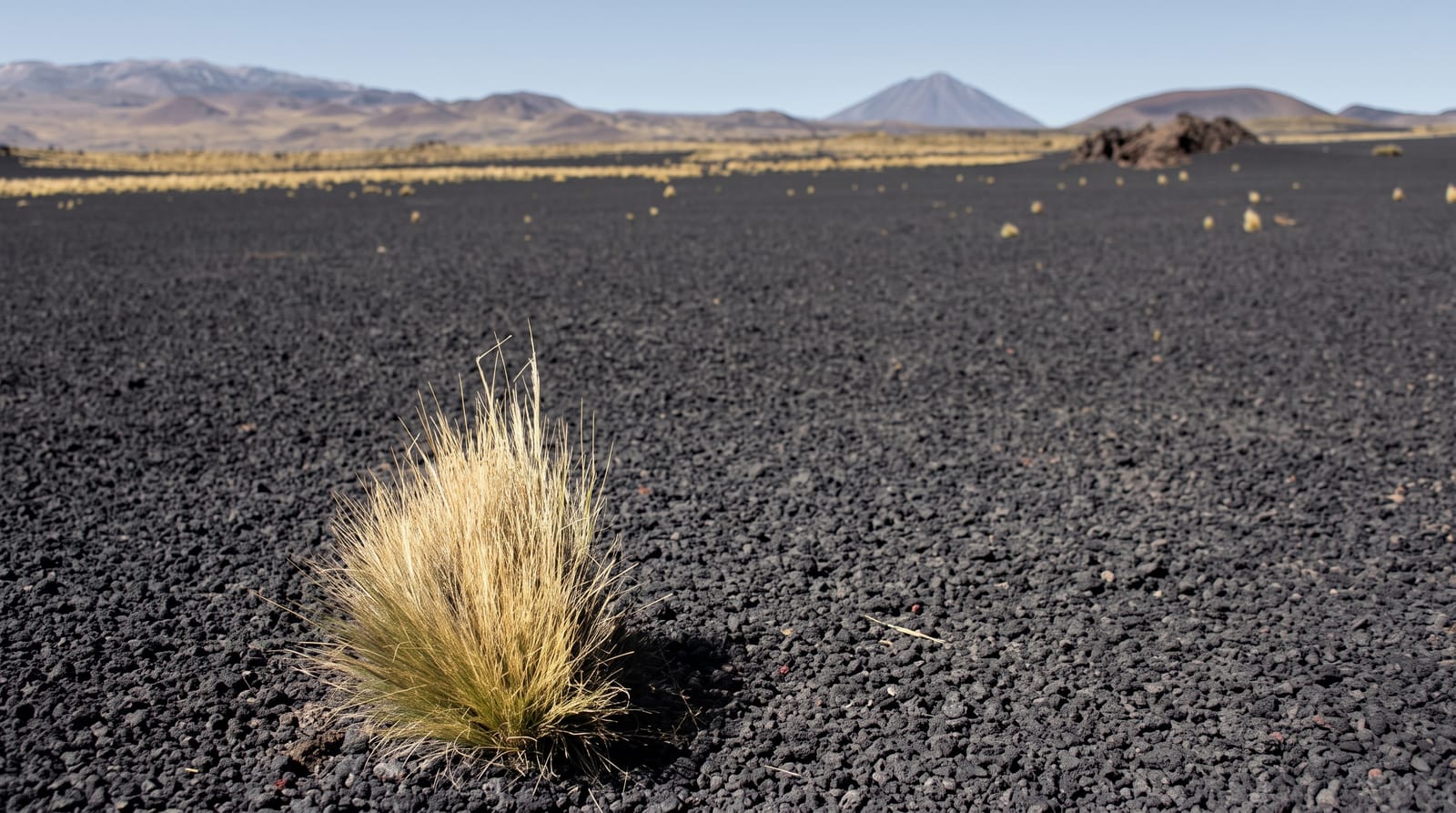
AI illustration
La Payunia is a reserve of some four hundred and fifty thousand hectares of volcanic country south of Malargüe, and the statistic usually quoted about it is the density of its cones: several hundred volcanoes across the field, among the highest concentrations recorded anywhere in the world. The ground is black with lava and scoria, in places running in flows that reach far across the plain, in others heaped into cones of red and black cinder such as Payún Matrú and Santa María. Between them are stretches of pale pumice, guanaco herds numbering in the thousands, and enormous silence. There are no settlements, no signal and few tracks, and visits are made by four-wheel drive with local guides.
What's there
- The volcanic cones - hundreds of craters across the plain.
- The lava fields - black flows and scoria stretching to the horizon.
- The coloured cinder - red and black cones such as Payún Matrú.
- The guanaco herds - thousands of animals grazing the volcanic steppe.
When to go
October to April; winter brings snow and cold that make the tracks impassable. Summer days are hot but bearable with an early start. Wind and dust are constant, and rain turns the tracks to trouble.
Practical notes
This is a full-day trip covering long distances on rough tracks, and going independently is genuinely risky: no fuel, no water, no signal and easy to get lost. Guided tours are the practical option and are not cheap. The landscape is monotone and austere, which is either the appeal or the disappointment.
Nearby
Malargüe is the base town; Laguna Llancanelo lies north of the reserve.
Key facts
Source: Wikidata, item Q3457612, read on 18 October 2026.
What to pack for La Payunia
Chosen from what this place is for. Tap a kit for the full checklist.
- Broken-in walking shoes or boots - Grip and ankle support matter more than looks; never hike in brand-new boots. Find on Amazon
- Warm base layers - Merino or synthetic against the skin - never cotton, which chills when damp. Find on Amazon
- Loose, light, long clothing - Covering up beats bare skin in the desert - and locals dress this way for a reason. Find on Amazon
- Layers + a waterproof shell - Mountain weather turns fast; a packable rain jacket saves the day. Find on Amazon
Some links on this page are Amazon affiliate links - if you buy through them we may earn a small commission at no extra cost to you.
All packing kitsPlan your trip
Where to start if La Payunia is going on the list.
Booking links on this page are affiliate links - if you book through them we may earn a small commission at no extra cost to you. It never changes what we write about a place.
Opening times, ticket prices and seasonal closures change - check the official source before you go: official site.