Knidos
A twin-harbour city at the tip of the Datça peninsula, famous in antiquity for a statue of Aphrodite that no longer exists.
Updated 25 August 2026
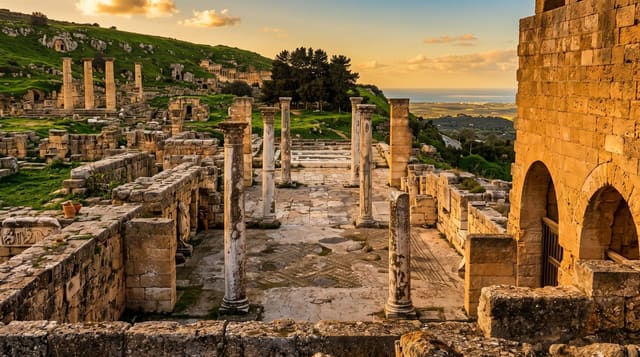
Knidos was built at the very end of the peninsula, on a site with harbours on both sides of a narrow isthmus, so ships could shelter whichever way the wind blew - which made it rich. Its fame rested on a statue: the Aphrodite of Knidos by Praxiteles, the first monumental female nude in Greek sculpture, displayed in a round temple where it could be seen from every side, and famous enough that people sailed here specifically to look at it. The original is lost and known only through Roman copies. The site holds the circular temple platform, two theatres, a sundial associated with the astronomer Eudoxus who came from here, stoas, terraces and the remains of both harbours with their moles still visible under the water. It is spread across a steep hillside above the sea with almost nothing modern around it except a small restaurant at the harbour, and the road out along the peninsula takes well over an hour.
What to look for
- The round temple platform - where the Aphrodite stood.
- The two harbours - moles and quays on both sides of the isthmus.
- The theatres - the lower one above the harbour.
- The terraced city - streets climbing the slope above the sea.
When to go
April to June and September to October, in the morning. There is no shade, and the site is fully exposed to sun and wind.
What to expect
The road from Datça is long, winding and slow. The famous statue is not here and never will be. The site is steep and rough underfoot with minimal facilities.
Nearby
Datça town and Eski Datça are back along the peninsula; boat trips run here from Datça harbour.
Key facts
Source: Wikidata, item Q690575, read on 18 October 2026.
What to pack for Knidos
Chosen from what this place is for. Tap a kit for the full checklist.
- Comfortable walking shoes - Sightseeing means kilometres of pavement and cobbles daily. Find on Amazon
- Modest clothing - Shoulders and knees covered - the single most common requirement. Find on Amazon
- A slim anti-theft daypack - Zips that close properly; keep it in front in crowds and on transit. Find on Amazon
- A scarf or shawl - To cover the head or shoulders on entry; women especially at mosques. Find on Amazon
Some links on this page are Amazon affiliate links - if you buy through them we may earn a small commission at no extra cost to you.
All packing kitsPlan your trip
Where to start if Knidos is going on the list.
Booking links on this page are affiliate links - if you book through them we may earn a small commission at no extra cost to you. It never changes what we write about a place.
Opening times, ticket prices and seasonal closures change - check the official source before you go: official site.