Bursa Grand Mosque
Ulu Cami, roofed by twenty domes on twelve piers, its walls covered in monumental calligraphy - the great early Ottoman mosque.
Updated 21 October 2026
UNESCO World Heritage
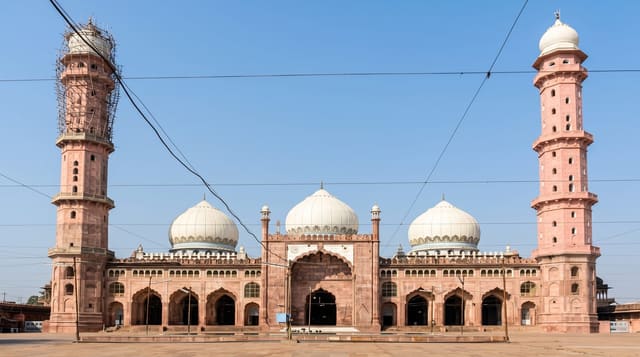
Ulu Cami was finished in 1399 and it belongs to an earlier Ottoman world than the Istanbul mosques - before the single great dome became the model, when the multi-domed hall was still the form. Twenty domes sit on twelve massive piers in a grid, and the effect inside is of a forest of supports rather than one soaring space, dim and horizontal and quite unlike Süleymaniye. In the centre, under a dome left open to the sky in the original design and now glazed, is a şadırvan, an ablution fountain, indoors - an unusual arrangement that gives the interior the constant sound of running water. The walls and piers carry around a hundred and ninety calligraphic panels painted directly onto the plaster by masters of successive centuries, which is the mosque's real distinction and the reason calligraphers still come. The covered bazaar and Koza Han are immediately outside.
History
Sultan Bayezid I commissioned the mosque to mark his victory at Nicopolis, and the architect Ali Neccar built it in 1396-1399 in Bursa, the first Ottoman capital, as the largest mosque of the city and a landmark of early Ottoman architecture as it grew out of the Seljuk. Tradition says it was burned in 1402 and again in 1412, and the first recorded repairs came in 1493. An earthquake in 1855 brought down the roof and the mosque stayed closed for years until repairs were finished in 1889 (Wikipedia, Grand Mosque of Bursa).
What to look for
- The twenty domes - the grid roof on twelve piers.
- The indoor fountain - the şadırvan under the central dome.
- The calligraphy panels - some 190 painted across walls and piers.
- The bazaar outside - the covered market at the door.
When to go
April to June and September to October. Mid-morning between prayers; Friday midday is closed to visitors.
What to expect
It is a working mosque - shoes off, modest dress, headscarf for women. The interior is deliberately dim, which surprises visitors expecting Istanbul's light-filled halls. Restoration work appears periodically.
Nearby
Koza Han and the covered bazaar adjoin it; the Muradiye complex and Bursa's tombs are a short ride west.
Key facts
Source: Wikidata, item Q32339, read on 18 October 2026.
What to pack for Bursa Grand Mosque
Chosen from what this place is for. Tap a kit for the full checklist.
- Comfortable walking shoes - Sightseeing means kilometres of pavement and cobbles daily. Find on Amazon
- Modest clothing - Shoulders and knees covered - the single most common requirement. Find on Amazon
- A slim anti-theft daypack - Zips that close properly; keep it in front in crowds and on transit. Find on Amazon
- A scarf or shawl - To cover the head or shoulders on entry; women especially at mosques. Find on Amazon
Some links on this page are Amazon affiliate links - if you buy through them we may earn a small commission at no extra cost to you.
All packing kitsPlan your trip
Where to start if Bursa Grand Mosque is going on the list.
Booking links on this page are affiliate links - if you book through them we may earn a small commission at no extra cost to you. It never changes what we write about a place.
Opening times, ticket prices and seasonal closures change - check the official source before you go: official site.