Uthina
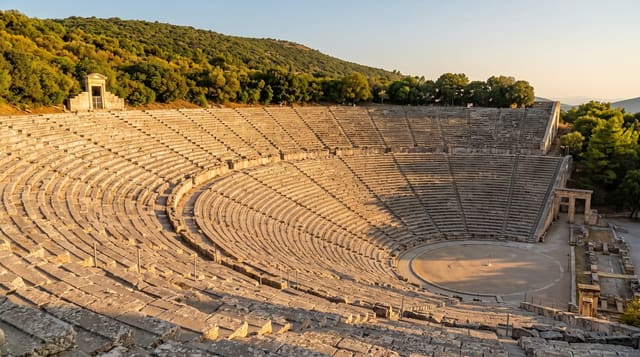
A Roman colony south of Tunis with a large amphitheatre built into a hillside and vaulted cisterns.
Updated 2 September 2026
Uthina was one of the earliest Roman colonies in Africa, settled with veterans under Augustus, and it lay on the road from Carthage to the interior. Its amphitheatre, built partly into the slope of a hill, held something like sixteen thousand people and its lower galleries and arena chambers survive. The site also has a large set of vaulted cisterns, the remains of an aqueduct, a capitol, and the House of the Laberii whose mosaics went to the Bardo.
What you'll find
- The amphitheatre - a large arena built into the hillside with surviving galleries.
- The cisterns - the vaulted water storage that supplied the town.
- The capitol - the temple platform above the forum area.
- The aqueduct remains - the arches carrying water towards the town.
When to go
October to April is comfortable. Mornings are best before the heat. The site is close enough to Tunis for a half-day trip.
Things to know
Restoration work on the amphitheatre has been heavy-handed in places. The site is exposed with no shade. Signage is minimal and there is no visitor centre.
Nearby
Tunis is north, and Thuburbo Majus is southwest.
Key facts
Source: Wikidata, item Q269424, read on 18 October 2026.
What to pack for Uthina
Chosen from what this place is for. Tap a kit for the full checklist.
- Comfortable walking shoes - Sightseeing means kilometres of pavement and cobbles daily. Find on Amazon
- Modest clothing - Shoulders and knees covered - the single most common requirement. Find on Amazon
- A slim anti-theft daypack - Zips that close properly; keep it in front in crowds and on transit. Find on Amazon
- A scarf or shawl - To cover the head or shoulders on entry; women especially at mosques. Find on Amazon
Some links on this page are Amazon affiliate links - if you buy through them we may earn a small commission at no extra cost to you.
All packing kitsPlan your trip
Where to start if Uthina is going on the list.
Booking links on this page are affiliate links - if you book through them we may earn a small commission at no extra cost to you. It never changes what we write about a place.
Opening times, ticket prices and seasonal closures change - check the official source before you go: official site.