The Medina of Sousse
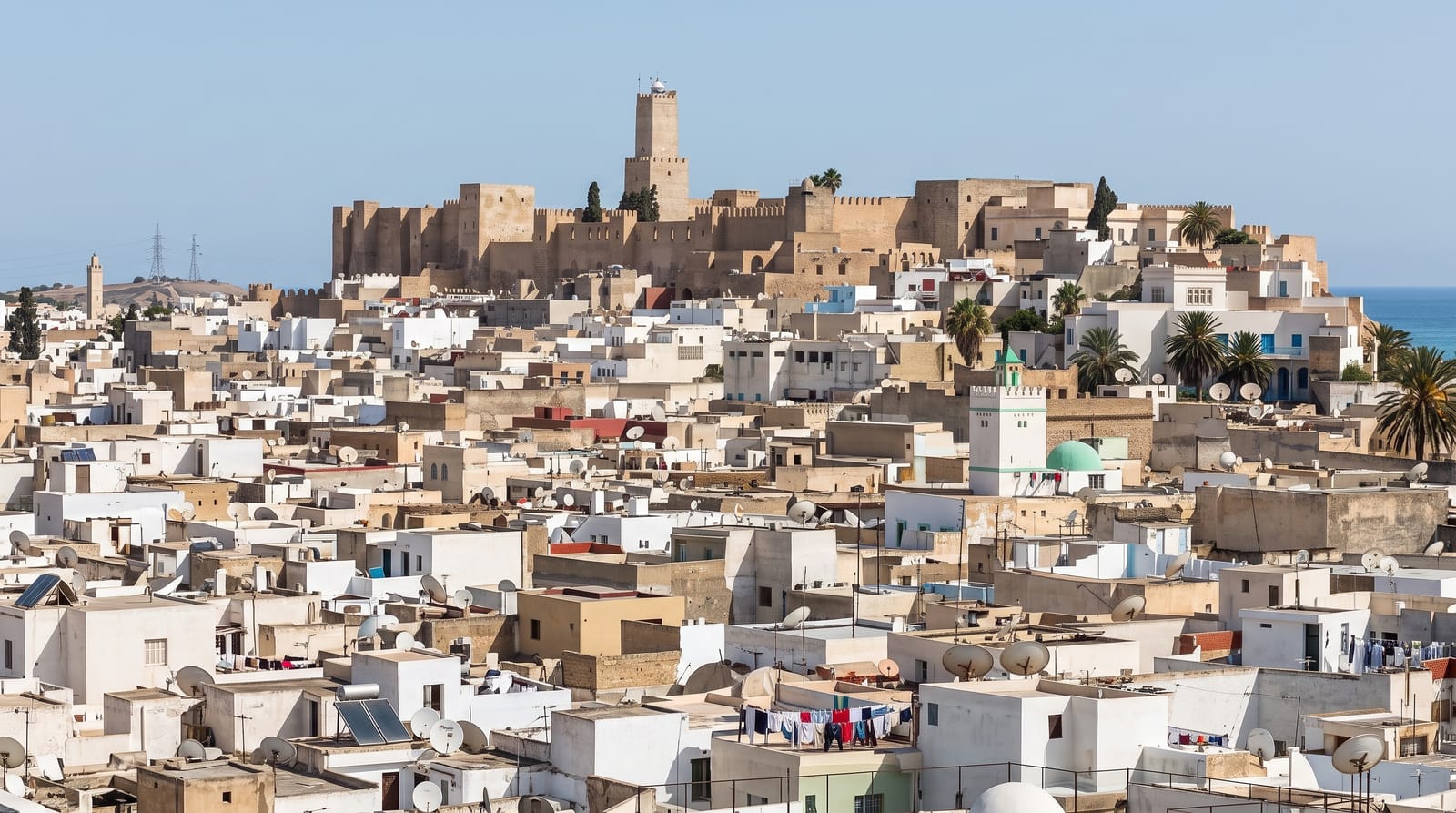
A UNESCO-listed walled medina on the coast, built around a fortified monastery whose watchtower looks out over the whole town and sea.
Updated 18 October 2026
AI illustration
UNESCO World Heritage
Sousse's medina is one of the best surviving examples of early Islamic coastal town planning, which is why UNESCO listed it, and its character comes from defence: the ribat, a fortified monastery built in the eighth century where warrior-monks kept watch for raiders from the sea, stands at its heart, with a tall round watchtower that can still be climbed for a view over the whole medina roofscape, the Great Mosque beside it and the port beyond. The walls that ring the old town are largely intact. Inside, the souqs run through covered lanes selling everything from spices to leather, and the archaeological museum in the kasbah holds an outstanding mosaic collection, second in the country only to the Bardo. Beyond the walls, Sousse is a working city and beach resort, so the medina is the historic core of somewhere very much alive.
History
Built at the dawn of Islamic civilisation in the Maghreb, the medina is one of the earliest constructions after the Islamic conquest there, and its walls, kasbah, ribat and Great Mosque show the stout coastal military architecture of the Aghlabid era, built to ward off pirates and raiders. Punic steles were found between the ribat and the Great Mosque in the 19th and 20th centuries, the old town now houses the Archaeological Museum of Sousse, and since 1988 it has been a World Heritage Site (Wikipedia, Medina of Sousse).
What's there
- The ribat - the eighth-century fortified monastery and its climbable watchtower.
- The Great Mosque - the austere ninth-century mosque beside it.
- The souqs - the covered market lanes running through the walled town.
- The kasbah museum - the mosaic collection in the citadel above the medina.
When to go
Spring and autumn are ideal; summer is hot and the coast fills with package holidaymakers. Mornings are best in the souqs, and the tower view is finest in the late afternoon. The mosque courtyard is open to visitors outside prayer times, with the prayer hall closed to non-Muslims.
Before you go
The souqs closest to the main entrance are heavily geared to resort day-trippers, with persistent selling and inflated first prices; walking deeper in reaches the parts where locals shop. Sousse outside the medina is an ordinary and rather built-up resort city. The ribat stairs are steep and narrow.
Nearby
Monastir and its ribat are down the coast; El Jem's amphitheatre is an hour inland.
Key facts
Source: Wikidata, item Q608100, read on 18 October 2026.
What to pack for The Medina of Sousse
Chosen from what this place is for. Tap a kit for the full checklist.
- Comfortable walking shoes - Sightseeing means kilometres of pavement and cobbles daily. Find on Amazon
- Modest clothing - Shoulders and knees covered - the single most common requirement. Find on Amazon
- A slim anti-theft daypack - Zips that close properly; keep it in front in crowds and on transit. Find on Amazon
- A scarf or shawl - To cover the head or shoulders on entry; women especially at mosques. Find on Amazon
Some links on this page are Amazon affiliate links - if you buy through them we may earn a small commission at no extra cost to you.
All packing kitsPlan your trip
Where to start if The Medina of Sousse is going on the list.
Booking links on this page are affiliate links - if you book through them we may earn a small commission at no extra cost to you. It never changes what we write about a place.
Opening times, ticket prices and seasonal closures change - check the official source before you go: official site.