Sejnane
A village in the northern hills where women make hand-built pottery by a technique UNESCO recognised in 2018.
Updated 21 October 2026
UNESCO Intangible Cultural Heritage
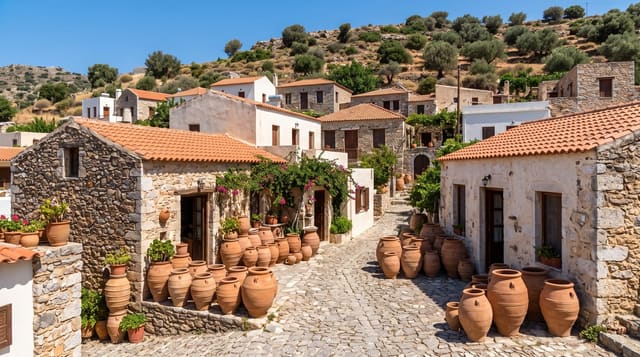
The women of Sejnane make pottery without a wheel: clay is dug locally, mixed with crushed old pottery, shaped by hand into figures, animals and vessels, dried, painted with geometric designs in red ochre and a black pigment from lentisk, and fired in an open pit fuelled with dung and wood. The forms and patterns are passed from mother to daughter, by methods said to go back some three thousand years, and UNESCO inscribed the skills in 2018. Sejnane is a small town in the Bizerte governorate, with some 4,700 people at the 2004 census.
Highlights
- The hand-building - pottery shaped without a wheel from locally dug clay.
- The ochre patterns - geometric decoration in red ochre and lentisk black.
- The open-pit firing - vessels fired in the ground with dung and wood.
- The figures - the animal and human forms particular to Sejnane.
When to go
April to October is the most comfortable; the northern hills are wet in winter. Firing happens in dry weather. Workshop visits should be arranged in advance.
Good to know
Visits need arranging rather than dropping in, and the workshops are homes. Firings happen when conditions allow and cannot be scheduled for visitors.
Nearby
Ain Draham is west, and Bizerte is east.
What to pack for Sejnane
Chosen from what this place is for. Tap a kit for the full checklist.
- Comfortable walking shoes - Sightseeing means kilometres of pavement and cobbles daily. Find on Amazon
- A slim anti-theft daypack - Zips that close properly; keep it in front in crowds and on transit. Find on Amazon
- A refillable water bottle - Many cities have public fountains; save money and plastic. Find on Amazon
- A light layer + compact umbrella - For museum air-con and a sudden shower. Find on Amazon
Some links on this page are Amazon affiliate links - if you buy through them we may earn a small commission at no extra cost to you.
All packing kitsPlan your trip
Where to start if Sejnane is going on the list.
Booking links on this page are affiliate links - if you book through them we may earn a small commission at no extra cost to you. It never changes what we write about a place.
Opening times, ticket prices and seasonal closures change - check the official source before you go: official site.