Wat Chiang Man
The oldest temple in Chiang Mai, built where the king camped while founding the city in 1296, with an elephant-buttressed chedi.
Saved in this browser only - no account, nothing sent anywhere. See your map
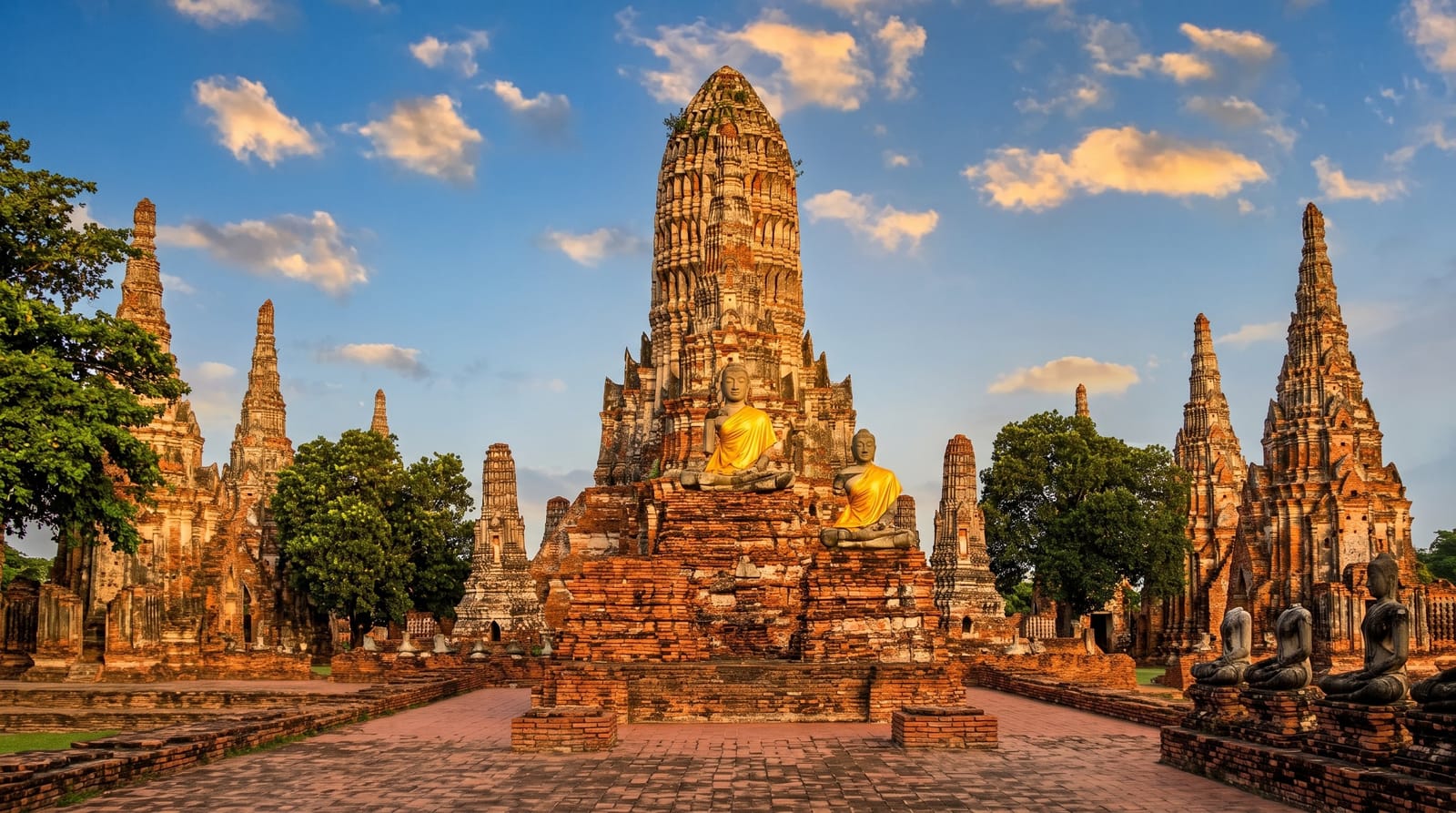
King Mangrai founded Chiang Mai in 1296 and built Wat Chiang Man on the spot where he had camped while the city was under construction, which makes it the oldest temple within the walls. Its chedi, Chang Lom, has a square base with fifteen half-elephant figures projecting from it as buttresses, in brick and stucco with a gilded upper section - a Lanna form found at several northern temples and one of the more distinctive things to look at in the old city. The viharn holds two small but important images: Phra Sila, a marble relief Buddha of Indian or Sri Lankan origin possibly from the eighth century, and Phra Sae Tang Khamani, a small crystal Buddha said to have come from Lamphun and older still, both of which are brought out for Songkran. The temple is quieter than Phra Singh or Chedi Luang, free to enter, and takes about an hour.
What you actually see
- Chang Lom chedi - fifteen half-elephant buttresses around a square base.
- Phra Sila - a marble relief Buddha of Indian or Sri Lankan origin.
- Phra Sae Tang Khamani - the small crystal Buddha, older still.
- The founding site - where Mangrai camped while building the city in 1296.
When to go
November to February. Mornings are quiet. The two small images are displayed behind glass and are brought out at Songkran in April. An hour covers it.
Honest expectations
The two famous images are small, behind glass and hard to see properly. Free, with donation boxes. Temple dress code applies. It is quieter but less imposing than the other old-city temples.
Nearby
Wat Chedi Luang is south; the Chang Phuak gate and moat are north.
What to pack for Wat Chiang Man
Chosen from what this place is for. Tap a kit for the full checklist.
Opening times, ticket prices and seasonal closures change - check the official source before you go: official site.