Wat Bang Kung
An Ayutthaya-era ordination hall completely enveloped by banyan roots, standing inside the walls of a lost military camp.
Updated 28 August 2026
The ubosot at Wat Bang Kung is a small brick hall from the late Ayutthaya period, and what makes it remarkable is that it is no longer visible as a building: four banyan and bodhi trees have grown over and around it until their roots sheathe the walls entirely, leaving a structure that reads as a tree with a doorway. Inside, a seated Buddha called Luang Pho Bot Noi sits under a soot-darkened ceiling with faded murals. The site was a Siamese military camp after the fall of Ayutthaya in 1767, garrisoned under King Taksin during the campaign to retake the country from Burmese forces, and the surrounding compound has monuments to that period including statues of Taksin and displays of Thai boxing associated with the camp. It is a short drive from Amphawa and is usually visited alongside the floating market. Free, quiet on weekdays, busy when Amphawa is.
The main sights
- The root-covered ubosot - a brick hall entirely sheathed in banyan roots.
- Luang Pho Bot Noi - the Buddha inside, under darkened murals.
- The Taksin camp - the military site the temple stood in after 1767.
- The compound - monuments and Thai boxing displays around the hall.
When to go
November to February. Weekdays are quiet; weekends bring the Amphawa crowds through. An hour covers it.
Practical notes
Small - the hall is the visit and takes twenty minutes. The interior is dim. Busy at weekends with Amphawa day-trippers. Temple dress code applies.
Nearby
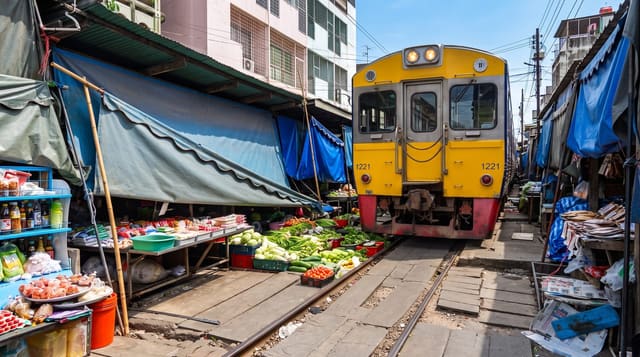
Amphawa floating market is close; the Maeklong railway market is a short drive.
Key facts
Source: Wikidata, item Q13020714, read on 18 October 2026.
What to pack for Wat Bang Kung
Chosen from what this place is for. Tap a kit for the full checklist.
- Comfortable walking shoes - Sightseeing means kilometres of pavement and cobbles daily. Find on Amazon
- Modest clothing - Shoulders and knees covered - the single most common requirement. Find on Amazon
- A slim anti-theft daypack - Zips that close properly; keep it in front in crowds and on transit. Find on Amazon
- A scarf or shawl - To cover the head or shoulders on entry; women especially at mosques. Find on Amazon
Some links on this page are Amazon affiliate links - if you buy through them we may earn a small commission at no extra cost to you.
All packing kitsPlan your trip
Where to start if Wat Bang Kung is going on the list.
Booking links on this page are affiliate links - if you book through them we may earn a small commission at no extra cost to you. It never changes what we write about a place.
Opening times, ticket prices and seasonal closures change - check the official source before you go: official site.