Lake Tanganyika
The longest freshwater lake in the world and the second deepest, holding hundreds of endemic cichlid species.
Updated 2 September 2026
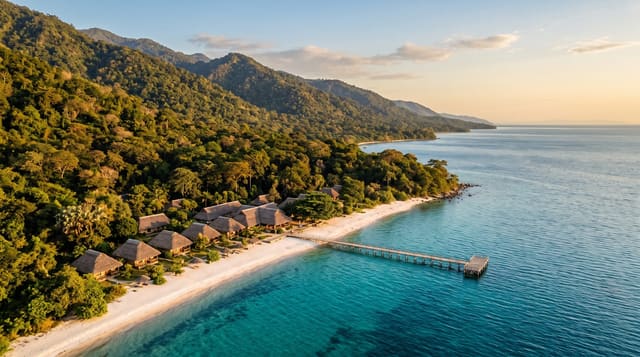
Tanganyika runs roughly six hundred and seventy kilometres north to south along the western border, which makes it the longest freshwater lake in the world, and it drops to about 1470 metres, second only to Baikal. Below around two hundred metres the water holds no oxygen, so all the life is in the top layer, and that layer holds several hundred cichlid species found nowhere else, many confined to single stretches of rocky shore. The water is clear and warm and snorkelling is straightforward.
Highlights
- The endemic cichlids - several hundred species found only in this lake.
- The clear water - visibility good enough to snorkel the rocky shorelines.
- The depth - the second deepest lake in the world at around 1470 metres.
- The shoreline parks - Gombe and Mahale running down to the water.
When to go
May to October is the dry season and calmest for boats. The water stays warm all year. Storms can build quickly on the lake in the afternoon.
Practical notes
Boat travel is slow and schedules unreliable. Bilharzia is present in some shoreline areas and local advice should be taken before swimming. Facilities along most of the shore are minimal.
Nearby
Kigoma is the main port, and Mahale Mountains are south.
Key facts
Source: Wikidata, item Q5511, read on 18 October 2026.
What to pack for Lake Tanganyika
Chosen from what this place is for. Tap a kit for the full checklist.
- Reef-safe sunscreen - High SPF that will not bleach the coral you are swimming over. Find on Amazon
- Your own mask + snorkel - A well-fitting mask is the single biggest comfort upgrade underwater. Find on Amazon
- Quick-dry towel - A microfibre towel packs small and dries in minutes. Find on Amazon
- Rash guard or thin wetsuit - Sun cover on the surface and warmth on longer or deeper dives. Find on Amazon
Some links on this page are Amazon affiliate links - if you buy through them we may earn a small commission at no extra cost to you.
All packing kitsPlan your trip
Where to start if Lake Tanganyika is going on the list.
Booking links on this page are affiliate links - if you book through them we may earn a small commission at no extra cost to you. It never changes what we write about a place.
Opening times, ticket prices and seasonal closures change - check the official source before you go: official site.