The Norias of Hama
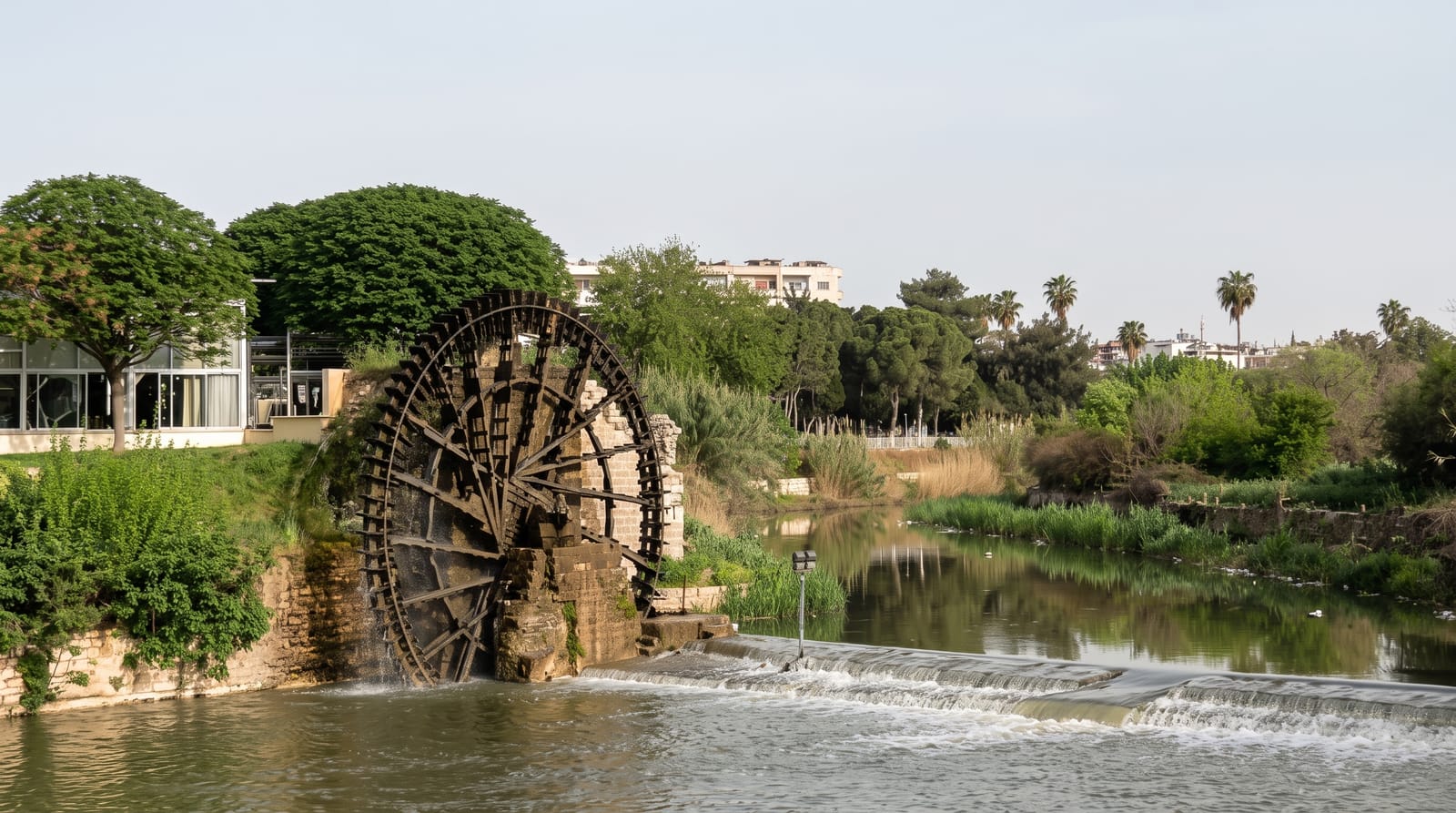
The groaning wheels of the Orontes - giant medieval waterwheels up to 20 metres tall, turning and singing as they have for centuries.
Updated 21 October 2026
AI illustration
Hama's soundtrack is medieval: the norias - giant wooden waterwheels, the largest around twenty metres across - turn in the Orontes as they have since at least the twelfth century, lifting river water to aqueducts that fed gardens and mosques, and groaning as they work in deep wooden voices the city calls their singing. Seventeen survive along the riverfront - the Muhammadiyya, of 1361, was named a historic mechanical engineering landmark in 2006 - the Four Norias cluster and the great Muhammadiyya the celebrated ones, maintained by hereditary craft knowledge and turning in season for the heritage they are. Riverside cafes put the wheels' song behind tea; the old town's lanes and palace-museum round the visit.
Highlights
- The great wheels - the 20-metre Muhammadiyya and its sisters.
- The wooden song - the norias' groaning voices at work.
- The aqueduct spans - the arches the wheels once fed.
- The riverfront cafes - tea beside the turning heritage.
When to go
May to September, when river levels set the wheels turning, is the season of the song; winter shows them still and sculptural.
Good to know
At the river: the wheels are working heritage, not climbing frames - the city's affection for them sets the etiquette; restoration cycles may still some wheels any given year.
Nearby
The Orontes valley and the old town's lanes.
Key facts
Source: Wikidata, item Q15262467, read on 18 October 2026.
What to pack for The Norias of Hama
Chosen from what this place is for. Tap a kit for the full checklist.
- Comfortable walking shoes - Sightseeing means kilometres of pavement and cobbles daily. Find on Amazon
- Modest clothing - Shoulders and knees covered - the single most common requirement. Find on Amazon
- A slim anti-theft daypack - Zips that close properly; keep it in front in crowds and on transit. Find on Amazon
- A scarf or shawl - To cover the head or shoulders on entry; women especially at mosques. Find on Amazon
Some links on this page are Amazon affiliate links - if you buy through them we may earn a small commission at no extra cost to you.
All packing kitsPlan your trip
Where to start if The Norias of Hama is going on the list.
Booking links on this page are affiliate links - if you book through them we may earn a small commission at no extra cost to you. It never changes what we write about a place.
Opening times, ticket prices and seasonal closures change - check the official source before you go: official site.