Bosra
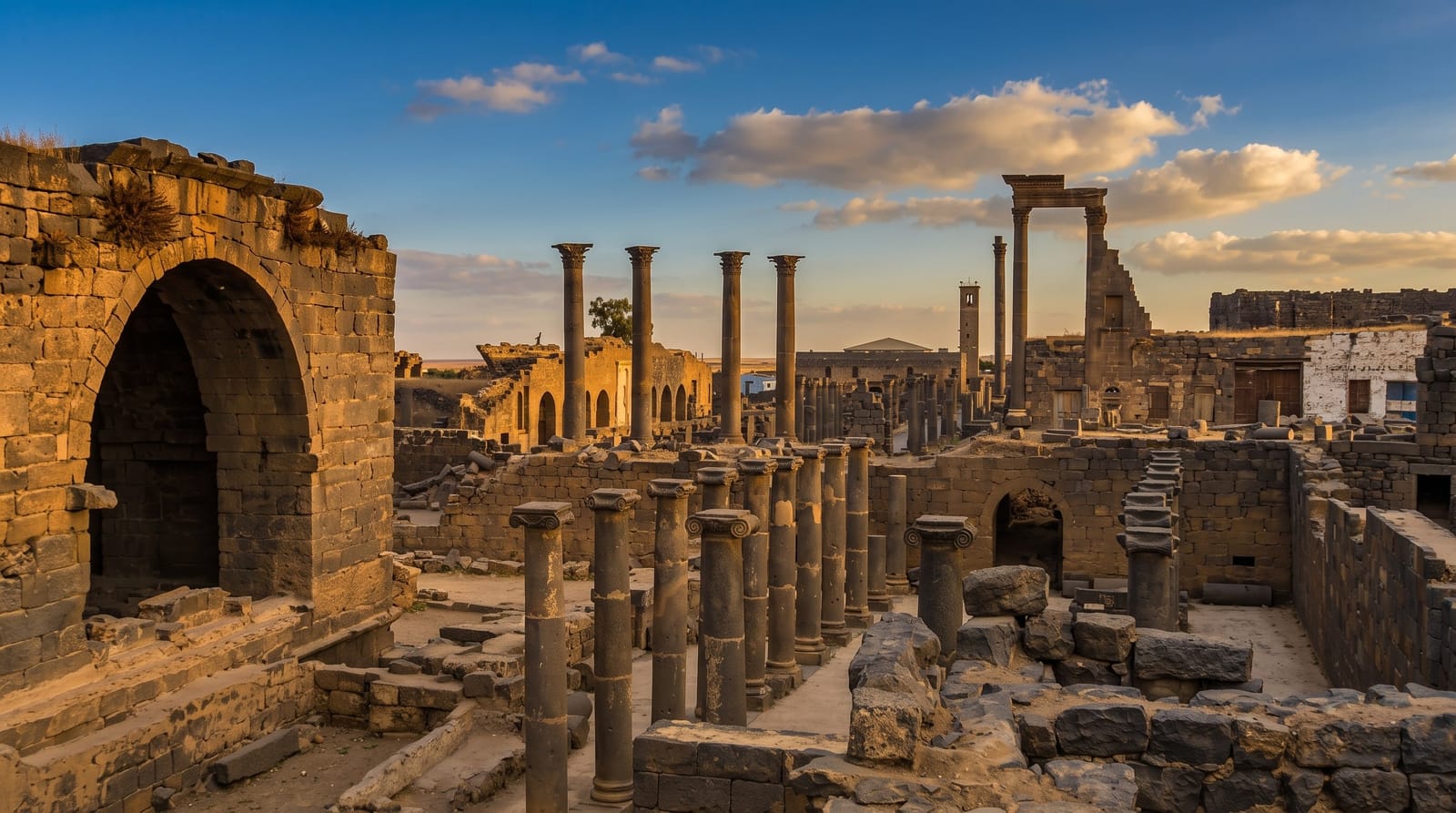
The black-stone theatre - a 15,000-seat Roman masterpiece preserved inside a citadel, heart of the UNESCO-listed basalt city of the Hauran.
Updated 21 October 2026
AI illustration
UNESCO World Heritage
Bosra built itself in basalt, and the black stone kept it: the ancient city of the Hauran - Nabataean, then Rome's provincial capital of Arabia - survives street by street in dark blocks, its masterpiece a second-century theatre seating some 15,000, so completely preserved that later centuries fortified it whole inside a citadel shell, walls armouring the auditorium like a geode. Around it run colonnaded streets, baths, early mosques and one of Islam's storied madrasas, the layers coexisting in basalt continuity. UNESCO lists the ensemble among Syria's treasures; visits run on local arrangements within the country's standing practical frame.
Background
Egyptian texts of the 14th century BC already mention the city, known in antiquity as Bostra and today officially as Busra al-Sham. The Nabataeans made it the northern capital of their kingdom. The two Councils of Arabia met here in 246 and 247 AD, and a large cathedral went up in the 6th century. The Umayyads built the Umari Mosque in 721, and the smaller al-Khidr Mosque in the northwest of the town was founded under Kumushtakin in 1134. In the Ottoman era Bosra shrank to a village, then revived in the 20th century with the Hijaz railway and new archaeological interest. UNESCO listed it in 1980, with a protected area of 116.2 hectares.
Source: Wikipedia, "Bosra"
What's there
- The theatre - 15,000 basalt seats inside the citadel shell.
- The colonnaded streets - the black city's Roman grid.
- The early mosques - Islam's first centuries in Hauran stone.
- The citadel walls - the fortress that saved an auditorium.
When to go
October to April for the plain's kind months; low light deepens the basalt's drama. Arrange the trip through specialist local operators.
Good to know
Conservation status varies across the site. The stones themselves remain among the classical world's most complete arguments.
Nearby
The Hauran villages and Damascus northward.
Key facts
Source: Wikidata, item Q272680, read on 18 October 2026.
What to pack for Bosra
Chosen from what this place is for. Tap a kit for the full checklist.
- Comfortable walking shoes - Sightseeing means kilometres of pavement and cobbles daily. Find on Amazon
- Modest clothing - Shoulders and knees covered - the single most common requirement. Find on Amazon
- A slim anti-theft daypack - Zips that close properly; keep it in front in crowds and on transit. Find on Amazon
- A scarf or shawl - To cover the head or shoulders on entry; women especially at mosques. Find on Amazon
Some links on this page are Amazon affiliate links - if you buy through them we may earn a small commission at no extra cost to you.
All packing kitsPlan your trip
Where to start if Bosra is going on the list.
Booking links on this page are affiliate links - if you book through them we may earn a small commission at no extra cost to you. It never changes what we write about a place.
Opening times, ticket prices and seasonal closures change - check the official source before you go: official site.