The Eiger
A 3,967-metre peak whose 1,800-metre north face carries the darkest climbing history in the Alps.
Updated 20 October 2026
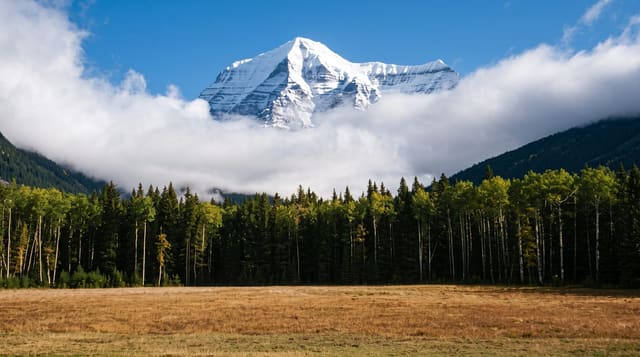
The Eiger reaches 3,967 metres, which does not put it among the highest Alpine peaks, and its fame rests almost entirely on one wall. The Nordwand rises about eighteen hundred metres above the meadows at Alpiglen in a concave sweep that traps bad weather, sheds rockfall down its own line, and stays in shadow - conditions that killed repeatedly through the 1930s attempts and gave the face the nickname Mordwand, the murder wall, in the German press. It was first climbed in July 1938 by Heckmair, Vörg, Harrer and Kasparek. The Jungfrau railway tunnels through the mountain behind the face, with a window gallery at Eigerwand that was used in rescue attempts on the face. From Kleine Scheidegg the whole wall stands directly opposite.
The landscape
- An 1,800-metre concave wall - the north face rising straight from the meadows.
- A railway inside the mountain - the Jungfrau line tunnelling behind the face.
- Kleine Scheidegg - the meadow terrace that watches the wall head-on.
- The 1938 line - the route Heckmair's party finally climbed.
When to go
June to September for clear viewing. A day.
Things to know
The face is in cloud on a large share of days, and the classic view needs settled weather. Watching climbers realistically needs a telescope. The railway to the Jungfraujoch is one of the most expensive in Europe. Alpiglen and Kleine Scheidegg are the free viewpoints.
Nearby
Grindelwald is below; Kleine Scheidegg and Wengen are along the railway.
Key facts
Source: Wikidata, item Q4425, read on 18 October 2026.
What to pack for The Eiger
Chosen from what this place is for. Tap a kit for the full checklist.
- Broken-in walking shoes or boots - Grip and ankle support matter more than looks; never hike in brand-new boots. Find on Amazon
- Layers for big temperature swings - Warm sun by day, near-freezing at night, even near the equator. Find on Amazon
- Layers + a waterproof shell - Mountain weather turns fast; a packable rain jacket saves the day. Find on Amazon
- Extra-strong sun protection - Thin air means fierce UV; hat, sunglasses and high-SPF sunscreen. Find on Amazon
Some links on this page are Amazon affiliate links - if you buy through them we may earn a small commission at no extra cost to you.
All packing kitsPlan your trip
Where to start if The Eiger is going on the list.
Booking links on this page are affiliate links - if you book through them we may earn a small commission at no extra cost to you. It never changes what we write about a place.
Opening times, ticket prices and seasonal closures change - check the official source before you go: official site.