Vadstena Abbey
The mother house of the Birgittine order on Lake Vattern, with Saint Birgitta's relics in a limestone church she specified herself.
Updated 16 October 2026
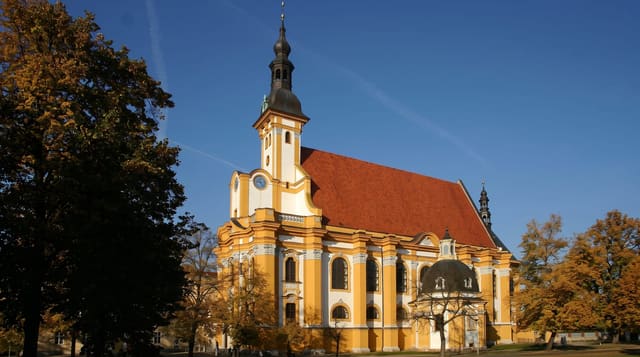
Birgitta Birgersdotter founded the order in the fourteenth century and left instructions for the church: plain, of grey stone, without unnecessary ornament, and that is what was built, consecrated in 1430 as a wide hall of pale limestone with almost nothing on the walls. Her relics are kept in a reliquary here. The abbey was the largest religious house in medieval Sweden and its scriptorium a centre of book production; the reformation closed it, and a Birgittine community returned only in the twentieth century. The monastery buildings and the castle Gustav Vasa built beside the lake are within a few minutes' walk, and the town keeps its medieval street plan.
Background
Saint Bridget founded the abbey in 1346 with help from King Magnus IV and Queen Blanche, whose will gave it ten farms, Vadstena among them. Her daughter, Saint Catherine, arrived in 1374 bringing her mother's relics, and the Bishop of Linköping blessed the abbey in 1384. A first wooden church burned in 1388. The community was a double monastery of 25 monks and 60 nuns, ran a hospital and retirement home recorded from 1401, and served as motherhouse of the order until 1595. The last Bridgettine nun died in 1605. In summer the church now receives between 2500 and 3000 pilgrims a day, and the Feast of Saint Bridget is kept each July 23 with a procession.
Source: Wikipedia, "Vadstena Abbey"
What you'll find
- A plain limestone hall of 1430 - built to Birgitta's own specification.
- Birgitta's relics - in a reliquary in the church.
- Medieval monastery buildings - around the church.
- A town on its medieval plan - within a short walk.
When to go
May to September for full access. Two hours.
Good to know
The interior is deliberately bare, which disappoints people expecting decoration. Parts are used by the religious community and closed. Winter opening is short. Vadstena is small and quiet out of season.
Nearby
Vadstena castle is by the lake; Omberg and Alvastra are south.
Key facts
Source: Wikidata, item Q513949, read on 18 October 2026.
What to pack for Vadstena Abbey
Chosen from what this place is for. Tap a kit for the full checklist.
- Comfortable walking shoes - Sightseeing means kilometres of pavement and cobbles daily. Find on Amazon
- Modest clothing - Shoulders and knees covered - the single most common requirement. Find on Amazon
- A slim anti-theft daypack - Zips that close properly; keep it in front in crowds and on transit. Find on Amazon
- A scarf or shawl - To cover the head or shoulders on entry; women especially at mosques. Find on Amazon
Some links on this page are Amazon affiliate links - if you buy through them we may earn a small commission at no extra cost to you.
All packing kitsPlan your trip
Where to start if Vadstena Abbey is going on the list.
Booking links on this page are affiliate links - if you book through them we may earn a small commission at no extra cost to you. It never changes what we write about a place.
Opening times, ticket prices and seasonal closures change - check the official source before you go: official site.