Lund Cathedral
A Romanesque sandstone cathedral of about 1145 with a fifteenth-century astronomical clock that plays twice a day.
Updated 16 October 2026
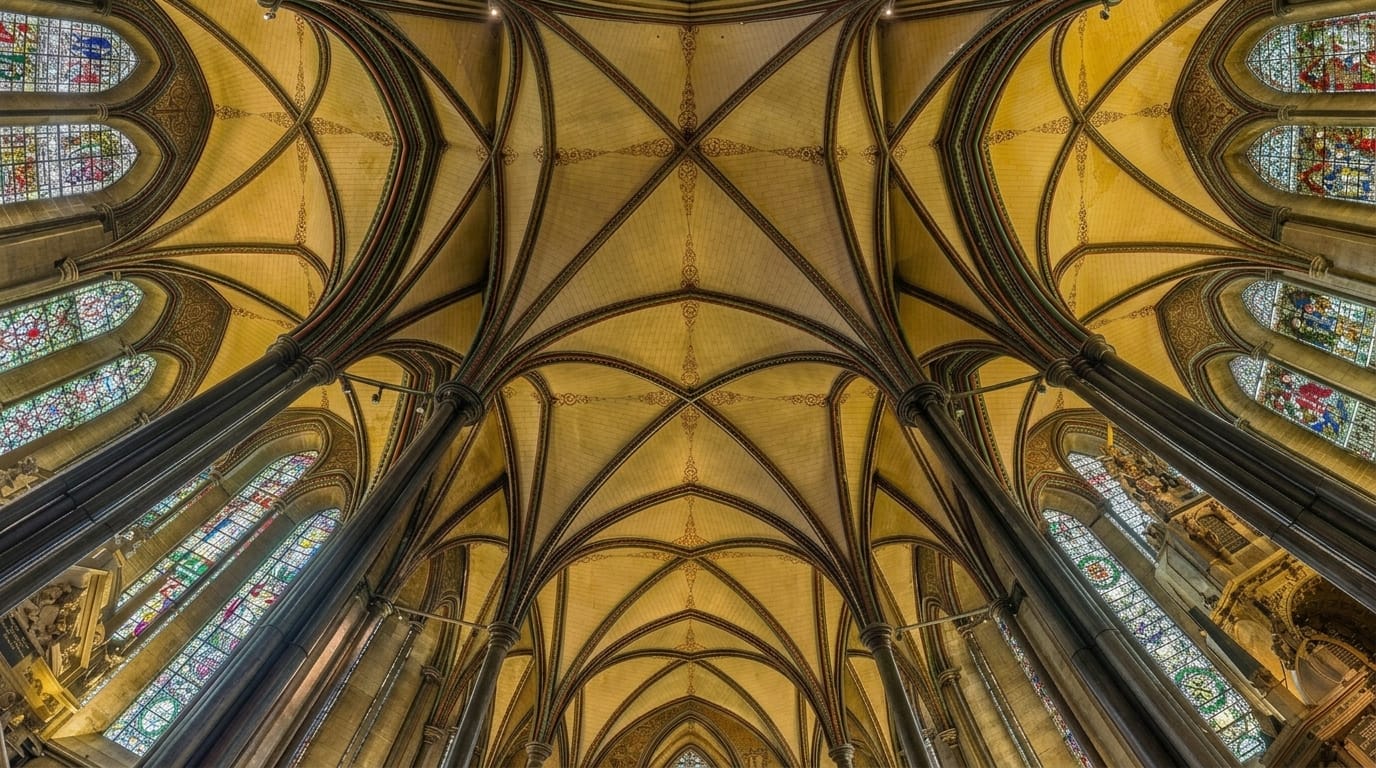
Lund was the archbishopric for the whole Nordic region when this was built, and the cathedral consecrated in 1145 is the most substantial Romanesque building in Sweden - two square west towers, an apsed east end, and a crypt of heavy columns underneath, one of which carries the carved figure people call Finn the Giant, with a folk story attached about the man who built the church. The astronomical clock in the north aisle dates from about 1425, was dismantled in the nineteenth century and reassembled in 1923; it runs a procession of figures and plays at midday and three in the afternoon on weekdays. Zettervall restored the exterior heavily in the 1860s and 70s.
Background
Lund Cathedral is now the seat of the Bishop of Lund in the Church of Sweden, but it was built as the Catholic cathedral of the archbishopric for all the Nordic countries and dedicated to Saint Lawrence. The crypt was consecrated on 30 June 1123 and the main altar on 1 September 1145, and its style shows the influence of north Italian building carried via the Rhine valley. A fire badly damaged it in 1234, Adam van Düren restored it in the early 16th century, and in the 19th century Helgo Zettervall rebuilt the whole western part with its towers, a work only finished in 1893. The church is 85 metres long, and its main altarpiece was given in 1398.
Source: Wikipedia, "Lund Cathedral"
What to look for
- A Romanesque cathedral of 1145 - the most substantial in Sweden.
- The crypt - heavy columns, and the carving called Finn the Giant.
- An astronomical clock of about 1425 - with figures, twice daily.
- Zettervall's exterior restoration - much of what you see outside.
When to go
Year round; time a visit for the clock. An hour.
Good to know
The clock performance is brief and draws a crowd. Services close the building. Much of the exterior is nineteenth-century recutting. The interior is austere.
Nearby
Kulturen open-air museum is a short walk; Malmo is south.
Key facts
Source: Wikidata, item Q1236689, read on 18 October 2026.
What to pack for Lund Cathedral
Chosen from what this place is for. Tap a kit for the full checklist.
- Comfortable walking shoes - Sightseeing means kilometres of pavement and cobbles daily. Find on Amazon
- Modest clothing - Shoulders and knees covered - the single most common requirement. Find on Amazon
- A slim anti-theft daypack - Zips that close properly; keep it in front in crowds and on transit. Find on Amazon
- A scarf or shawl - To cover the head or shoulders on entry; women especially at mosques. Find on Amazon
Some links on this page are Amazon affiliate links - if you buy through them we may earn a small commission at no extra cost to you.
All packing kitsPlan your trip
Where to start if Lund Cathedral is going on the list.
Booking links on this page are affiliate links - if you book through them we may earn a small commission at no extra cost to you. It never changes what we write about a place.
Opening times, ticket prices and seasonal closures change - check the official source before you go: official site.