Kristianopel
A tiny walled village on the Kalmar strait, founded by a Danish king in 1603 as a border town and never grown.
Updated 20 October 2026
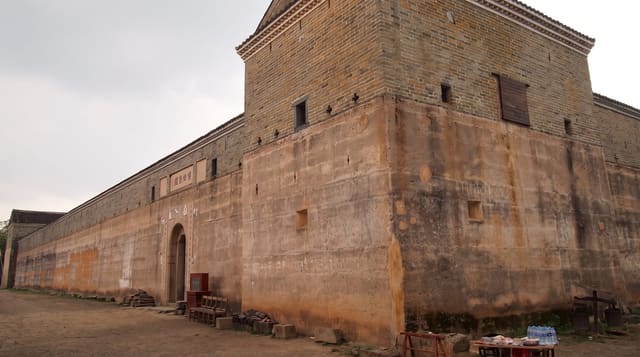
Christian IV of Denmark founded Kristianopel in 1603 on the border with Sweden, naming it after his newborn son, and fortified it with a bastioned wall, intending a town that would hold the frontier and trade on the strait. It was stormed and burned in 1611, rebuilt, and lost its importance entirely when Blekinge became Swedish in 1658 - after which nothing much happened, which is why the seventeenth-century plan is still legible. What stands is a stretch of the rampart, the church of 1618 inside it, a grid of small streets and perhaps a hundred residents. In summer the harbour fills with boats and there is a guesthouse, a bakery and a rose garden along the wall.
What's there
- A stretch of bastioned rampart - from the Danish founding of 1603.
- The church of 1618 - inside the walls.
- A seventeenth-century street grid - preserved by the town's failure.
- A small harbour - busy in summer, empty otherwise.
When to go
June to August, when the village is open. Two hours.
Good to know
It is very small - an hour or two covers it. Almost everything closes outside summer. Parking is tight in season. There is no museum.
Nearby
Karlskrona is south-west; Kalmar is north.
Key facts
Source: Wikidata, item Q174593, read on 18 October 2026.
What to pack for Kristianopel
Chosen from what this place is for. Tap a kit for the full checklist.
- Comfortable walking shoes - Sightseeing means kilometres of pavement and cobbles daily. Find on Amazon
- A slim anti-theft daypack - Zips that close properly; keep it in front in crowds and on transit. Find on Amazon
- A refillable water bottle - Many cities have public fountains; save money and plastic. Find on Amazon
- A light layer + compact umbrella - For museum air-con and a sudden shower. Find on Amazon
Some links on this page are Amazon affiliate links - if you buy through them we may earn a small commission at no extra cost to you.
All packing kitsPlan your trip
Where to start if Kristianopel is going on the list.
Booking links on this page are affiliate links - if you book through them we may earn a small commission at no extra cost to you. It never changes what we write about a place.
Opening times, ticket prices and seasonal closures change - check the official source before you go: official site.