Stora Alvaret
An almost treeless limestone plain covering much of southern Oland, grazed for five thousand years and listed by UNESCO.
Updated 21 October 2026
UNESCO World Heritage
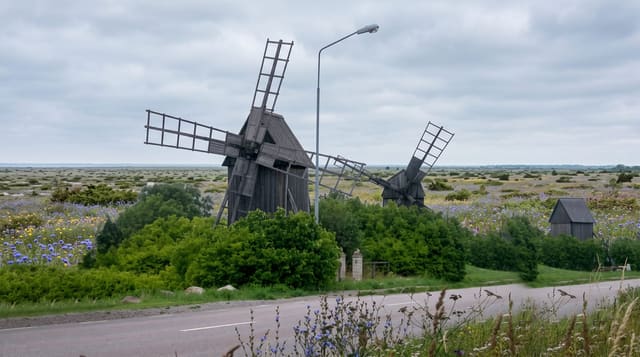
The alvar is limestone bedrock with almost no soil over it - a few centimetres in places, bare rock in others - which means only a few stunted trees take hold, and the result is around two hundred and sixty square kilometres of open steppe-like ground unlike anything else in northern Europe. Grazing has kept it open since the Stone Age and continues; without stock it would scrub over. The flora is the reason people come: orchids, rock-rose, and species otherwise found in the Alps or on the steppe, flowering in a short burst in late May and June. The southern Oland agricultural landscape as a whole is on the World Heritage list for this continuity of use.
Highlights
- Bare limestone with almost no soil - which keeps the few trees small and stunted.
- Around 260 square kilometres of open ground - grazed since the Stone Age.
- Orchids and steppe species - flowering in late May and June.
- A listed farmed landscape - the whole of southern Oland.
When to go
Late May to June for the flowering. Half a day.
Before you go
Outside the flowering weeks it reads as a flat empty plain. There is no shade or shelter. Walking on the alvar is rough and wet in spring. It is grazing land - stock and fences are everywhere.
Nearby
Eketorp fortress is south; Morbylanga is on the west coast.
Key facts
Source: Wikidata, item Q202816, read on 18 October 2026.
What to pack for Stora Alvaret
Chosen from what this place is for. Tap a kit for the full checklist.
- Broken-in walking shoes or boots - Grip and ankle support matter more than looks; never hike in brand-new boots. Find on Amazon
- Layers + a waterproof shell - Mountain weather turns fast; a packable rain jacket saves the day. Find on Amazon
- Daypack with rain cover - 20-30 litres holds water, snacks, layers and a first-aid kit. Find on Amazon
- Offline maps + a power bank - Download the trail before you lose signal; carry backup charge. Find on Amazon
Some links on this page are Amazon affiliate links - if you buy through them we may earn a small commission at no extra cost to you.
All packing kitsPlan your trip
Where to start if Stora Alvaret is going on the list.
Booking links on this page are affiliate links - if you book through them we may earn a small commission at no extra cost to you. It never changes what we write about a place.
Opening times, ticket prices and seasonal closures change - check the official source before you go: official site.