Suakin
The coral city of the Red Sea - Ottoman-era merchant houses of reef stone dissolving on their island, gateway of pilgrims and pearls.
Updated 16 October 2026
AI illustration
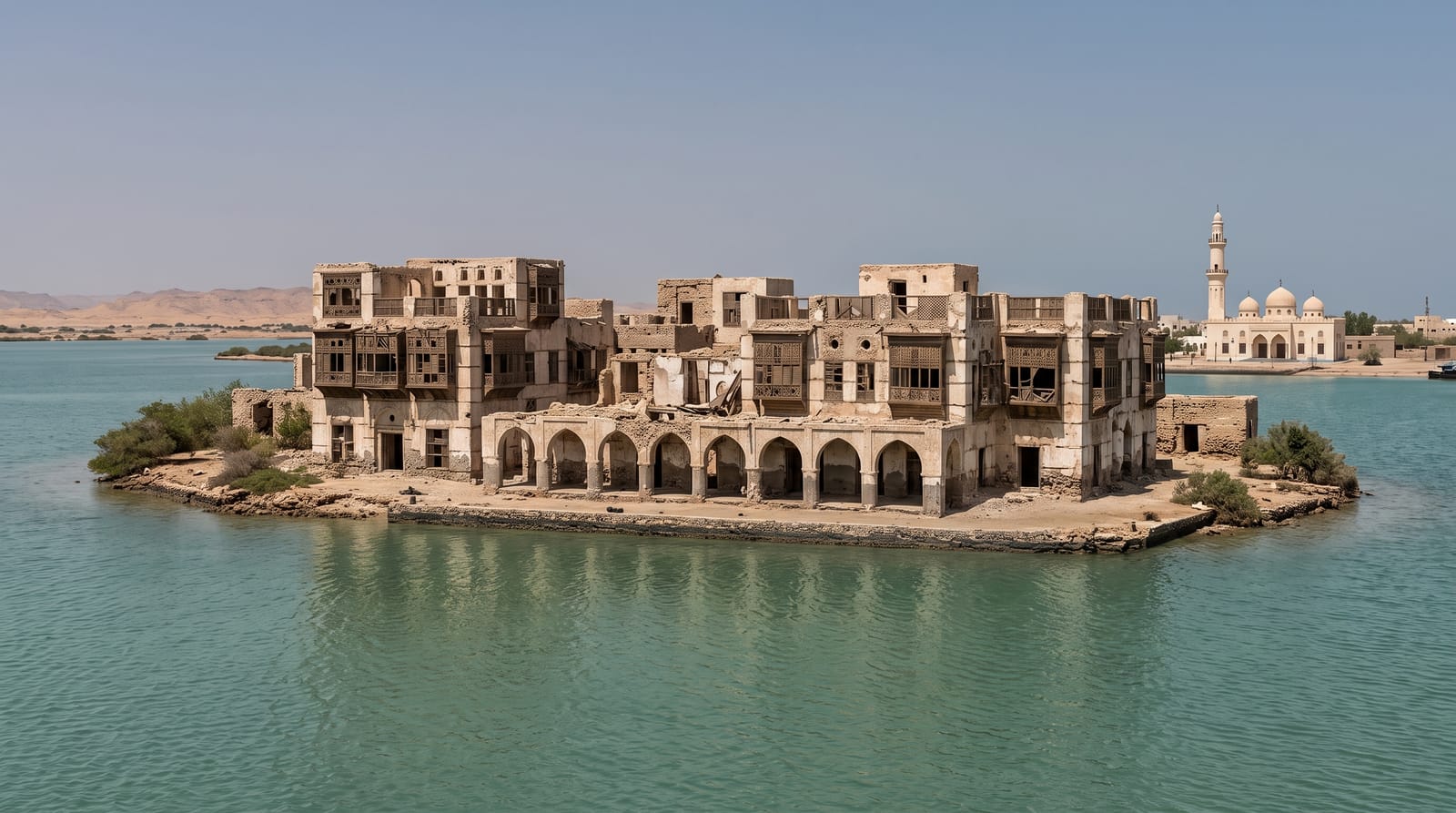
Suakin traded and ferried pilgrims for centuries as the Red Sea's coral-built jewel: its island core, ringed by a natural harbour, raised merchant houses, mosques and customs halls entirely from reef limestone - coral blocks carved into roshan balconies and arched facades - until Port Sudan's founding drew the trade north and the city began its long dissolve. What remains is elegy in coral: standing facades and collapsing courts on the island (restoration works have steadied portions), the Ottoman gateway on the mainland side, and fishing boats working a harbour that once berthed the Hejaz ferries. Flamingos and mangroves edge the lagoons around.
Background
The Beja name for the town is Oosook. Al-Hamdani named it in the 10th century and described it as an ancient town even then, and Venetian merchants were living there as early as the 14th century. In the medieval period the coral town was regarded as the height of luxury on the Red Sea. Late 19th century Admiralty charts spelled it "Sauakin", while the popular press mostly wrote "Suakim". Once the chief port of the region, it now ranks behind Port Sudan, about 50 kilometres to the north. The Geyf, the historic mainland town beside the old city, had 18,030 people in 1983, and the 2008 census counted 82,150 in Suakin. Daily ferries sail to Jeddah.
Source: Wikipedia, "Suakin"
Highlights
- The coral facades - reef-stone houses and their carved balconies.
- The island circuit - the harbour-ringed old city's elegy.
- The Ottoman gate - the mainland approach's survivor.
- The working harbour - fishing boats where pilgrim ships berthed.
When to go
November to February for the coast's kind months. Arrange the trip through specialist local operators.
Before you go
On the island: ruins are genuinely unstable - thresholds, not interiors; restoration areas follow their own access rules. The poignancy is the point - Suakin is heritage in the act of leaving.
Nearby
Port Sudan and the Sanganeb reef offshore.
What to pack for Suakin
Chosen from what this place is for. Tap a kit for the full checklist.
- Travel rod + reel - A packable multi-piece rod fits in a case and covers most holiday fishing. Find on Amazon
- Reef-safe sunscreen - High SPF that will not bleach the coral you are swimming over. Find on Amazon
- Comfortable walking shoes - Sightseeing means kilometres of pavement and cobbles daily. Find on Amazon
- Modest clothing - Shoulders and knees covered - the single most common requirement. Find on Amazon
Some links on this page are Amazon affiliate links - if you buy through them we may earn a small commission at no extra cost to you.
All packing kitsPlan your trip
Where to start if Suakin is going on the list.
Booking links on this page are affiliate links - if you book through them we may earn a small commission at no extra cost to you. It never changes what we write about a place.
Opening times, ticket prices and seasonal closures change - check the official source before you go: official site.