The Pyramids of Meroë
More pyramids than Egypt - the astonishing Pyramids of Meroë, a UNESCO World Heritage site where scores of steep, slender royal pyramids of the ancient Kushite kingdom rise from golden desert dunes, one of Africa's great and least-crowded wonders.
Updated 18 October 2026
AI illustration
UNESCO World Heritage
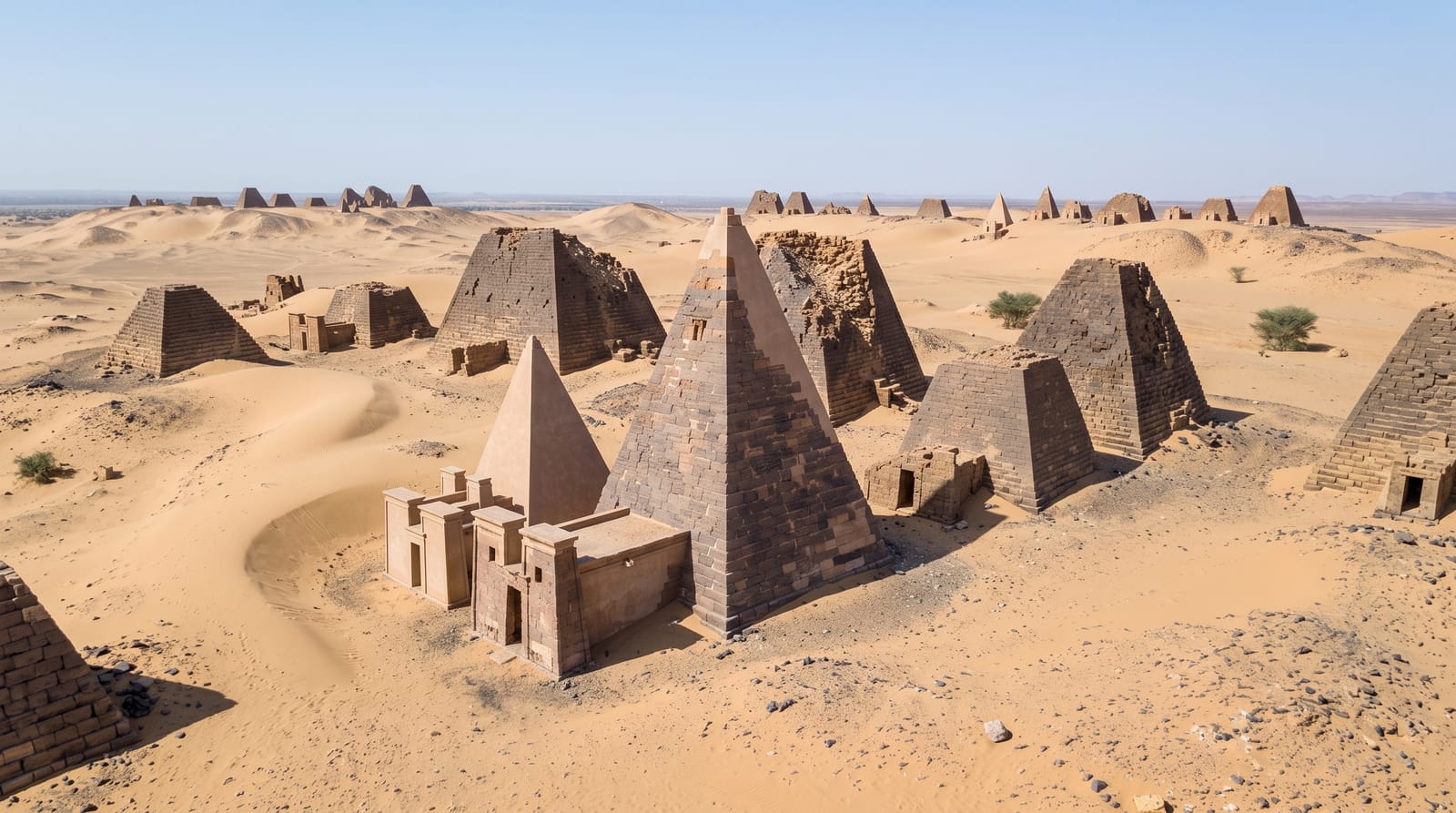
The Pyramids of Meroë, rising from the golden dunes of the Nubian desert in northeastern Sudan, are one of the most astonishing and least-known ancient wonders on earth, a UNESCO World Heritage site. Here, along the Nile, the powerful Kushite kingdom of Meroë raised more pyramids than exist in all of Egypt, scores of steep, slender royal tombs clustered on the desert ridges, smaller but no less striking than their northern cousins. Adorned with chapels and reliefs, they mark the burials of the kings and queens of a great Black African civilisation that rivalled and outlasted pharaonic Egypt. Set amid rippling sands and near silent, Meroë is a place of extraordinary beauty and mystery.
History
Around 270 BC the royal burials of Kush moved here from the Napata region, and the three cemeteries hold the tombs of the later kingdom, from about 300 BC to around 300 AD: kings, queens, other members of the royal family and high officials, laid in pyramids of local sandstone and later of brick, none taller than 30 metres. The Kushite elite took much from Egypt, including burial in pyramids with mortuary temples and belief in an afterlife, with Osiris as the chief funerary god and Isis and Anubis invoked in requests for bread and water for eternity (Wikipedia, Pyramids of Meroë).
What to look for
- The royal pyramids - the scores of steep, slender Kushite tombs.
- The desert dunes - the golden sands rippling around them.
- The chapels and reliefs - the carved offering chapels.
- The wider site - the ancient city and temples nearby.
When to go
November to February, the cool dry season, is the most comfortable time in the desert, avoiding the intense heat; the pyramids are at their most magical in the golden light of early morning and late afternoon, when the sands glow and the tombs cast long shadows. Winter nights are cool and clear.
Practical notes
Meroë lies in the desert some distance from the capital and takes effort to reach, with modest facilities, though this is part of its magic, as visitors often have the pyramids almost to themselves. As a UNESCO World Heritage site with more pyramids than all of Egypt, rising from golden dunes in near silence, though, Meroë is one of the most beautiful and rewarding ancient wonders on earth.
Nearby
The ancient sites of Naqa and Musawwarat lie in the surrounding desert.
Key facts
Source: Wikidata, item Q456939, read on 18 October 2026.
What to pack for The Pyramids of Meroë
Chosen from what this place is for. Tap a kit for the full checklist.
- Loose, light, long clothing - Covering up beats bare skin in the desert - and locals dress this way for a reason. Find on Amazon
- Comfortable walking shoes - Sightseeing means kilometres of pavement and cobbles daily. Find on Amazon
- Modest clothing - Shoulders and knees covered - the single most common requirement. Find on Amazon
- A wide-brim hat + sunglasses - Shade for your face and eyes where there is none overhead. Find on Amazon
Some links on this page are Amazon affiliate links - if you buy through them we may earn a small commission at no extra cost to you.
All packing kitsPlan your trip
Where to start if The Pyramids of Meroë is going on the list.
Booking links on this page are affiliate links - if you book through them we may earn a small commission at no extra cost to you. It never changes what we write about a place.
Opening times, ticket prices and seasonal closures change - check the official source before you go: official site.