Urdaibai Biosphere Reserve
A Basque estuary of marshes and sandbanks holding migrating birds, a famous surf wave and a hermitage on a rock island.
Updated 21 October 2026

AI illustration
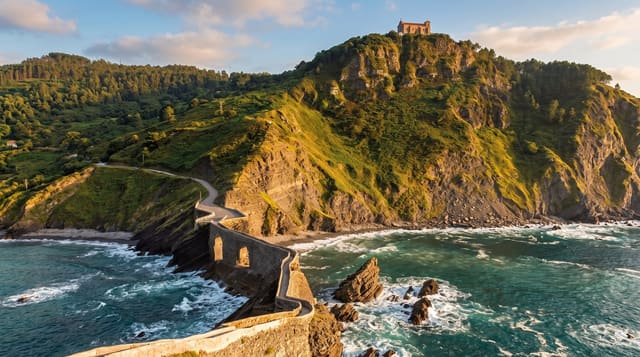
Urdaibai is the estuary of the Oka, declared a biosphere reserve by UNESCO in 1984, covering about 220 square kilometres of tidal marsh, sandbank, holm oak wood and cliff between Gernika and the sea. The marshes are a major stopover on the Atlantic migration route, with a bird centre at the old Orueta school; some 615 species of vascular plants and 318 of vertebrates, 245 of them birds, have been recorded, and the Santimamine cave holds finds from the Middle Palaeolithic to the Iron Age. At the estuary mouth, the sandbar off Mundaka produces a long left-hand wave that is among the best known in Europe and has hosted world tour events, though it depends on the sand and has failed in some years. San Juan de Gaztelugatxe, an islet reached by a stone causeway and 241 steps to a hermitage, lies just outside the reserve and requires booked entry. Gernika, at the head, holds the Basque assembly oak.
What you'll find
- The tidal marshes - migration stopover habitat at the head of the estuary.
- The Mundaka wave - a long left-hander off the sandbar at the mouth.
- Gaztelugatxe - a causeway and 241 steps to an islet hermitage nearby.
- The Gernika oak - the tree under which Basque assemblies met.
When to go
April to June and September to November for birds and mild weather; the Mundaka wave works best from autumn to spring with the right swell and sand. Gaztelugatxe requires free booked tickets with a daily cap.
Things to know
Gaztelugatxe access is capped and must be booked in advance, with the steps steep and exposed. The Mundaka wave is inconsistent and has disappeared for whole seasons after dredging changed the sandbar. Rain is frequent.
Nearby
Gernika and its peace museum are at the head; Bermeo and the coast lie north.
Key facts
Source: Wikidata, item Q3118982, read on 18 October 2026.
What to pack for Urdaibai Biosphere Reserve
Chosen from what this place is for. Tap a kit for the full checklist.
- Broken-in walking shoes or boots - Grip and ankle support matter more than looks; never hike in brand-new boots. Find on Amazon
- Quick-dry clothing - Board shorts or synthetics that shrug off spray and dry fast. Find on Amazon
- Head torch + spare batteries - Hands-free light is essential; caves are truly dark. Find on Amazon
- Layers + a waterproof shell - Mountain weather turns fast; a packable rain jacket saves the day. Find on Amazon
Some links on this page are Amazon affiliate links - if you buy through them we may earn a small commission at no extra cost to you.
All packing kitsPlan your trip
Where to start if Urdaibai Biosphere Reserve is going on the list.
Booking links on this page are affiliate links - if you book through them we may earn a small commission at no extra cost to you. It never changes what we write about a place.
Opening times, ticket prices and seasonal closures change - check the official source before you go: official site.