Plaza de Toros de la Maestranza
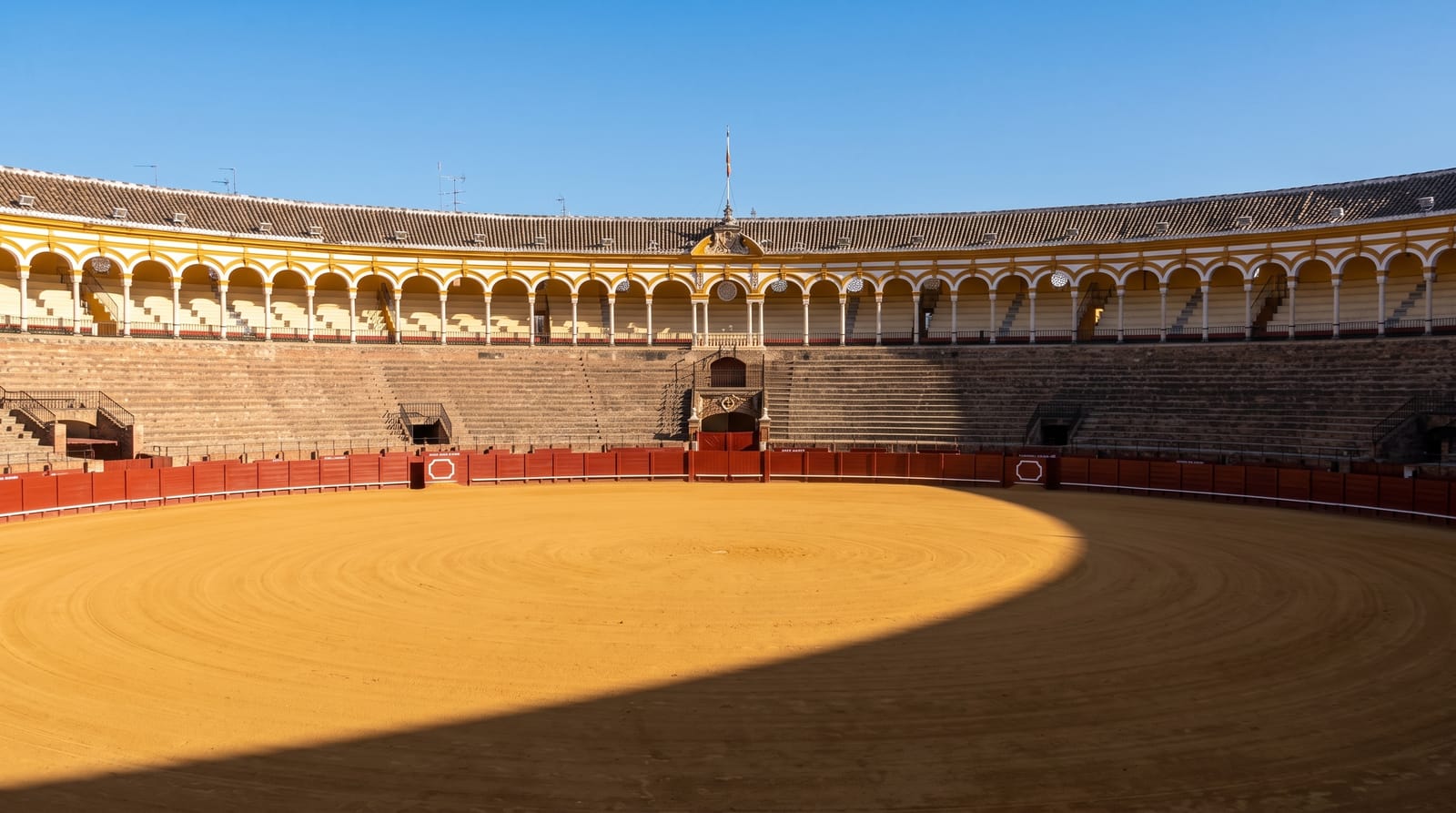
Seville's eighteenth-century bullring on the riverside, an oval of white and ochre arcades with a museum inside.
Updated 4 September 2026
AI illustration
The Real Maestranza was begun in 1749 and took over a century to complete, which is why its plan is an irregular oval rather than a circle, and it is one of the oldest and most important bullrings in Spain, holding around twelve thousand people. The building is worth seeing as architecture: white and ochre arcades, a baroque royal box with a canopy of Portuguese marble, and a chapel and infirmary behind the ring where matadors prepare. Guided tours run when there is no event, taking visitors through the arena, the stands, the chapel and a museum of posters, costumes and paintings. Bullfighting is legal in Andalusia and the season runs from April, opening with the Feria de Abril corridas.
The main sights
- The oval arena - an irregular ring built over more than a century.
- The royal box - a baroque canopy in Portuguese marble.
- The chapel and infirmary - the rooms matadors use before entering.
- The museum - posters, costumes and paintings from the ring's history.
When to go
Year-round for tours, which run daily when no bullfight is scheduled; the season runs from April to October with the Feria de Abril the peak. Tours are shortened or cancelled on event days.
Practical notes
Bullfighting is contested, and many visitors find touring a functioning bullring uncomfortable regardless of whether they attend a corrida; the tour presents the tradition without engaging with the objections. Tours are guided only, at set times, in Spanish and English.
Nearby
The Torre del Oro is alongside on the river; the cathedral and Triana are minutes away.
What to pack for Plaza de Toros de la Maestranza
Chosen from what this place is for. Tap a kit for the full checklist.
- Comfortable walking shoes - Sightseeing means kilometres of pavement and cobbles daily. Find on Amazon
- Modest clothing - Shoulders and knees covered - the single most common requirement. Find on Amazon
- A slim anti-theft daypack - Zips that close properly; keep it in front in crowds and on transit. Find on Amazon
- A scarf or shawl - To cover the head or shoulders on entry; women especially at mosques. Find on Amazon
Some links on this page are Amazon affiliate links - if you buy through them we may earn a small commission at no extra cost to you.
All packing kitsPlan your trip
Where to start if Plaza de Toros de la Maestranza is going on the list.
Booking links on this page are affiliate links - if you book through them we may earn a small commission at no extra cost to you. It never changes what we write about a place.
Opening times, ticket prices and seasonal closures change - check the official source before you go: official site.