Carmona
A hilltop town east of Seville with Roman gates, a large Roman necropolis and Moorish walls above the Guadalquivir plain.
Updated 4 September 2026
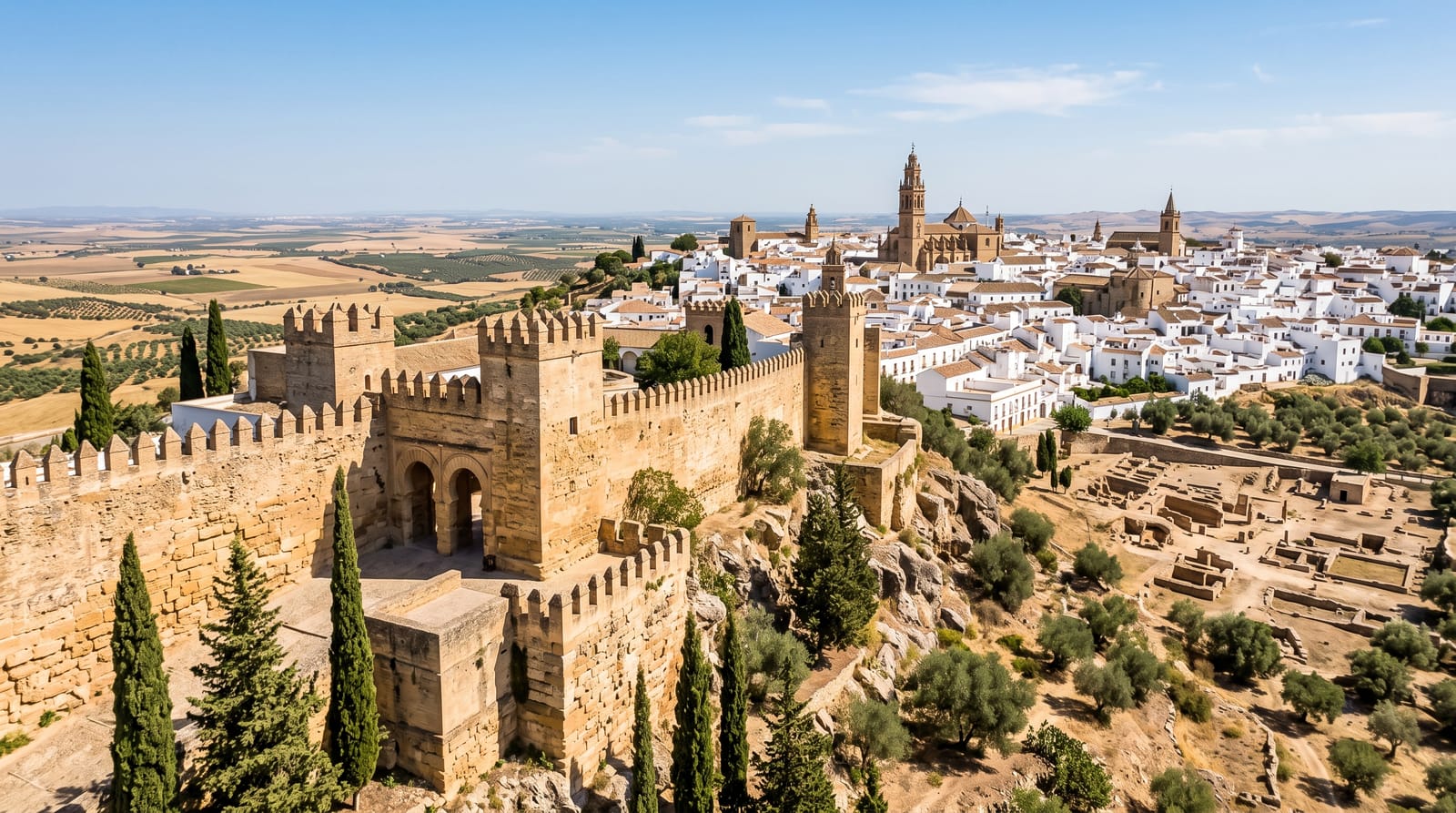
AI illustration
Carmona stands on a ridge above the Guadalquivir plain and has been fortified since Carthaginian times, with Julius Caesar calling it the strongest town in the province. Two Roman gates survive in the walls: the Puerta de Sevilla, incorporated into a later Moorish and Christian fortification, and the Puerta de Cordoba with its Roman arch. Outside the walls lies the necropolis, a Roman burial ground of the first centuries BC and AD with hundreds of tombs cut into the rock, including chambered family vaults with painted walls, the Tomb of the Elephant and the large Servilia tomb. The town above holds Mudejar churches, convents and the Alcazar del Rey Don Pedro, part of which is now a parador.
Highlights
- The Roman necropolis - hundreds of rock-cut tombs including painted chambers.
- The Puerta de Sevilla - a Roman gate inside a later fortress.
- The Puerta de Cordoba - a Roman arch on the eastern walls.
- The Alcazar - a royal fortress above the plain, partly a parador.
When to go
Spring and autumn; the plain below is green in spring and the town is severely hot in July and August. The necropolis closes on Mondays and shuts early in summer afternoons.
Practical notes
The necropolis is exposed with almost no shade. Several churches and convents keep short irregular hours. Parking within the walls is difficult and most visitors leave cars outside.
Nearby
Seville lies thirty-three kilometres west; Ecija and Osuna are further east.
What to pack for Carmona
Chosen from what this place is for. Tap a kit for the full checklist.
- Comfortable walking shoes - Sightseeing means kilometres of pavement and cobbles daily. Find on Amazon
- A slim anti-theft daypack - Zips that close properly; keep it in front in crowds and on transit. Find on Amazon
- A refillable water bottle - Many cities have public fountains; save money and plastic. Find on Amazon
- A light layer + compact umbrella - For museum air-con and a sudden shower. Find on Amazon
Some links on this page are Amazon affiliate links - if you buy through them we may earn a small commission at no extra cost to you.
All packing kitsPlan your trip
Where to start if Carmona is going on the list.
Booking links on this page are affiliate links - if you book through them we may earn a small commission at no extra cost to you. It never changes what we write about a place.
Opening times, ticket prices and seasonal closures change - check the official source before you go: official site.