Casa de Pilatos
A sixteenth-century Seville palace mixing Mudejar tilework with Italian Renaissance sculpture, still owned by a ducal family.
Updated 4 September 2026
AI illustration
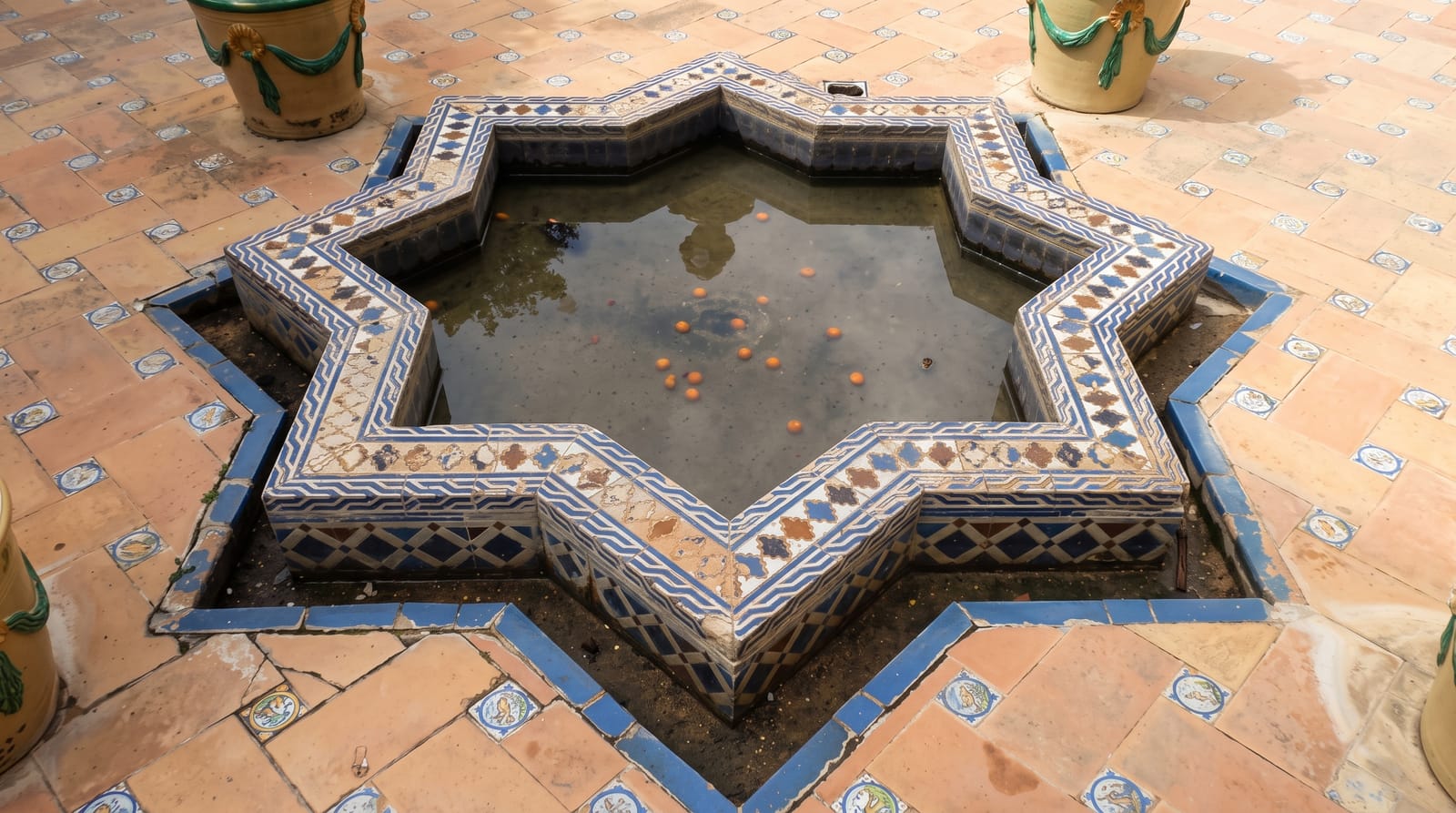
The Casa de Pilatos was built from the late fifteenth century and completed by Fadrique Enriquez de Ribera after a pilgrimage to Jerusalem in 1519, which is where the tradition connecting it to Pilate's house comes from, though the link is decorative rather than historical. The result combines two idioms: Mudejar craftsmanship in the plasterwork, coffered ceilings and around a hundred and fifty distinct patterns of azulejo tiling, and Italian Renaissance work in the marble fountain, the classical statuary Ribera collected, and the loggias. The main patio with its Genoese fountain and Roman busts is the set piece. The upper floor, still used by the Dukes of Medinaceli, is shown on guided tours and holds paintings and family collections.
Highlights
- The main patio - a Genoese marble fountain among Roman statuary.
- The azulejo tiling - around a hundred and fifty distinct sixteenth-century patterns.
- The Mudejar ceilings - coffered woodwork and carved plaster.
- The upper floor - the ducal apartments, shown by guided tour.
When to go
Spring and autumn; the courtyards and gardens are pleasant then, and summer heat makes the walk across the old town hard. The palace is less crowded than the Alcazar and rarely requires advance booking.
Things to know
The upper floor is accessible only on a timed guided tour at extra cost, and tours are limited. Parts close for family use and private events. The garden is small compared with the Alcazar's.
Nearby
Seville cathedral and the Alcazar are ten minutes west; Metropol Parasol lies north.
Key facts
Source: Wikidata, item Q1046529, read on 18 October 2026.
What to pack for Casa de Pilatos
Chosen from what this place is for. Tap a kit for the full checklist.
- Comfortable walking shoes - Sightseeing means kilometres of pavement and cobbles daily. Find on Amazon
- Modest clothing - Shoulders and knees covered - the single most common requirement. Find on Amazon
- A slim anti-theft daypack - Zips that close properly; keep it in front in crowds and on transit. Find on Amazon
- A scarf or shawl - To cover the head or shoulders on entry; women especially at mosques. Find on Amazon
Some links on this page are Amazon affiliate links - if you buy through them we may earn a small commission at no extra cost to you.
All packing kitsPlan your trip
Where to start if Casa de Pilatos is going on the list.
Booking links on this page are affiliate links - if you book through them we may earn a small commission at no extra cost to you. It never changes what we write about a place.
Opening times, ticket prices and seasonal closures change - check the official source before you go: official site.