Triana
Seville's quarter across the river, historically a barrio of potters, sailors and flamenco families with its own identity.
Updated 20 October 2026
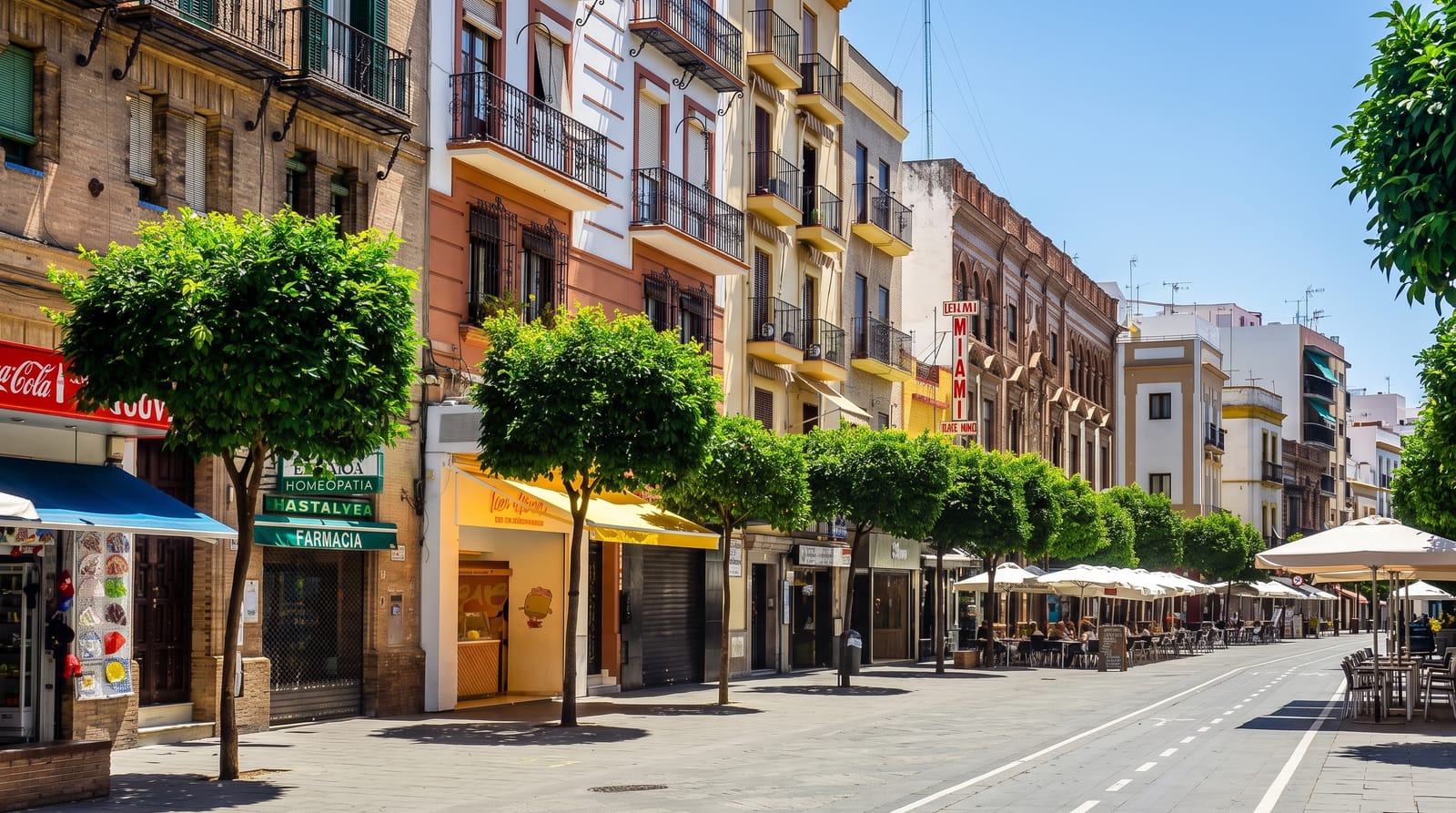
AI illustration
Triana sits across the Guadalquivir from central Seville, and it has always insisted on being separate: a barrio of ceramicists, sailors, bullfighters and flamenco families, home to a large Roma community until redevelopment in the 1970s dispersed much of it. Ceramics remain visible, with tile workshops along Calle San Jorge and the Centro Ceramica Triana built over old kilns, and the azulejos on the barrio's facades are made here. The Capilla de los Marineros holds the Esperanza de Triana, one of the two Virgins whose Holy Week rivalry divides the city. The Calle Betis riverfront faces the Torre del Oro, and the covered market occupies the site of the Castillo de San Jorge, once the seat of the Inquisition.
What to look for
- The ceramic workshops - tile production along Calle San Jorge.
- The Capilla de los Marineros - the chapel of the Esperanza de Triana.
- Calle Betis - a riverfront of bars facing the old city.
- The market and castle site - a covered market over the Inquisition's former seat.
When to go
Spring and autumn for the pleasantest walking; Holy Week brings the Esperanza procession, one of the most attended in Seville. Evenings on Calle Betis are the liveliest and busiest.
What to expect
The flamenco heritage is real but the barrio's Roma community was largely displaced decades ago, and much of what is presented to visitors is staged. Calle Betis is a tourist strip with prices to match. The quarter is small and walked in a couple of hours.
Nearby
Central Seville is across the bridge; the Torre del Oro and cathedral face the quarter from the far bank.
Key facts
Source: Wikidata, item Q957828, read on 18 October 2026.
What to pack for Triana
Chosen from what this place is for. Tap a kit for the full checklist.
- Comfortable walking shoes - Sightseeing means kilometres of pavement and cobbles daily. Find on Amazon
- Modest clothing - Shoulders and knees covered - the single most common requirement. Find on Amazon
- A slim anti-theft daypack - Zips that close properly; keep it in front in crowds and on transit. Find on Amazon
- A scarf or shawl - To cover the head or shoulders on entry; women especially at mosques. Find on Amazon
Some links on this page are Amazon affiliate links - if you buy through them we may earn a small commission at no extra cost to you.
All packing kitsPlan your trip
Where to start if Triana is going on the list.
Booking links on this page are affiliate links - if you book through them we may earn a small commission at no extra cost to you. It never changes what we write about a place.
Opening times, ticket prices and seasonal closures change - check the official source before you go: official site.