Montseny
A misty massif north of Barcelona where beech and fir grow at Mediterranean latitude, protected as a biosphere reserve.
Updated 21 October 2026
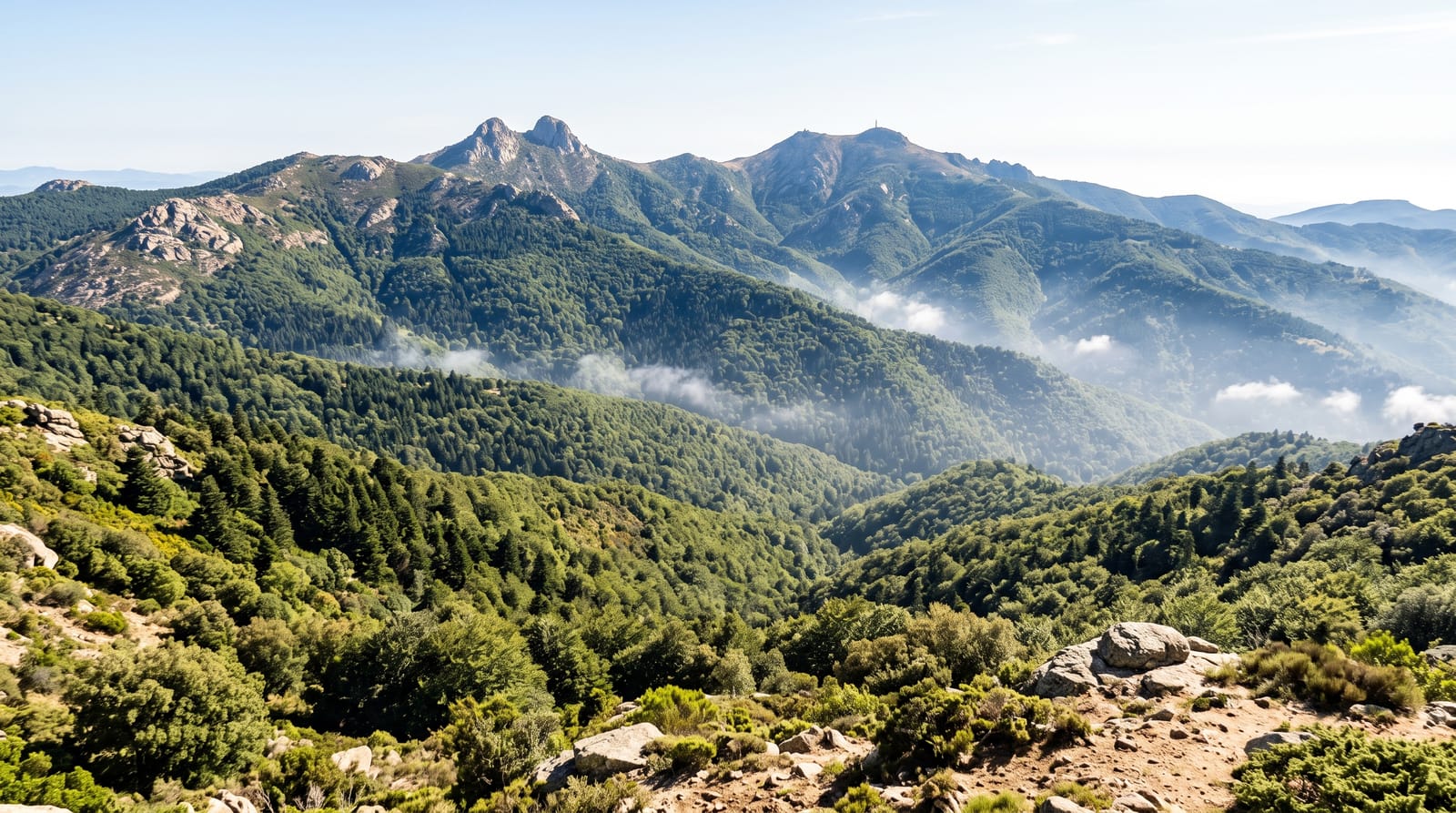
AI illustration
Montseny rises to 1,706 metres at Turo de l'Home, and its height in a Mediterranean setting produces a stack of vegetation zones within a short distance: holm oak and cork at the bottom, chestnut and beech in the middle, and at the top a relict fir forest and moorland that belong to central Europe rather than Catalonia, survivors from colder periods. It became a biosphere reserve in 1978, among the first in Spain, and the park covers about 301 square kilometres. Mist is frequent on the upper slopes, which is why the beech does well. The massif holds an endemic newt described only in 2005, the Montseny brook newt, the only vertebrate endemic to Catalonia and one of the most endangered amphibians in Europe. Santa Fe del Montseny, Viladrau and the Sant Marcal pass are the usual bases.
What's there
- The vegetation zones - holm oak to beech to relict fir within a few kilometres.
- The beech forest - central European woodland at Mediterranean latitude.
- Turo de l'Home - the highest point at 1,706 metres.
- The frequent mist - cloud on the upper slopes that sustains the forest.
When to go
April to June for flowers and green, October to November for beech colour, which draws heavy weekend traffic. Winter brings snow to the tops and the roads can be difficult.
What to expect
Autumn weekends bring severe congestion on the narrow mountain roads, with parking quotas and closures at popular points. Mist can remove views entirely. The massif is inhabited and farmed rather than wild.
Nearby
Viladrau and Santa Fe are within the park; Barcelona lies fifty kilometres south.
What to pack for Montseny
Chosen from what this place is for. Tap a kit for the full checklist.
- Broken-in walking shoes or boots - Grip and ankle support matter more than looks; never hike in brand-new boots. Find on Amazon
- Warm base layers - Merino or synthetic against the skin - never cotton, which chills when damp. Find on Amazon
- Layers + a waterproof shell - Mountain weather turns fast; a packable rain jacket saves the day. Find on Amazon
- An insulated + windproof jacket - A down or synthetic layer under a hard shell handles most cold. Find on Amazon
Some links on this page are Amazon affiliate links - if you buy through them we may earn a small commission at no extra cost to you.
All packing kitsPlan your trip
Where to start if Montseny is going on the list.
Booking links on this page are affiliate links - if you book through them we may earn a small commission at no extra cost to you. It never changes what we write about a place.
Opening times, ticket prices and seasonal closures change - check the official source before you go: official site.