La Rabida Monastery
A Franciscan friary near Huelva where Columbus stayed and argued his case before the 1492 voyage.
Updated 12 October 2026

AI illustration
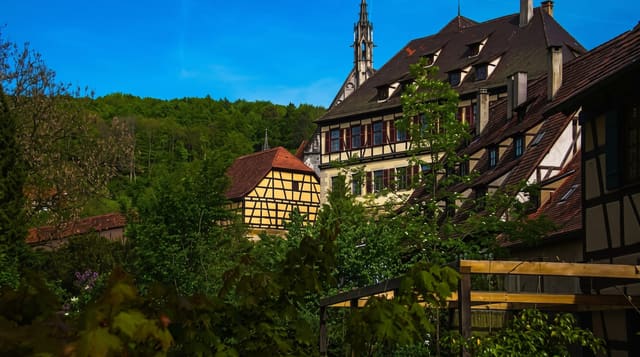
La Rabida is a fifteenth-century Franciscan friary above the Tinto estuary, and its place in history rests on the years around 1490 when Columbus, rejected at court, stayed here with his son and found supporters among the friars, notably Juan Perez and Antonio de Marchena, who had the queen's ear and helped reopen his case. The building is modest Mudejar work with a small cloister, a chapel holding a fourteenth-century Virgin before which the crews prayed, and frescoes by Daniel Vazquez Diaz painted in 1930 on the voyages. Nearby at the Muelle de las Carabelas, replicas of the Santa Maria, Pinta and Nina are moored and can be boarded, and Palos, where the ships sailed from, is a short drive.
What's there
- The Mudejar cloister - a small fifteenth-century courtyard.
- The Virgin of the Miracles - the fourteenth-century image the crews prayed before.
- The Vazquez Diaz frescoes - 1930 murals on the voyages.
- The ship replicas - the three caravels moored at the nearby quay.
When to go
Spring and autumn; Huelva is hot in summer with little shade at the quay. The monastery keeps a long midday closure and shuts on Mondays, and the caravel quay has separate hours and tickets.
Things to know
The monastery is small and the visit takes about an hour. Access to parts is by guided tour only. The caravel replicas are a separate site with its own ticket, and they are modern reconstructions of debated accuracy.
Nearby
Palos de la Frontera and Moguer are close; Huelva and the Odiel marshes lie north.
Key facts
Source: Wikidata, item Q2580841, read on 18 October 2026.
What to pack for La Rabida Monastery
Chosen from what this place is for. Tap a kit for the full checklist.
- Comfortable walking shoes - Sightseeing means kilometres of pavement and cobbles daily. Find on Amazon
- Modest clothing - Shoulders and knees covered - the single most common requirement. Find on Amazon
- A slim anti-theft daypack - Zips that close properly; keep it in front in crowds and on transit. Find on Amazon
- A scarf or shawl - To cover the head or shoulders on entry; women especially at mosques. Find on Amazon
Some links on this page are Amazon affiliate links - if you buy through them we may earn a small commission at no extra cost to you.
All packing kitsPlan your trip
Where to start if La Rabida Monastery is going on the list.
Booking links on this page are affiliate links - if you book through them we may earn a small commission at no extra cost to you. It never changes what we write about a place.
Opening times, ticket prices and seasonal closures change - check the official source before you go: official site.