Marismas del Odiel
A tidal marsh reserve beside Huelva city holding one of Europe's largest spoonbill colonies and resident flamingos.
Updated 4 September 2026
AI illustration
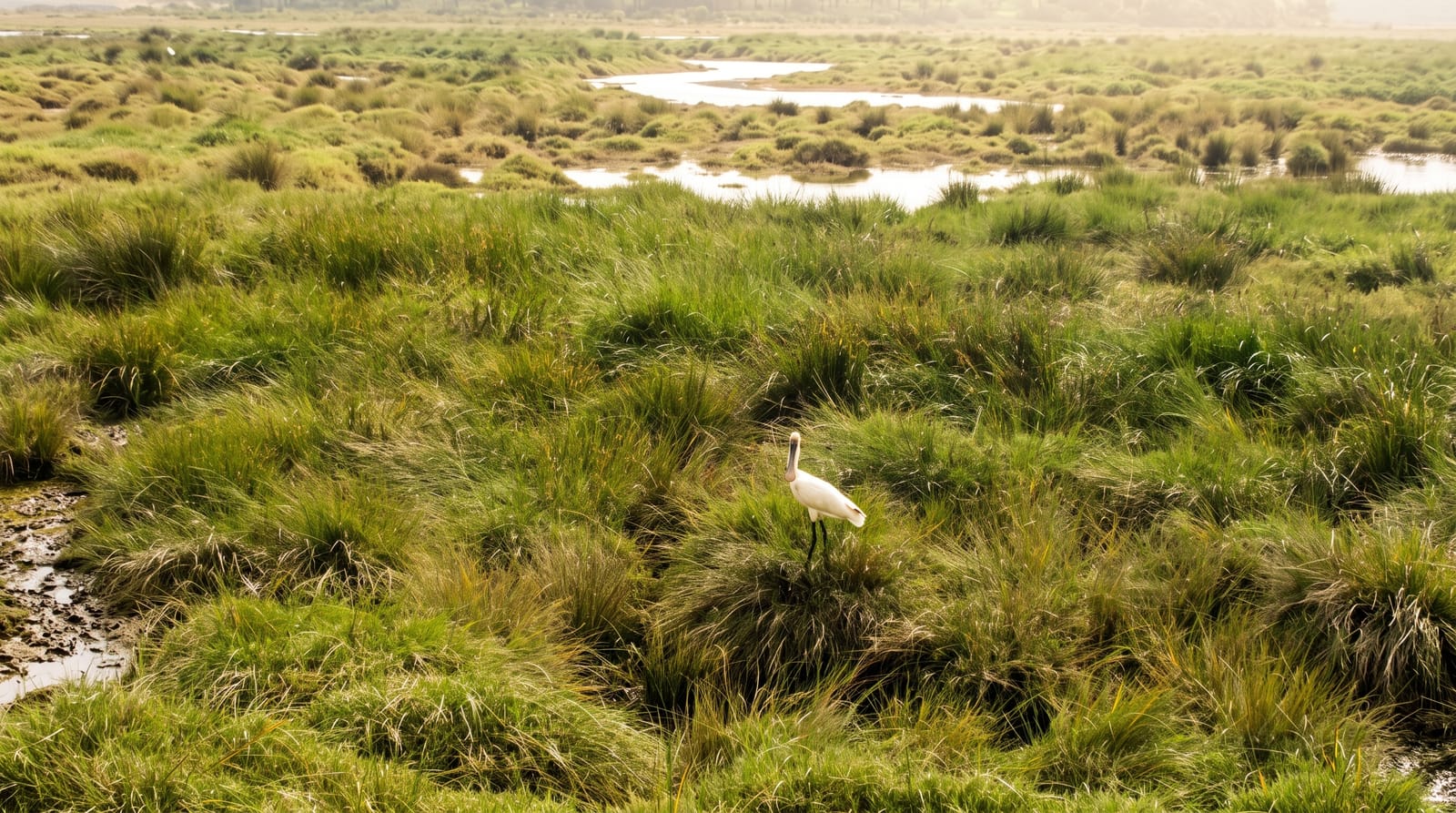
The Odiel marshes cover about seven thousand hectares where the Odiel and Tinto rivers meet the Atlantic beside Huelva, a system of tidal channels, salt pans, mudflats and islands declared a biosphere reserve in 1983. They hold the largest spoonbill breeding colony in Europe, along with flamingos present year-round, ospreys, terns, waders on migration and a large gull population. Two smaller reserves within, Isla de Enmedio and Marisma del Burro, have restricted access. A road runs along the Dique Juan Carlos I into the marshes with pull-ins and hides, and a visitor centre organises guided trips. The setting is complicated: a large petrochemical complex and the port sit directly alongside the reserve.
Highlights
- The spoonbill colony - Europe's largest breeding population.
- The flamingos - present through the year on the salt pans.
- The tidal channels - a shifting system of mudflats and creeks.
- The hides and road - access along the dyke into the marshes.
When to go
September to April for the greatest numbers and variety, with migration peaks in autumn and spring; breeding runs through spring and early summer. Tides determine what is visible, and low water concentrates birds on the flats.
Practical notes
The industrial complex beside the reserve is visible and audible throughout, which surprises visitors. Access to the core areas is restricted and needs a guided trip. Birds are distant and a scope helps considerably.
Nearby
Huelva city is alongside; La Rabida and the Donana marshes lie east.
Key facts
Source: Wikidata, item Q14217415, read on 18 October 2026.
What to pack for Marismas del Odiel
Chosen from what this place is for. Tap a kit for the full checklist.
- Broken-in walking shoes or boots - Grip and ankle support matter more than looks; never hike in brand-new boots. Find on Amazon
- Layers + a waterproof shell - Mountain weather turns fast; a packable rain jacket saves the day. Find on Amazon
- Daypack with rain cover - 20-30 litres holds water, snacks, layers and a first-aid kit. Find on Amazon
- Offline maps + a power bank - Download the trail before you lose signal; carry backup charge. Find on Amazon
Some links on this page are Amazon affiliate links - if you buy through them we may earn a small commission at no extra cost to you.
All packing kitsPlan your trip
Where to start if Marismas del Odiel is going on the list.
Booking links on this page are affiliate links - if you book through them we may earn a small commission at no extra cost to you. It never changes what we write about a place.
Opening times, ticket prices and seasonal closures change - check the official source before you go: official site.

