Elche Palm Grove
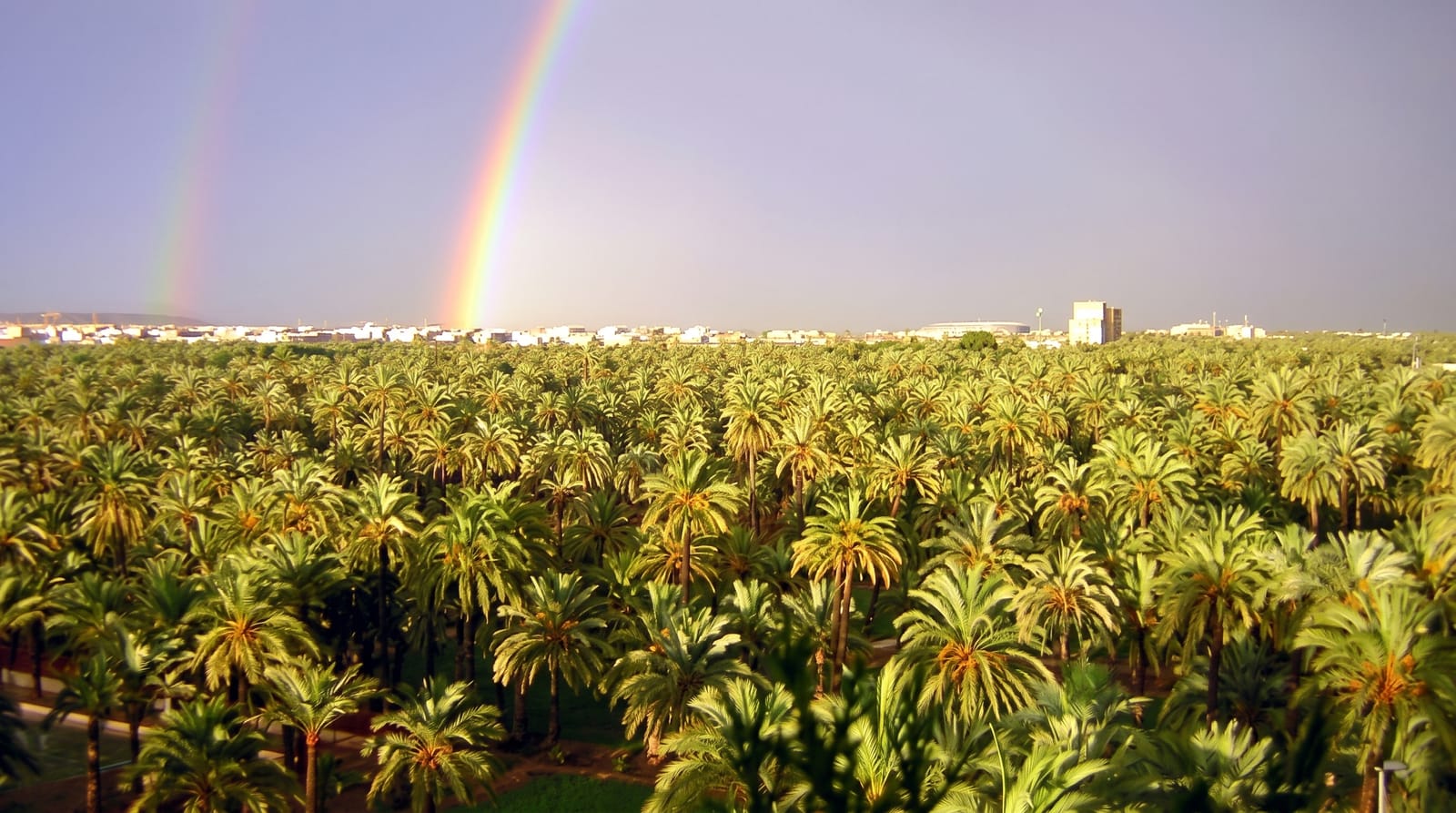
Around two hundred thousand date palms in and around a city, planted on Muslim-era irrigation channels and listed by UNESCO.
Updated 18 October 2026
AI illustration
UNESCO World Heritage
The Palmeral of Elche is the largest palm grove in Europe, around two hundred thousand date palms covering some five square kilometres in and around the city, planted in rows along irrigation channels that were laid out under Muslim rule using water from the Vinalopo, with the palms serving as windbreaks and shade for crops grown between them. UNESCO listed it in 2000 as an example of Arab agricultural practice transferred to Europe and maintained since. Much survives as public parkland and private huertos. The Huerto del Cura, a walled garden with a labelled collection, holds the Imperial Palm, a specimen with seven trunks branching from one base. Palm fronds are bleached for Palm Sunday and exported across Spain.
History
Carthaginian settlers in the town of Ilici planted Elche's first date palms in the 5th century BC, and after the Roman conquest of the 2nd century BC the Romans dammed the Vinalopó in the mountains to the north and brought its water down by aqueduct for cereals and olives. In the 10th century the Caliphate of Córdoba moved the town seven kilometres from Ilici to its present site and, facing scarce rain and brackish river water, planted palm groves in a grid along the edges of rectangular huertos, sheltering cereals, forage and pomegranates from sun and wind, and Islamic rulers built the largest sections of the canal system. Christian rulers took Elche in the 13th century and extended the canals, industry and urban sprawl shrank the groves in the late 19th and 20th centuries, national and regional laws were passed to protect them, and in 2000 the Palmeral became a World Heritage Site (Wikipedia, Palmeral of Elche).
The landscape
- The irrigation rows - palms planted along medieval water channels.
- The Huerto del Cura - a walled garden with the seven-trunked Imperial Palm.
- The public groves - parkland sections open and free throughout the city.
- The frond bleaching - palms wrapped to whiten leaves for Palm Sunday.
When to go
March to June and September to November; Elche is very hot in July and August. Palm Sunday brings the frond procession, and the Misteri d'Elx is performed in August.
Things to know
Much of the grove is private or divided by roads and buildings, so the experience is fragmented rather than a single forest. The Huerto del Cura is small and ticketed. Summer heat in the city is severe.
Nearby
The basilica of Santa Maria and the Altamira palace are in the city; Alicante lies northeast.
Key facts
Source: Wikidata, item Q930784, read on 18 October 2026.
What to pack for Elche Palm Grove
Chosen from what this place is for. Tap a kit for the full checklist.
- Broken-in walking shoes or boots - Grip and ankle support matter more than looks; never hike in brand-new boots. Find on Amazon
- Modest clothing - Shoulders and knees covered - the single most common requirement. Find on Amazon
- Layers + a waterproof shell - Mountain weather turns fast; a packable rain jacket saves the day. Find on Amazon
- A scarf or shawl - To cover the head or shoulders on entry; women especially at mosques. Find on Amazon
Some links on this page are Amazon affiliate links - if you buy through them we may earn a small commission at no extra cost to you.
All packing kitsPlan your trip
Where to start if Elche Palm Grove is going on the list.
Booking links on this page are affiliate links - if you book through them we may earn a small commission at no extra cost to you. It never changes what we write about a place.
Opening times, ticket prices and seasonal closures change - check the official source before you go: official site.