Cadaques
A white village on the far side of a mountain pass near Cap de Creus, where Dali kept a house at Portlligat.
Updated 4 September 2026
AI illustration
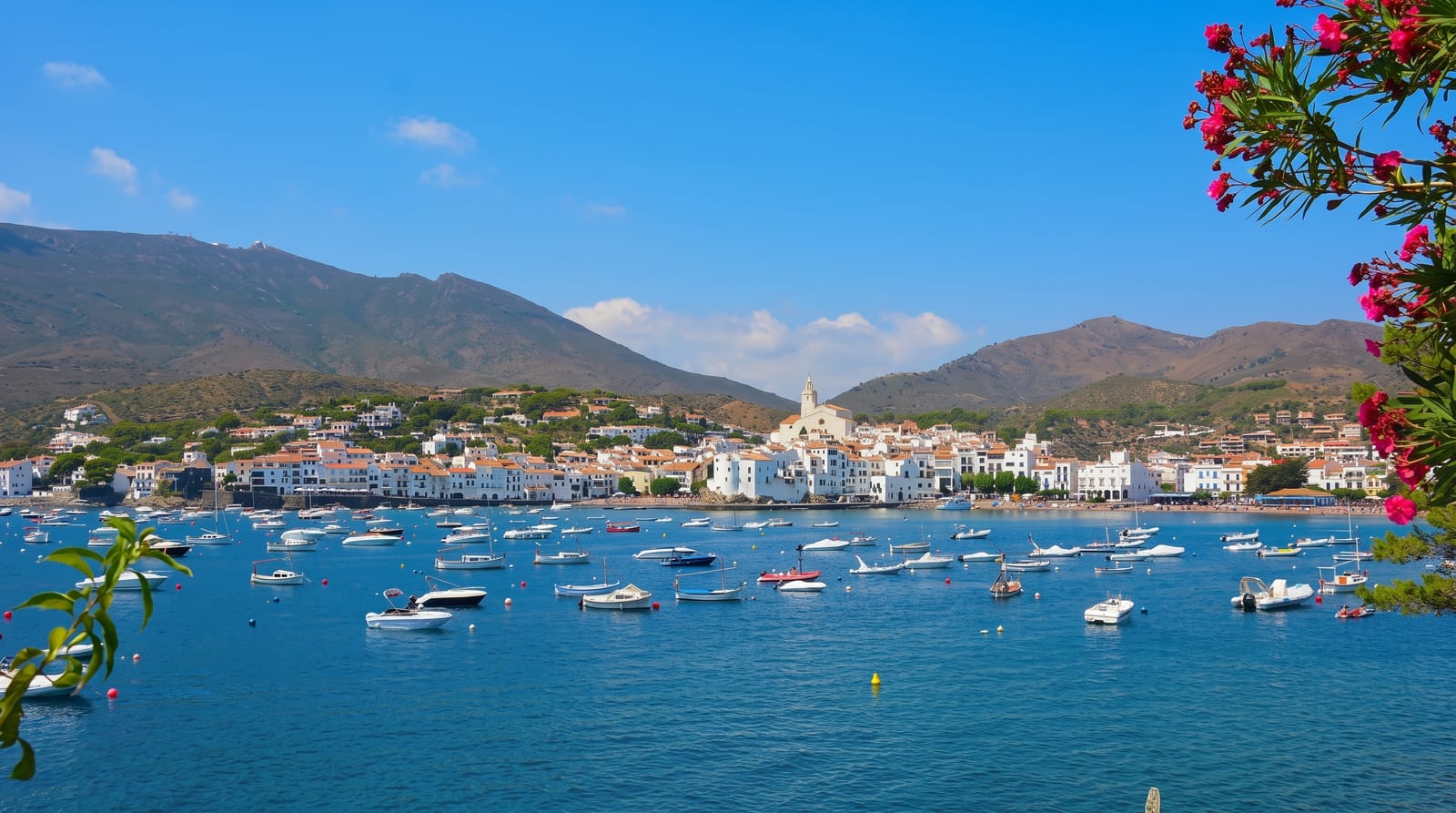
Cadaques sits in a bay on the Cap de Creus peninsula, cut off from the plain by the Sierra de Rodes and reachable only over a winding pass, which kept it a fishing village long after the rest of the Costa Brava was built up. Whitewashed houses climb to a sixteenth-century church with a large baroque altarpiece, and the streets are paved in rabassada, an unusual surface of upended slate. Salvador Dali spent childhood summers here and from 1930 lived at Portlligat, the next cove, in a house grown from a fisherman's hut over decades, now a museum entered by timed booking. Picasso, Duchamp, Man Ray, Lorca and Bunuel all passed through. The Cap de Creus headland beyond is a natural park of eroded schist.
What's there
- The white village - houses climbing to a church above the bay.
- The Dali house at Portlligat - a home grown from fishermen's huts, by booking.
- The slate paving - streets surfaced in upended stone.
- Cap de Creus - a wind-carved headland park beyond the village.
When to go
May, June, September and October; July and August fill the village and the single road in. The tramuntana wind blows hard for days at a time in any season and shapes the place.
Before you go
The Dali house takes small timed groups and books out weeks ahead; walk-up entry is not possible. Parking in Cadaques is very limited and paid. The road over the pass is winding and slow.
Nearby
Cap de Creus and Sant Pere de Rodes lie north; Figueres and the Dali Theatre-Museum are inland.
Key facts
Source: Wikidata, item Q11263, read on 18 October 2026.
What to pack for Cadaques
Chosen from what this place is for. Tap a kit for the full checklist.
- Travel rod + reel - A packable multi-piece rod fits in a case and covers most holiday fishing. Find on Amazon
- Comfortable walking shoes - Sightseeing means kilometres of pavement and cobbles daily. Find on Amazon
- Shelter suited to the place - Tent, tarp or hut booking - match it to the terrain and rules. Find on Amazon
- A small tackle selection - Hooks, weights, line and a few lures or flies suited to local waters. Find on Amazon
Some links on this page are Amazon affiliate links - if you buy through them we may earn a small commission at no extra cost to you.
All packing kitsPlan your trip
Where to start if Cadaques is going on the list.
Booking links on this page are affiliate links - if you book through them we may earn a small commission at no extra cost to you. It never changes what we write about a place.
Opening times, ticket prices and seasonal closures change - check the official source before you go: official site.