Bolonia Beach and Dune
A wild Atlantic beach near Tarifa backed by a shifting sand dune thirty metres high, climbable for the view.
Updated 4 September 2026

AI illustration
Bolonia is a bay of pale sand about four kilometres long on the Costa de la Luz, backed at its western end by a dune declared a natural monument: around thirty metres high and two hundred wide, formed by the levante wind driving sand inland, and slowly advancing into the pine woods behind, burying trees as it goes. Climbing it is hard work in loose sand but gives a view over the whole bay, the Roman town of Baelo Claudia at the other end, and across the strait to the Moroccan coast. The wind that built it also makes the bay a kitesurfing and windsurfing spot, and it means the beach is often uncomfortable for lying on. A small settlement behind has a handful of restaurants.
Highlights
- The dune - a thirty-metre sand hill advancing into the pine woods.
- The buried pines - trees being swallowed by the moving sand.
- The Africa view - the Moroccan coast across the strait from the top.
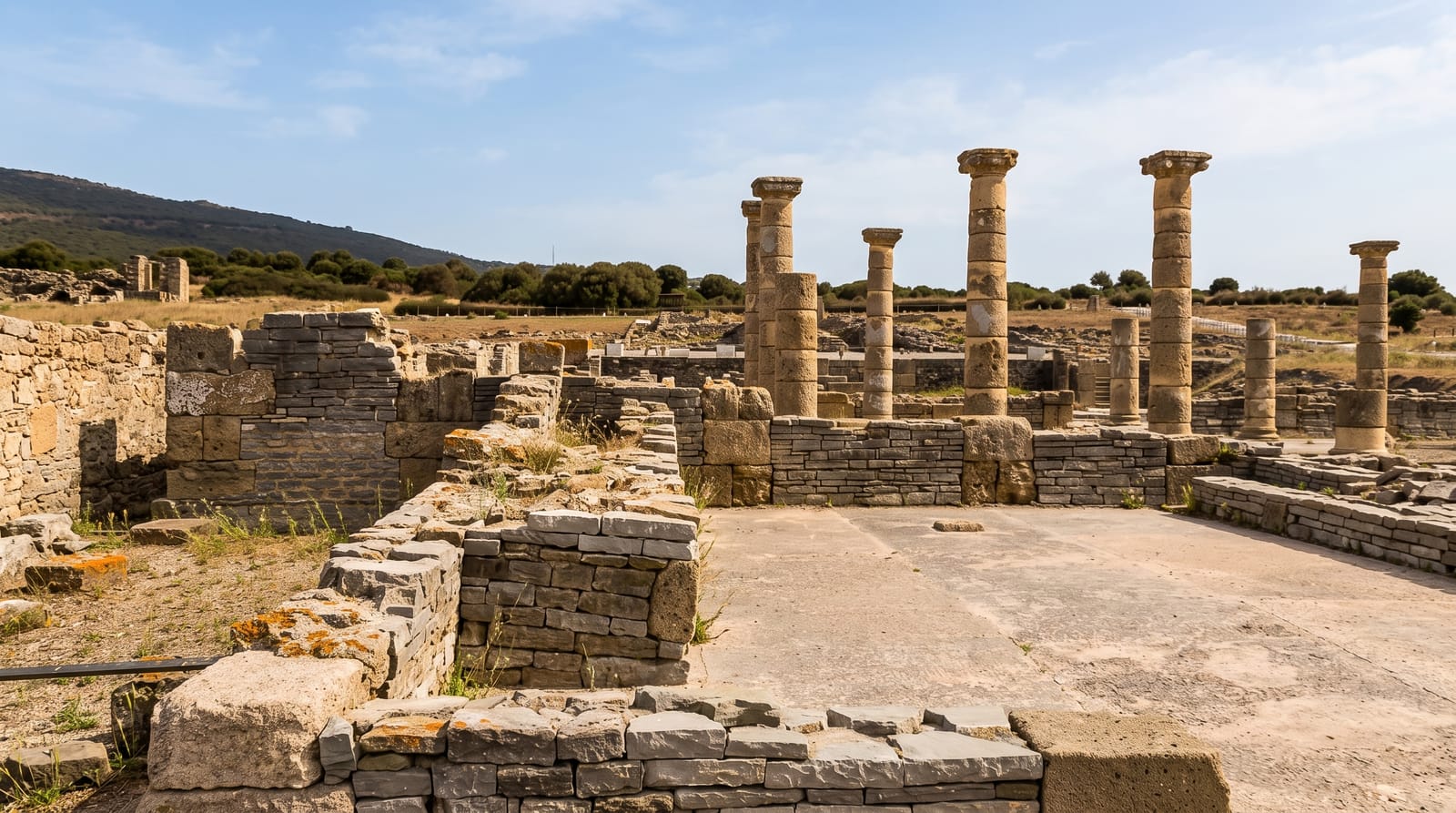
- Baelo Claudia - the Roman town at the eastern end of the same beach.
When to go
May, June, September and October for warm water without the peak crowd; July and August fill the beach and the parking completely. The levante wind can make any day unpleasant, so checking the forecast helps.
Things to know
Wind is the defining feature, and on a levante day sand blows hard enough to sting. Parking is limited and overflows onto verges in summer. There are no lifeguards on most of the beach and the Atlantic has currents.
Nearby
Baelo Claudia is at the beach's eastern end; Tarifa and Valdevaqueros lie south along the coast.
What to pack for Bolonia Beach and Dune
Chosen from what this place is for. Tap a kit for the full checklist.
- Broken-in walking shoes or boots - Grip and ankle support matter more than looks; never hike in brand-new boots. Find on Amazon
- Quick-dry clothing - Board shorts or synthetics that shrug off spray and dry fast. Find on Amazon
- Loose, light, long clothing - Covering up beats bare skin in the desert - and locals dress this way for a reason. Find on Amazon
- Layers + a waterproof shell - Mountain weather turns fast; a packable rain jacket saves the day. Find on Amazon
Some links on this page are Amazon affiliate links - if you buy through them we may earn a small commission at no extra cost to you.
All packing kitsPlan your trip
Where to start if Bolonia Beach and Dune is going on the list.
Booking links on this page are affiliate links - if you book through them we may earn a small commission at no extra cost to you. It never changes what we write about a place.
Opening times, ticket prices and seasonal closures change - check the official source before you go: official site.