Woraksan National Park
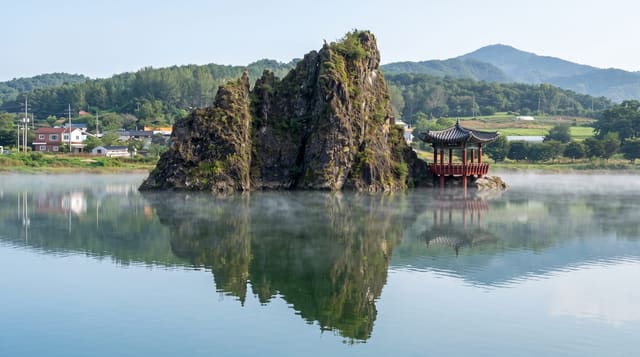
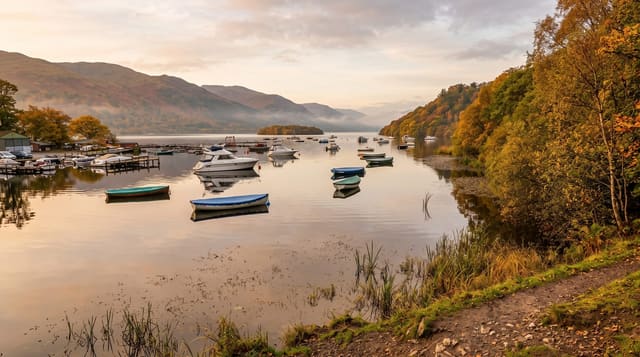
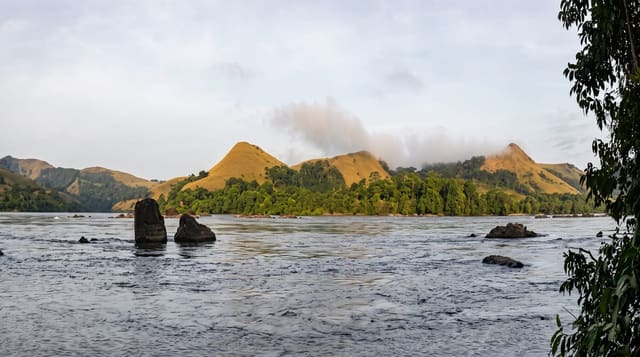
Rugged ridges above Chungju Lake, with the Deokjusa valley, a huge rock-carved Buddha and a long stairway to the summit.
Updated 21 October 2026
Woraksan rises to 1,097 metres on the northern side of Chungju Lake, and its name - moon rock mountain - refers to the moon appearing to hang in a notch of the summit ridge. The mountain is rocky and the routes are steep, with long sections of steel stairway and cable on the upper slopes; from the top the lake spreads out below with Sobaeksan and Songnisan on the horizon. The Deokjusa valley on the eastern approach holds the ruins of a large temple, a stone flagpole support and, on the cliff above, the Maaebul - a Buddha carved in relief into the rock face, around thirteen metres tall and dating from the Goryeo period. The valley also carries the story of Princess Deokju of the fallen Silla court, who by tradition took refuge here. Songgye valley on the south side has its own trail network and the park's campsites. The park, the seventeenth in the country, was designated in 1984, and some 1,200 plant species are recorded in it.
The landscape
- The Maaebul - the thirteen-metre Buddha carved into the cliff.
- Deokjusa ruins - the temple site in the valley.
- The summit stairways - steel steps and cable on the upper rock.
- The lake view - Chungju Lake below from the ridge.
When to go
May to June and October. Autumn colour is strong here and the park is far quieter than the Gangwon parks. Winter requires crampons on the stairways.
What to expect
The summit routes are steep with long metal stair sections and exposure - a full day and hard on the legs. Park fee applies. Facilities are at the valley gates only.
Nearby
Chungju Lake and its ferries are below; Danyang and Sobaeksan are east.
Key facts
Source: Wikidata, item Q8034123, read on 18 October 2026.
What to pack for Woraksan National Park
Chosen from what this place is for. Tap a kit for the full checklist.
- Broken-in walking shoes or boots - Grip and ankle support matter more than looks; never hike in brand-new boots. Find on Amazon
- Binoculars - The single best wildlife tool - even a compact pair transforms a sighting. Find on Amazon
- Modest clothing - Shoulders and knees covered - the single most common requirement. Find on Amazon
- Shelter suited to the place - Tent, tarp or hut booking - match it to the terrain and rules. Find on Amazon
Some links on this page are Amazon affiliate links - if you buy through them we may earn a small commission at no extra cost to you.
All packing kitsPlan your trip
Where to start if Woraksan National Park is going on the list.
Booking links on this page are affiliate links - if you book through them we may earn a small commission at no extra cost to you. It never changes what we write about a place.
Opening times, ticket prices and seasonal closures change - check the official source before you go: official site.