Lope National Park
The savanna in the forest - mandrill hordes, forest elephants and ancient rock art where grassland fingers reach into Gabon's green ocean.
Updated 18 October 2026
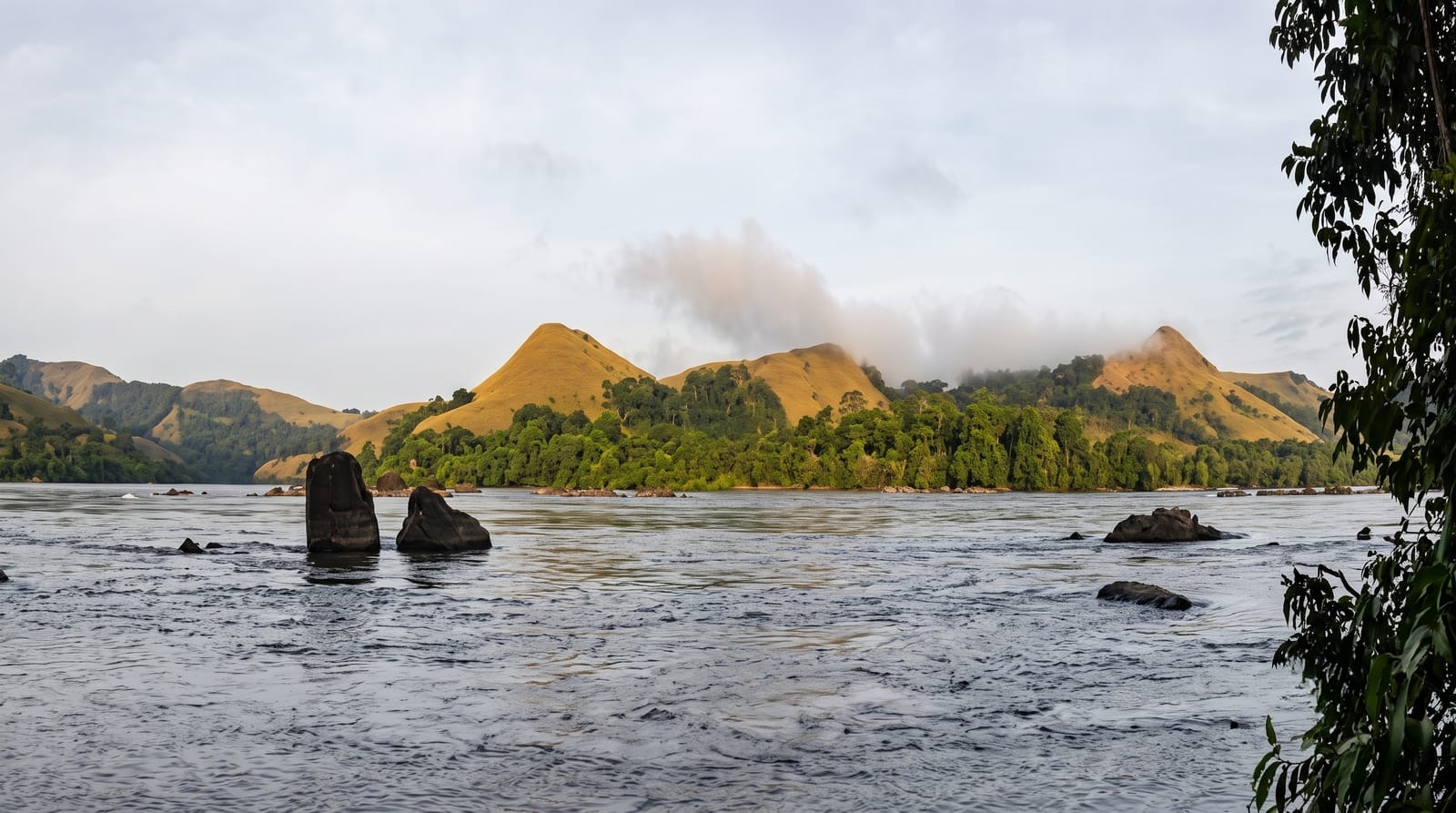
AI illustration
UNESCO World Heritage
Lope is Gabon's flagship strangeness: ancient savanna fingers - relics of drier ages - reach into the rainforest along the Ogooue's middle valley, and the mosaic multiplies life. Forest elephants graze the grass edges at dusk, buffalo herd the open ground, and the park's superstar spectacle is the mandrill horde: aggregations that can run to several hundred of the technicolour primates crashing through the forest in one of the mammal world's great gatherings, tracked in season with researchers' help. Rock engravings by the river record humanity's own long tenure - the reason UNESCO inscribed Lope as a mixed natural-and-cultural site in 2007 - and the Trans-Gabon railway delivers visitors almost to the lodge door.
History
The park and its surroundings show almost continuous human occupation over the last 400,000 years, perhaps because the open Ogooué valley served as a corridor from the coast into the interior, and the oldest Stone Age tools known in the area were found at Elarmékora. Between 3,500 and 2,000 years ago Bantu peoples built hilltop villages here, iron-working arrived about 2,000 years ago, and more than 1,600 petroglyphs date from around that time; the valley seems to have been abandoned between 600 and 1200 AD and was resettled by the Okanda in the 14th and 15th centuries. The Lopé-Okanda Wildlife Reserve, created in 1946, was Gabon's first protected area, and in 2007 the national park and its landscape were added to the World Heritage List (Wikipedia, Lopé National Park).
The landscape
- The mandrill hordes - hundreds strong in the season's aggregations.
- Forest elephants on savanna - dusk grazing where the grass meets the trees.
- The Ogooue rock art - engravings of the valley's ancient peoples.
- The mosaic itself - savanna fingers inside the green ocean.
When to go
June to September, the long dry season, gives the best track access and savanna viewing; mandrill aggregation tracking peaks in the drier months - lodges know the current pattern. The railway timetable frames arrivals.
Practical notes
Wildlife here is forest-wary - sightings build over days, and the mandrill spectacle depends on tracking arrangements made ahead. Lodging is limited; book, don't improvise. The train runs to its own philosophy of time - pad connections generously.
Nearby
The Ogooue river villages, Mikongo's forest camps and the railway line east and west.
Key facts
Source: Wikidata, item Q9055976, read on 18 October 2026.
What to pack for Lope National Park
Chosen from what this place is for. Tap a kit for the full checklist.
- Broken-in walking shoes or boots - Grip and ankle support matter more than looks; never hike in brand-new boots. Find on Amazon
- Binoculars - The single best wildlife tool - even a compact pair transforms a sighting. Find on Amazon
- Strong insect repellent - DEET or picaridin; the jungle is where bites and disease risk are highest. Find on Amazon
- Layers + a waterproof shell - Mountain weather turns fast; a packable rain jacket saves the day. Find on Amazon
Some links on this page are Amazon affiliate links - if you buy through them we may earn a small commission at no extra cost to you.
All packing kitsPlan your trip
Where to start if Lope National Park is going on the list.
Booking links on this page are affiliate links - if you book through them we may earn a small commission at no extra cost to you. It never changes what we write about a place.
Opening times, ticket prices and seasonal closures change - check the official source before you go: official site.