Jongmyo Shrine
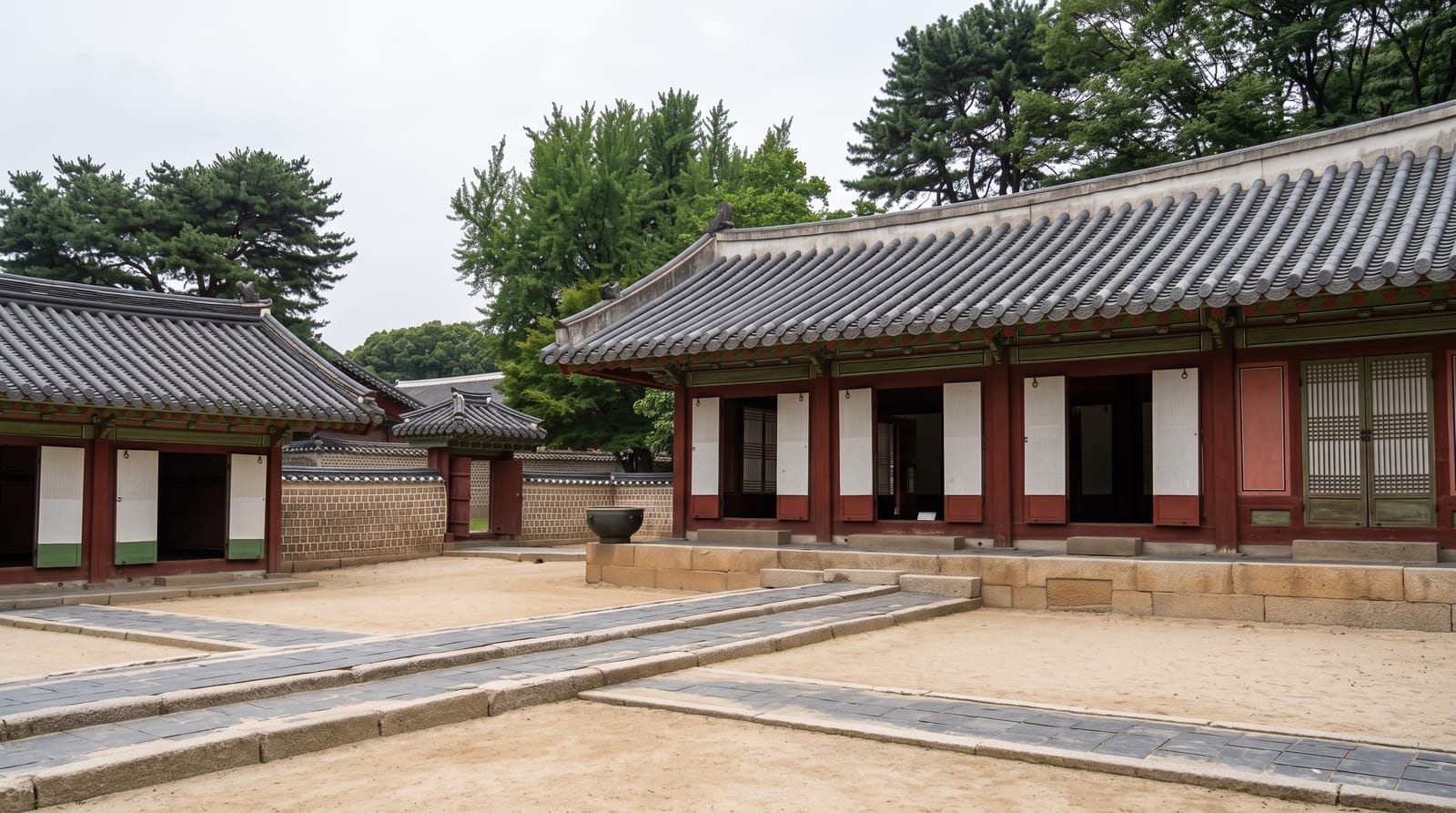
The Joseon royal ancestral shrine, where a plain colonnaded hall over a hundred metres long holds the spirit tablets of kings and queens.
Updated 18 October 2026
AI illustration
UNESCO World Heritage
Jongmyo is the least decorated and most serious of Seoul's historic sites. It was built in the 1390s as the shrine where the kings of Joseon honoured their ancestors, and its main building, Jeongjeon, is a single unpainted hall stretching along a raised stone courtyard, lengthened again and again over five centuries as more tablets were added. There is no ornament, no colour and almost no furniture. A second hall, Yeongnyeongjeon, holds tablets moved out of the main one. Visitors normally follow a timed guided tour along paths beside the raised stone walkways, which were laid for the dead and are not walked on. The memorial rite is still performed here once a year in May.
History
King Taejo, founder of Joseon, built the shrine in October 1394, when he moved the capital to Hanseong, today's Seoul, and its main hall, Jeongjeon, with seven niches for the spirit tablets of kings and queens, was thought to be among the longest buildings in Asia. King Sejong added the Yeongnyeongjeon hall, and the complex kept growing eastward as tablets accumulated until there were 19 niches; Japanese invaders burned the original shrine during the invasions of 1592-1598, but the tablets were saved by hiding them in a commoner's house, and the present complex was built in 1601. It holds the tablets of 19 kings and 30 queens, the last enshrinements took place in 1973 and 1991, its rites continue a tradition from the 14th century, and in 1995 the shrine became a World Heritage Site (Wikipedia, Jongmyo).
What to look for
- Jeongjeon - the long unpainted main hall and its wide empty stone courtyard.
- Yeongnyeongjeon - the smaller hall of secondary tablets, set to one side.
- The spirit paths - raised stone walkways laid for the dead, closed to visitors.
- Jongmyo Jerye - the ancestral rite performed once a year with its own music and dance.
When to go
Weekday tours are quieter than weekends. Saturday is the only day you can walk the grounds freely without joining a tour, which suits anyone who wants to sit rather than follow a guide. The annual rite falls in May and draws a large crowd. Autumn colour in the surrounding woodland is good but short.
What to expect
Jeongjeon has been under long-running restoration and scaffolding has covered parts of it for years, so check before making a special trip. The site is austere by design: no painted eaves, no gardens, nothing to buy. English tour slots run only a few times a day and fill up. Expect an hour of walking on gravel and stone.
Nearby
Changdeokgung is a short walk north; Gwangjang Market is ten minutes east.
Key facts
Source: Wikidata, item Q490497, read on 18 October 2026.
What to pack for Jongmyo Shrine
Chosen from what this place is for. Tap a kit for the full checklist.
- Comfortable walking shoes - Sightseeing means kilometres of pavement and cobbles daily. Find on Amazon
- Modest clothing - Shoulders and knees covered - the single most common requirement. Find on Amazon
- A slim anti-theft daypack - Zips that close properly; keep it in front in crowds and on transit. Find on Amazon
- A scarf or shawl - To cover the head or shoulders on entry; women especially at mosques. Find on Amazon
Some links on this page are Amazon affiliate links - if you buy through them we may earn a small commission at no extra cost to you.
All packing kitsPlan your trip
Where to start if Jongmyo Shrine is going on the list.
Booking links on this page are affiliate links - if you book through them we may earn a small commission at no extra cost to you. It never changes what we write about a place.
Opening times, ticket prices and seasonal closures change - check the official source before you go: official site.