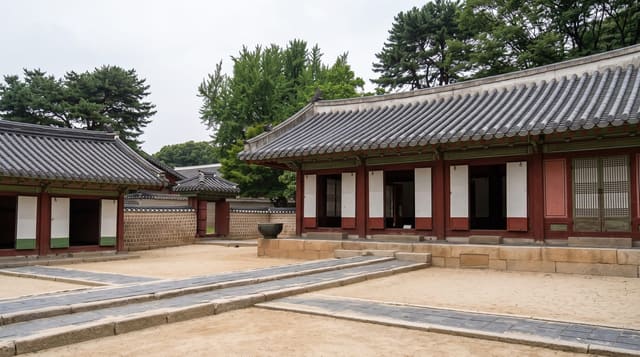
Ikseondong Hanok Village
A block of speculative hanok built from the 1920s in Jongno, now a dense warren of cafes and small shops.
Updated 20 October 2026
Ikseondong is a small grid of alleys behind Jongno 3-ga, and its history is more interesting than its current use suggests: the houses were built from the 1920s by Jeong Se-gwon, a developer who bought aristocratic estates and subdivided them into rows of compact hanok sold to ordinary Korean buyers - an early instance of mass housing built deliberately in Korean rather than Japanese style during the colonial period. The block survived redevelopment by accident, went derelict, and from around 2015 was taken over by cafes, bars, boutiques and small restaurants, which is what it now is. The alleys are genuinely narrow, roofed in places, and at night lit and busy. It is not quiet and it is not residential in feel; it is a nightlife and cafe district in old buildings, which people either enjoy for what it is or find disappointing if they came for heritage.
What to look for
- The old alleys - narrow lanes of speculative hanok from the 1920s on.
- The cafe warren - courtyards converted into small businesses.
- The night lighting - the block at its busiest after dark.
- The tiled roofscape - visible from the wider streets around.
When to go
April to June and September to November; evenings are the busy hours. Weekends are crowded enough that popular places have long waits.
Good to know
This is a commercial district, not a preserved village - almost every building is a business. Queues are normal. The historical interest is real but nothing on site explains it.
Nearby
Insadong and Jongmyo are a short walk; Gwangjang market is east.
Key facts
Source: Wikidata, item Q16188499, read on 18 October 2026.
What to pack for Ikseondong Hanok Village
Chosen from what this place is for. Tap a kit for the full checklist.
- Comfortable walking shoes - Sightseeing means kilometres of pavement and cobbles daily. Find on Amazon
- A slim anti-theft daypack - Zips that close properly; keep it in front in crowds and on transit. Find on Amazon
- A refillable water bottle - Many cities have public fountains; save money and plastic. Find on Amazon
- A light layer + compact umbrella - For museum air-con and a sudden shower. Find on Amazon
Some links on this page are Amazon affiliate links - if you buy through them we may earn a small commission at no extra cost to you.
All packing kitsPlan your trip
Where to start if Ikseondong Hanok Village is going on the list.
Booking links on this page are affiliate links - if you book through them we may earn a small commission at no extra cost to you. It never changes what we write about a place.
Opening times, ticket prices and seasonal closures change - check the official source before you go: official site.