Gyeonggijeon Shrine
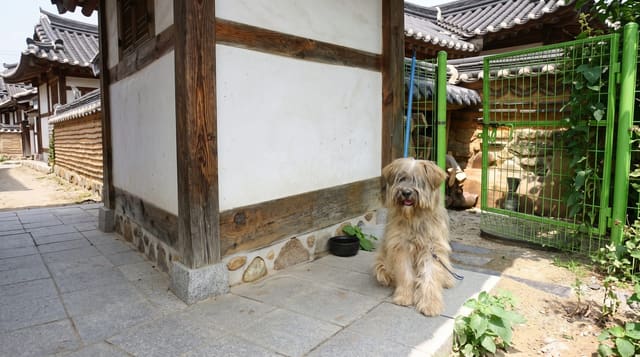
The Jeonju hall holding the founding king's portrait, in a walled bamboo compound at the edge of the hanok village.
Updated 25 August 2026
Jeonju was the ancestral seat of the Yi family who founded the Joseon dynasty, and Gyeonggijeon was built in 1410 to house a portrait of Yi Seong-gye, the founding king - one of several such halls around the country, and the one whose portrait survives. That painting, a National Treasure, shows him seated in blue robes, and it is the only royal portrait of him left; it was moved and hidden repeatedly during invasions, which is the reason it exists at all. The compound has the shrine hall on axis behind gates, a small museum displaying the portrait and the palanquins used to carry it, and a walled garden of bamboo and old trees that is quieter than anything else in the hanok village outside the gate. Also here is a reconstructed archive building of the type that held the dynastic annals. It is ticketed, central, and the natural first stop in Jeonju.
What you'll find
- The shrine hall - on axis behind its gates.
- The founder's portrait - in the museum, with the palanquins.
- The bamboo garden - the walled quiet inside the compound.
- The archive building - the reconstructed annals repository.
When to go
April to June and September to November. The hanok village outside is busy at weekends; the compound absorbs it better than the streets do. Mornings are best.
What to expect
What hangs in the shrine hall is a copy - the original portrait is displayed in the museum building. Ticketed. The surrounding village is heavily commercialised.
Nearby
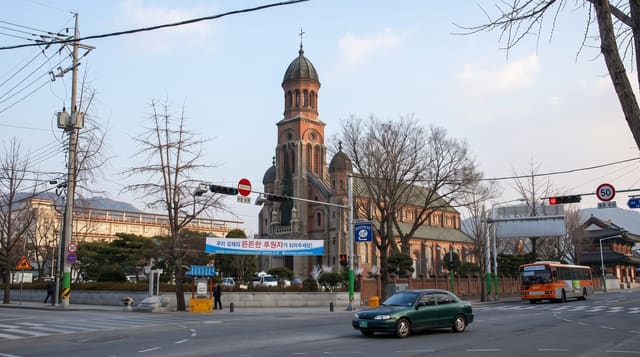
Pungnammun gate and the Jeondong Catholic church are a few minutes away.
Key facts
Source: Wikidata, item Q27951512, read on 18 October 2026.
What to pack for Gyeonggijeon Shrine
Chosen from what this place is for. Tap a kit for the full checklist.
- Comfortable walking shoes - Sightseeing means kilometres of pavement and cobbles daily. Find on Amazon
- Modest clothing - Shoulders and knees covered - the single most common requirement. Find on Amazon
- A slim anti-theft daypack - Zips that close properly; keep it in front in crowds and on transit. Find on Amazon
- A scarf or shawl - To cover the head or shoulders on entry; women especially at mosques. Find on Amazon
Some links on this page are Amazon affiliate links - if you buy through them we may earn a small commission at no extra cost to you.
All packing kitsPlan your trip
Where to start if Gyeonggijeon Shrine is going on the list.
Booking links on this page are affiliate links - if you book through them we may earn a small commission at no extra cost to you. It never changes what we write about a place.
Opening times, ticket prices and seasonal closures change - check the official source before you go: official site.