Tetepare Island
The last wild island - the South Pacific's largest uninhabited island, kept by its descendants as a conservation estate of leatherbacks, dugongs and primary forest.
Updated 7 August 2026

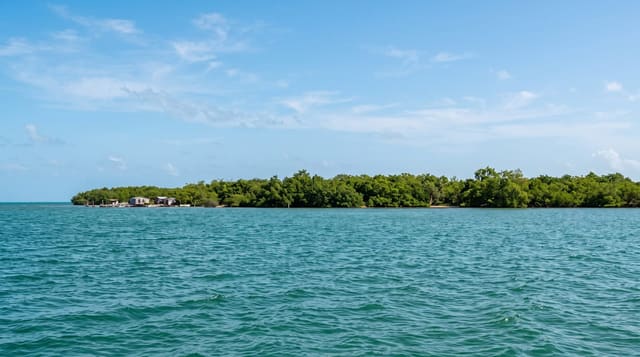
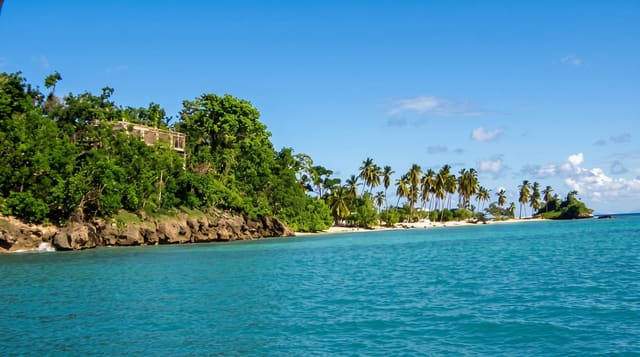
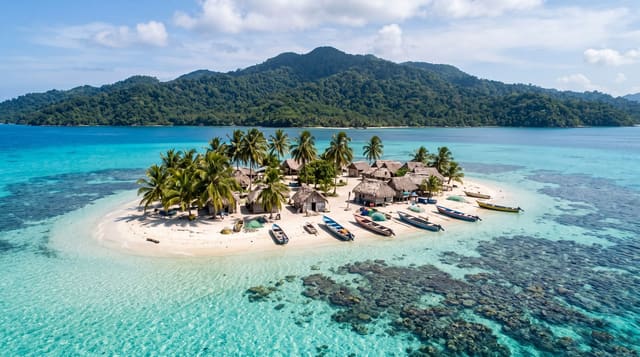
AI illustration
Tetepare's people left their island in the mid-1800s under raiding-era pressures - and never resettled it, leaving the largest uninhabited island in the South Pacific: 120 square kilometres of primary rainforest running to black-sand beaches where leatherback turtles nest, reefs where dugongs graze the seagrass, and rivers with crocodiles in honest residence. The Tetepare Descendants' Association chose conservation over logging money and runs the simple ecolodge, where stays fund rangers and visits mean turtle patrols, snorkelling with rangers, forest walks among skinks and hornbills, and the particular quiet of an island that belongs to itself.
The landscape
- Leatherback patrols - nesting giants on the black sand, in season.
- The dugong seagrass - snorkel encounters on the lagoon meadows.
- The primary forest - untouched canopy from coast to ridge.
- The descendants' story - conservation chosen and kept.
When to go
May to November for drier weather and settled crossings; leatherback nesting concentrates roughly November to March - lodge staff know the current pattern. Numbers are capped by design - book ahead.
Things to know
The lodge is deliberately simple: solar light, shared meals, no bar but the ocean - the luxury is the island itself. Crossings can be wet and lively; crocodiles make river and some lagoon edges no-swim zones, exactly as briefed. Fees are the conservation model - pay them as the point, not the price.
Nearby
Munda's reefs and Rendova, and the Marovo Lagoon eastward.
Key facts
Source: Wikidata, item Q1136145, read on 18 October 2026.
What to pack for Tetepare Island
Chosen from what this place is for. Tap a kit for the full checklist.
- Reef-safe sunscreen - High SPF that will not bleach the coral you are swimming over. Find on Amazon
- Your own mask + snorkel - A well-fitting mask is the single biggest comfort upgrade underwater. Find on Amazon
- Binoculars - The single best wildlife tool - even a compact pair transforms a sighting. Find on Amazon
- Strong insect repellent - DEET or picaridin; the jungle is where bites and disease risk are highest. Find on Amazon
Some links on this page are Amazon affiliate links - if you buy through them we may earn a small commission at no extra cost to you.
All packing kitsPlan your trip
Where to start if Tetepare Island is going on the list.
Booking links on this page are affiliate links - if you book through them we may earn a small commission at no extra cost to you. It never changes what we write about a place.
Opening times, ticket prices and seasonal closures change - check the official source before you go: official site.