Pokljuka Plateau
A forested karst plateau above Bled with raised peat bogs, herders' meadows and a biathlon stadium.
Updated 6 November 2026
Pokljuka is a forested karst plateau in the Julian Alps, some 20 km long and almost as wide, between Bled and the Triglav range. Where the glaciers that shaped it dammed the drainage, small lakes formed that later turned into raised bogs, among the southernmost in Europe, and on some of its old summer pastures cattle still graze from June to September beside wooden, shingle-roofed huts. Spruce makes up almost all of its roughly 6,300 ha of forest, having replaced much of the beech and fir that was cut over the centuries for charcoal and for the ironworks of Bohinj. The plateau lies inside Triglav National Park, and in winter its biathlon centre at Rudno Polje holds World Cup races and has hosted the world championships.
Background
Pokljuka is a forested karst plateau of the Julian Alps in north-western Slovenia, lying at about 1,100 to 1,400 m (3,600 to 4,600 ft) within Triglav National Park. Its Upper Triassic limestone and dolomite, dissolved by groundwater, form a high karst of sinkholes and blind valleys, and a tongue of the Bohinj glacier once crossed it. In the 18th century many of its beech and fir trees were felled for the iron foundries of Bohinj, and spruce has mostly taken their place. Mountain pastures such as Uskovnica and Lipanca break the forest, and the Pokljuka Biathlon Center holds World Cup races every year.
Source: Wikipedia, "Pokljuka"
What you'll find
- The raised bogs - Šijec, Goreljek and others, among the southernmost raised bogs in Europe, with an educational trail at Goreljek.
- The planina meadows - summer pastures such as Uskovnica, Zajamniki and Lipanca, with wooden shingle-roofed huts.
- The spruce forest - dense spruce over limestone sinkholes, whose slow growth gives prized resonance wood.
- The biathlon stadium - the Rudno Polje centre, used for World Cup races and for the world championships of 2001 and 2021.
When to go
June to September for walking, when cattle still graze some of the pastures and the herders sell milk, curd and cheese; December to March for cross-country skiing on the trail network, when deep snow covers the plateau. September, October, April and May are the wettest months, and January and February fairly dry. A day.
What to expect
The climate is cool and moist, with a mean air temperature of 3 to 6 °C and frequent temperature inversions in the hollows. Most forest roads are closed to traffic by barriers, with car parks laid out for visitors, and Triglav National Park rules limit new building and keep forestry low-impact. Some of the bogs are well preserved, while others are under threat.
Nearby
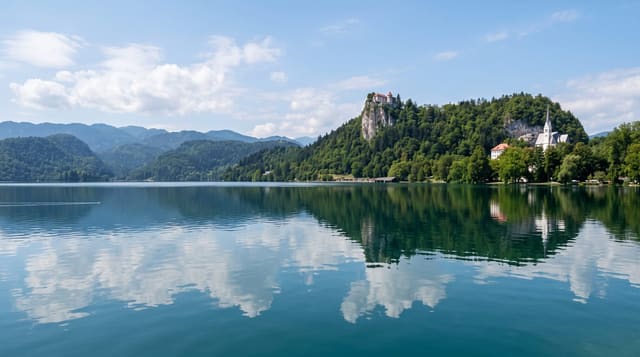
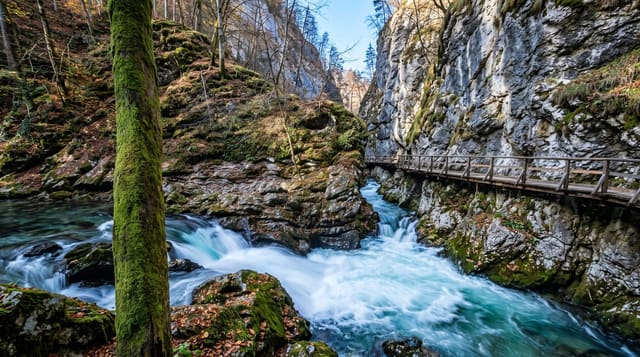
At the eastern foot of the plateau, the dry Pokljuka Gorge, 1.5 km long and up to 50 m (164 ft) deep, has natural bridges and the Pokljuka Hole, a cave with three natural windows; a road of 7 km leads to it from Bled through Zgornje Gorje and Krnica. In a straight line, Lake Bled is about 5 km to the east, Bohinjska Bistrica about 11 km to the south-southwest and Triglav about 15 km to the west.
Key facts
Source: Wikidata, item Q843444, read on 18 October 2026.
What to pack for Pokljuka Plateau
Chosen from what this place is for. Tap a kit for the full checklist.
- Broken-in walking shoes or boots - Grip and ankle support matter more than looks; never hike in brand-new boots. Find on Amazon
- Head torch + spare batteries - Hands-free light is essential; caves are truly dark. Find on Amazon
- Warm base layers - Merino or synthetic against the skin - never cotton, which chills when damp. Find on Amazon
- Shelter suited to the place - Tent, tarp or hut booking - match it to the terrain and rules. Find on Amazon
Some links on this page are Amazon affiliate links - if you buy through them we may earn a small commission at no extra cost to you.
All packing kitsPlan your trip
Where to start if Pokljuka Plateau is going on the list.
Booking links on this page are affiliate links - if you book through them we may earn a small commission at no extra cost to you. It never changes what we write about a place.
Opening times, ticket prices and seasonal closures change - check the official source before you go: official site.