Aldabra Atoll
One of the world's largest coral atolls and among its least visited - home to over a hundred thousand giant tortoises, reachable only by expedition.
Updated 18 October 2026

AI illustration
UNESCO World Heritage
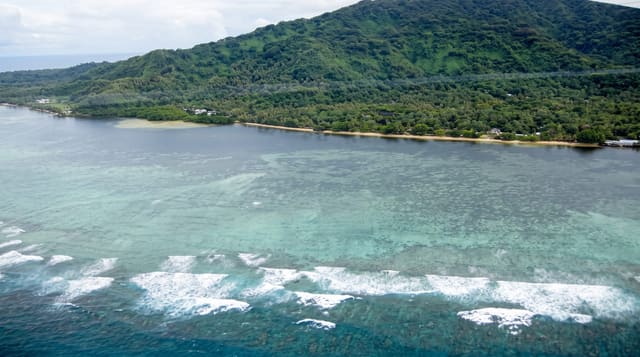
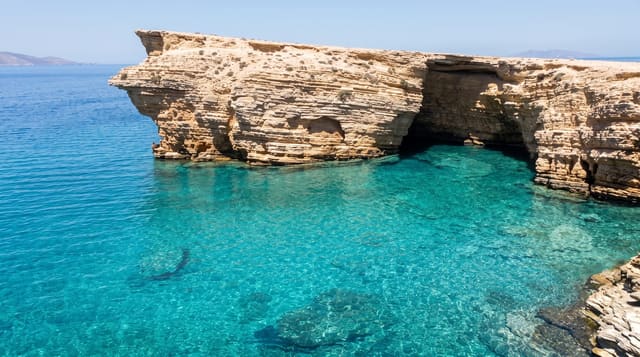
Aldabra is the Seychelles' great wilderness: a vast raised coral atoll far out in the Indian Ocean, so remote and so difficult to land on that it survived almost untouched by humans. It shelters the world's largest population of giant tortoises - over a hundred thousand of them, far more than the Galapagos - along with the last flightless bird of the Indian Ocean, the Aldabra rail, plus nesting green turtles, frigatebird colonies and a lagoon so big that at low tide the water pours out through the channels like a river. UNESCO listed it in 1982, and access is tightly controlled by the foundation that manages it.
History
Arab seafarers named the atoll Al-Hadra or Al-Khadra, a name that appears on 16th-century Portuguese maps, and Portuguese navigators visited it in 1511. With no surface fresh water it drew hunters rather than settlers: no European visit is proven before 1742, and in the mid-18th century it became a dependency of French Réunion, from where expeditions came to catch its giant tortoises. In 1810 it passed to Britain with Mauritius and the Seychelles, Admiral W. J. L. Wharton of the Royal Navy surveyed it in 1878, and in 1888 a first settlement was set up under a concession from the Seychelles authorities to exploit its resources, with a chapel, rectangular water tanks beside each building and a two-room jail, part of which still stands; a mill on Picard Island crushed tortoise bones, and attempts to grow coconuts, cotton and sisal failed for lack of water (Wikipedia, Aldabra).
The landscape
- The giant tortoises - free-ranging in numbers found nowhere else.
- The Aldabra rail - the Indian Ocean's last flightless bird.
- The tidal lagoon channels - enormous water movement twice a day.
- Seabird colonies - frigatebirds and boobies nesting in thousands.
When to go
Expedition vessels favour the calmer inter-monsoon windows, roughly March to May and September to November. Green turtle nesting and seabird breeding follow their own calendars, and operators plan around them. There is no casual season - trips run rarely and are scheduled long in advance.
What to expect
This is not a destination you can simply book: visits require permits through the Seychelles Islands Foundation, come on a handful of expedition cruises or research charters a year, cost a great deal, and involve days at sea to reach. Landings depend entirely on weather and tide. Anyone hoping for a Seychelles beach holiday should look at Mahe, Praslin or La Digue instead - Aldabra is for people who want the wildest place in the region and accept the price and the uncertainty.
Nearby
The other outer islands and the Amirantes group lie on the same distant expedition routes.
Key facts
Source: Wikidata, item Q272768, read on 18 October 2026.
What to pack for Aldabra Atoll
Chosen from what this place is for. Tap a kit for the full checklist.
- Reef-safe sunscreen - High SPF that will not bleach the coral you are swimming over. Find on Amazon
- Binoculars - The single best wildlife tool - even a compact pair transforms a sighting. Find on Amazon
- Strong insect repellent - DEET or picaridin; the jungle is where bites and disease risk are highest. Find on Amazon
- Shelter suited to the place - Tent, tarp or hut booking - match it to the terrain and rules. Find on Amazon
Some links on this page are Amazon affiliate links - if you buy through them we may earn a small commission at no extra cost to you.
All packing kitsPlan your trip
Where to start if Aldabra Atoll is going on the list.
Booking links on this page are affiliate links - if you book through them we may earn a small commission at no extra cost to you. It never changes what we write about a place.
Opening times, ticket prices and seasonal closures change - check the official source before you go: official site.