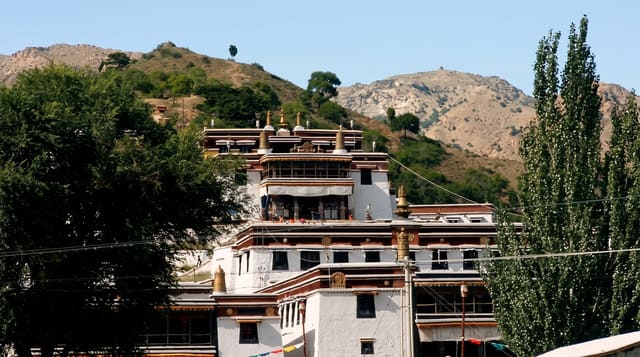
Poganovo Monastery
A late fourteenth-century monastery standing alone in the Jerma canyon, with frescoes of unusual quality inside.
Updated 21 October 2026
Poganovo was founded around 1395 by a noble family in the last years of medieval Serbian independence, and it sits on a bend of the Jerma with cliffs on both sides, a single church of the Morava school with a high dome and a narthex added later. Its frescoes date mostly from 1499 and are the reason art historians come: the painting is accomplished, with an unusual iconographic programme, and it survives in reasonable condition. A double-sided icon from the monastery, one of the notable Byzantine works of the region, was removed in the early twentieth century and is now in Sofia. A small monastic community lives here, and the monastery has been a protected monument of great importance since 1979. The isolation of the setting, deep in a gorge with almost nothing around, is much of what visitors remember.
What you'll find
- The 1499 frescoes - the painted programme filling the church.
- Morava-school architecture - the high-domed church and its stonework.
- The gorge setting - cliffs rising on both sides of the monastery.
- The monastic community - a small living foundation in a remote valley.
When to go
April to October for the road through the gorge. The monastery is open year round but winter access can be difficult. Services take precedence over visits, and mornings are usually quiet.
Before you go
Photography inside is normally forbidden and the frescoes are dark, so a torch and time for the eyes to adjust help. Modest dress is required. There is no interpretation on site and little in English. The road in through the gorge is rough and narrow.
Nearby
Jerma gorge surrounds it; Pirot lies northwest.
Key facts
Source: Wikidata, item Q839026, read on 18 October 2026.
What to pack for Poganovo Monastery
Chosen from what this place is for. Tap a kit for the full checklist.
- Comfortable walking shoes - Sightseeing means kilometres of pavement and cobbles daily. Find on Amazon
- Modest clothing - Shoulders and knees covered - the single most common requirement. Find on Amazon
- A slim anti-theft daypack - Zips that close properly; keep it in front in crowds and on transit. Find on Amazon
- A scarf or shawl - To cover the head or shoulders on entry; women especially at mosques. Find on Amazon
Some links on this page are Amazon affiliate links - if you buy through them we may earn a small commission at no extra cost to you.
All packing kitsPlan your trip
Where to start if Poganovo Monastery is going on the list.
Booking links on this page are affiliate links - if you book through them we may earn a small commission at no extra cost to you. It never changes what we write about a place.
Opening times, ticket prices and seasonal closures change - check the official source before you go: official site.