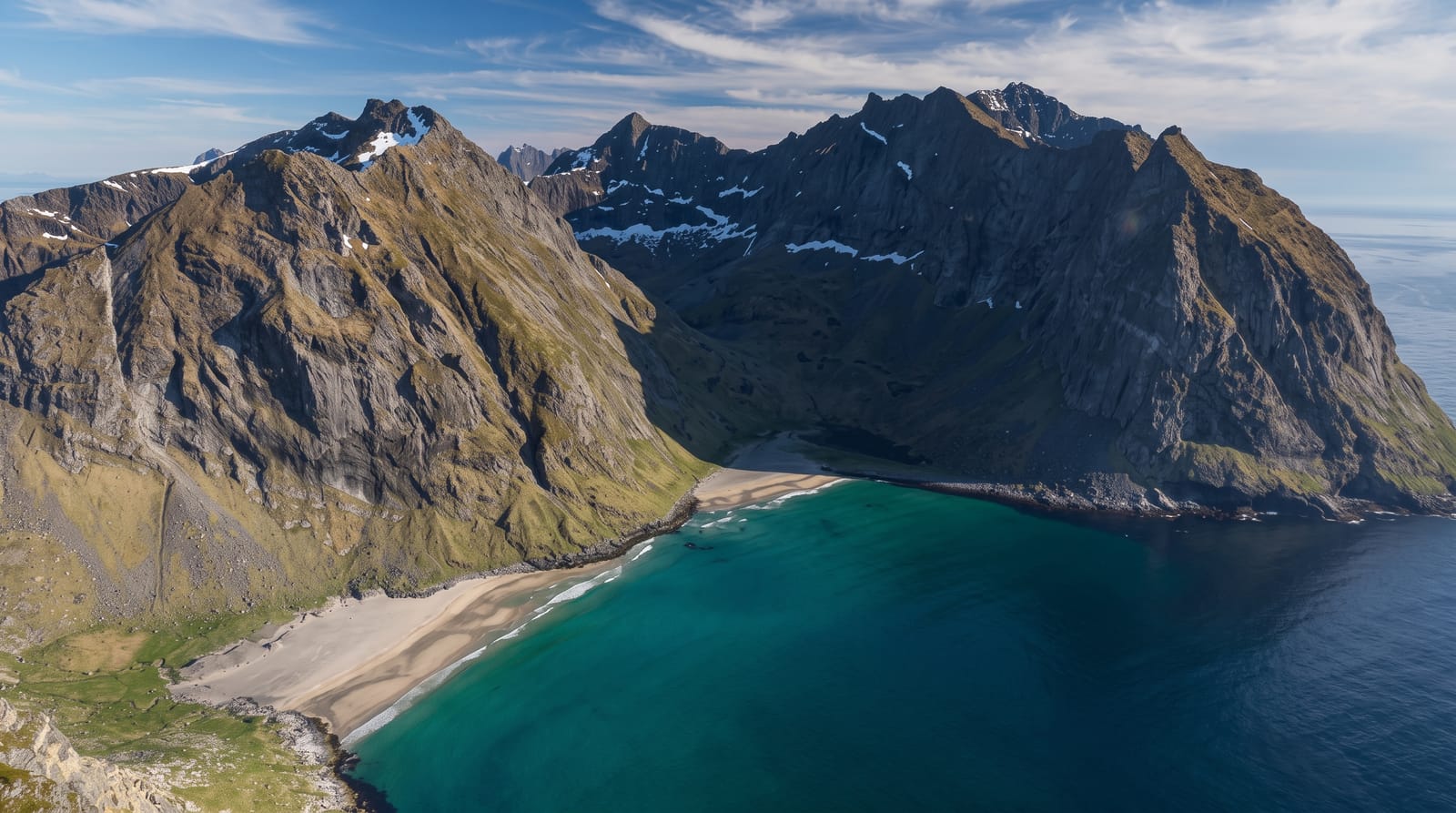
Sikhote-Alin Mountains
A UNESCO taiga range in Primorye where boreal and subtropical species overlap, and where most Amur tigers live.
Updated 18 October 2026
UNESCO World Heritage
The Sikhote-Alin runs about 900 kilometres north-east from Vladivostok along the Pacific coast, and its interest is biogeographical: the last glaciation did not cover it, so northern and southern species that were separated elsewhere meet here - spruce and fir growing with Manchurian walnut, Amur cork tree, lianas and wild ginseng, and brown bear sharing forest with Asiatic black bear, leopard, and the Amur tiger. The biosphere reserve, founded in 1935 and listed by UNESCO in 2001, protects about four thousand square kilometres and is the core of the tiger's range; there are perhaps five to six hundred Amur tigers in the wild, most of them in this region, recovered from around forty animals in the 1940s. Tigers are effectively never seen - tracks in snow are what researchers and occasional visitors get. Permits are required, routes are fixed, and independent walking is not allowed.
History
The name may come from Manchu for "coastal ridge" or Nanai for "forested mountains". In the 1910s and 1920s the geographer Vladimir Arsenyev explored the range and wrote about it, most famously in Dersu Uzala (1923), which Akira Kurosawa turned into an Oscar-winning film in 1975; largely thanks to him, the Sikhote-Alin and Lazo reserves were set up in 1935. On 12 February 1947 one of the largest meteorite showers in recent history fell here, scattering many tons of iron over about 1.3 square kilometres and leaving craters up to 26 metres across. Central Sikhote-Alin was listed as a World Heritage Site in 2001 for species such as the Amur tiger and Blakiston's fish owl, and the site was enlarged in 2018 with the Bikin River valley (Wikipedia, Sikhote-Alin).
What's there
- The species overlap - boreal conifers growing with Manchurian and subtropical plants.
- The tiger range - the core habitat of a population recovered from about forty animals.
- The 1935 reserve - a UNESCO site since 2001 covering four thousand square kilometres.
- The tracks - in winter snow, which is what visitors realistically see of tigers.
When to go
June to September for the forest; February for tracks in snow. Three days to a week. Permits and guided routes are compulsory.
Before you go
Tigers are not seen - anyone offering a sighting is selling something. Permits are required and independent walking is prohibited. Ticks in summer are severe and carry disease. Bears of two species are present. Terney is a long drive from Vladivostok.
Nearby
Terney is the reserve town; the Land of the Leopard park is far to the south.
Key facts
Source: Wikidata, item Q155322, read on 18 October 2026.
What to pack for Sikhote-Alin Mountains
Chosen from what this place is for. Tap a kit for the full checklist.
- Broken-in walking shoes or boots - Grip and ankle support matter more than looks; never hike in brand-new boots. Find on Amazon
- Warm base layers - Merino or synthetic against the skin - never cotton, which chills when damp. Find on Amazon
- Layers for big temperature swings - Warm sun by day, near-freezing at night, even near the equator. Find on Amazon
- Layers + a waterproof shell - Mountain weather turns fast; a packable rain jacket saves the day. Find on Amazon
Some links on this page are Amazon affiliate links - if you buy through them we may earn a small commission at no extra cost to you.
All packing kitsPlan your trip
Where to start if Sikhote-Alin Mountains is going on the list.
Booking links on this page are affiliate links - if you book through them we may earn a small commission at no extra cost to you. It never changes what we write about a place.
Opening times, ticket prices and seasonal closures change - check the official source before you go: official site.