Vejigante Masks
Horned carnival masks made two ways in two towns: papier-mâché in Ponce and carved coconut in Loíza, each with its own history.
Updated 2 September 2026
AI illustration
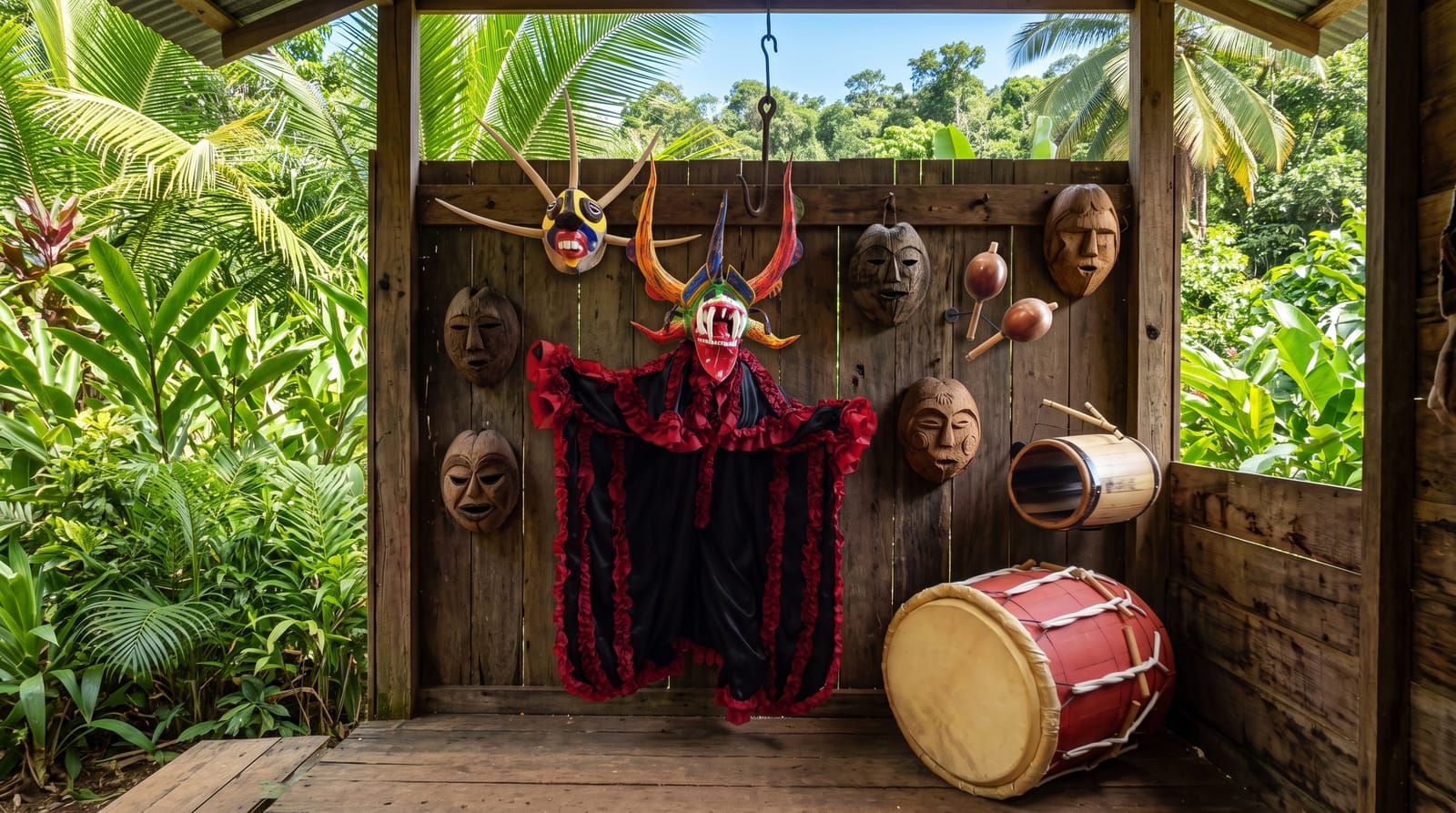
The vejigante is the horned trickster figure of Puerto Rican carnival, and the mask is made in two quite different traditions. In Ponce they are built up in papier-mâché over a clay mould, painted in strong colours with spots and stripes, and given as many horns as the maker can manage; families there have made them for generations and sign their work. In Loíza, a town with deep West African roots on the north coast, they are carved from coconut husk instead, browner, rougher and closer to the mask traditions the tradition descends from. The name comes from the vejiga, an inflated animal bladder the character once carried to strike at onlookers.
What to look for
- Ponce papier-mâché masks - many-horned and brightly painted, signed by makers.
- Loíza coconut masks - carved from husk in a distinct older tradition.
- The workshops - families working in both towns, open to visitors.
- The festivals - Ponce carnival in February, Loíza's Santiago Apóstol in July.
When to go
Year-round for workshops, which generally welcome visitors on weekdays. The Ponce carnival runs in the week before Lent, usually February, and Loíza's festival is at the end of July; both are when the masks are actually worn rather than sold.
Before you go
Much of what is sold in San Juan souvenir shops is imported or mass-produced, and the signed work from a named maker costs several times more. Masks are bulky and fragile, which makes them awkward to carry home. Workshop hours are informal, so calling ahead helps.
Nearby
Ponce's old town is the base in the south; Loíza and Piñones are east of San Juan.
What to pack for Vejigante Masks
Chosen from what this place is for. Tap a kit for the full checklist.
- Comfortable walking shoes - Sightseeing means kilometres of pavement and cobbles daily. Find on Amazon
- A slim anti-theft daypack - Zips that close properly; keep it in front in crowds and on transit. Find on Amazon
- A refillable water bottle - Many cities have public fountains; save money and plastic. Find on Amazon
- A light layer + compact umbrella - For museum air-con and a sudden shower. Find on Amazon
Some links on this page are Amazon affiliate links - if you buy through them we may earn a small commission at no extra cost to you.
All packing kitsPlan your trip
Where to start if Vejigante Masks is going on the list.
Booking links on this page are affiliate links - if you book through them we may earn a small commission at no extra cost to you. It never changes what we write about a place.
Opening times, ticket prices and seasonal closures change - check the official source before you go: official site.