San Germán
The island's second-oldest town, a hill settlement of colonial streets around a chapel that is among the oldest church buildings in the Americas.
Updated 22 October 2026

AI illustration
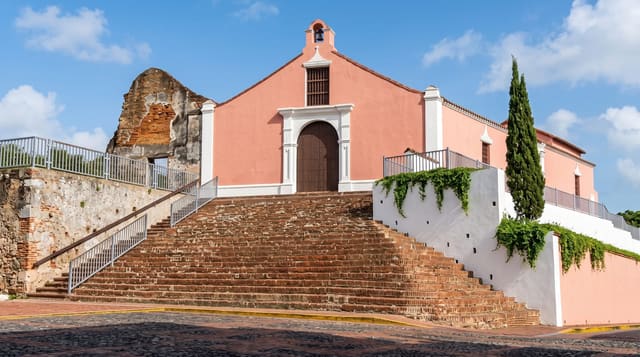
San Germán was founded in the early sixteenth century, making it the second-oldest town on the island after San Juan, and because it sat inland away from the raiding coast it kept a colonial centre that later development largely spared. Its two plazas are lined with houses in styles running from Spanish colonial through creole to nineteenth-century neoclassical, and at the top of a flight of steps stands the Porta Coeli chapel, the church of a convent founded in 1609 and among the oldest surviving church structures anywhere in the Americas, now a small museum of religious art with a beamed ceiling and thick masonry walls. The town is a national historic district and remains a quiet university town rather than a tourist stop.
History
When Alonso Manso became the first bishop of Puerto Rico in 1511, San Germán had about 50 residents, and in 1512 Miguel Díaz built a new settlement at Guayanilla, named after Germaine of Foix, second wife of King Fernando II. After raids by French corsairs the people moved inland, on 12 May 1571 the Royal Audience of Santo Domingo approved merging San Germán with Santa María de Guadianilla, and the new town was built on the Santa Marta hills in 1573 (Wikipedia, San Germán, Puerto Rico).
What's there
- Porta Coeli - the convent chapel at the top of its steps, now a museum.
- The two plazas - the colonial squares and the houses around them.
- The architectural mix - colonial, creole and neoclassical on the same streets.
- The quiet - a historic centre with almost no tourism.
When to go
December to April is the driest and most comfortable; the southwest is the hot, dry corner of the island year-round. Mornings are best for walking the streets. The chapel museum keeps limited hours and closes on some weekdays, so check before making the drive.
Things to know
It is small and quiet, a half-day at most, and there is little in the way of visitor infrastructure. The chapel museum's opening hours are limited and unreliable. It works best combined with Cabo Rojo's cliffs and salt flats or the Guánica dry forest rather than as a destination on its own.
Nearby
Cabo Rojo and the salt flats are southwest; the Guánica dry forest lies east along the coast.
Key facts
Source: Wikidata, item Q1598808, read on 18 October 2026.
What to pack for San Germán
Chosen from what this place is for. Tap a kit for the full checklist.
- Comfortable walking shoes - Sightseeing means kilometres of pavement and cobbles daily. Find on Amazon
- A slim anti-theft daypack - Zips that close properly; keep it in front in crowds and on transit. Find on Amazon
- A refillable water bottle - Many cities have public fountains; save money and plastic. Find on Amazon
- A light layer + compact umbrella - For museum air-con and a sudden shower. Find on Amazon
Some links on this page are Amazon affiliate links - if you buy through them we may earn a small commission at no extra cost to you.
All packing kitsPlan your trip
Where to start if San Germán is going on the list.
Booking links on this page are affiliate links - if you book through them we may earn a small commission at no extra cost to you. It never changes what we write about a place.
Opening times, ticket prices and seasonal closures change - check the official source before you go: official site.