Stone Town, Zanzibar
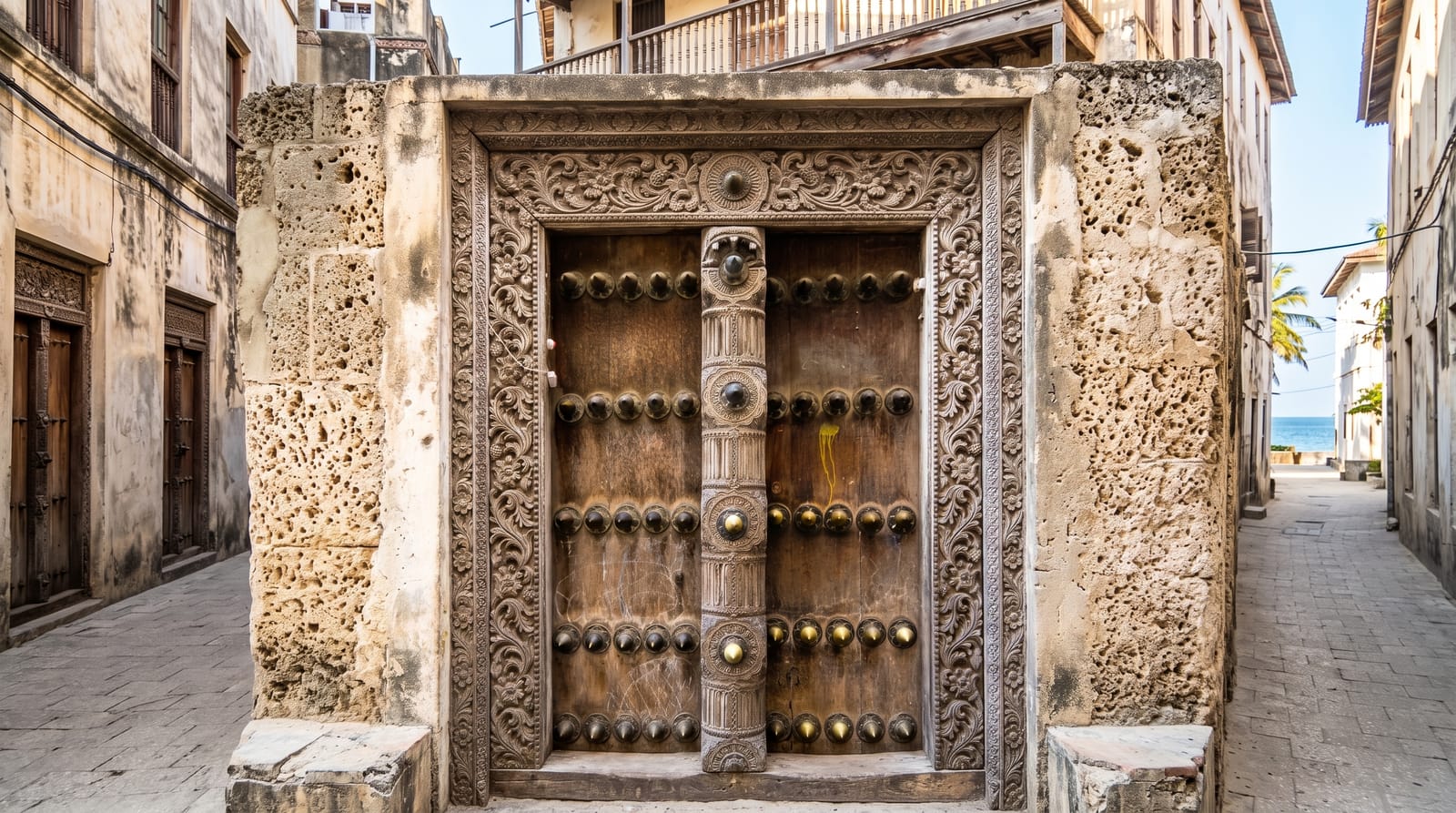
A labyrinth of the Swahili coast - the atmospheric old heart of Zanzibar, a UNESCO maze of winding lanes, coral-stone houses and carved doors, steeped in the history of spice and the slave trade.
Updated 22 October 2026
AI illustration
UNESCO World Heritage
Stone Town is the atmospheric old heart of Zanzibar City, a UNESCO labyrinth of narrow, winding lanes on the Swahili coast island of Zanzibar. A melting pot of African, Arab, Indian and European influences built up over centuries of spice and slave trading, it is a maze of coral-stone houses with famous carved wooden doors, bustling bazaars, mosques, old palaces and the birthplace of Freddie Mercury, endlessly evocative to wander and lose yourself in.
History
The Periplus of the Erythraean Sea, of the 1st to 3rd centuries, mentions an island called Menuthias, probably Unguja, and Bantu-speakers settled Zanzibar early in the first millennium; by the end of the 10th century it was one of the main Swahili trading towns. Shangani, the fishing village that grew into Stone Town, was founded in the 11th century while larger towns elsewhere on the island held power until the 16th, the Portuguese built a church there early in the 16th century, and after the Portuguese were driven out in the 17th century local patricians invited the Sultan of Oman to rule in exchange for protection. In the 19th century it was the capital of the Sultanate of Zanzibar and a flourishing centre of the spice trade and the Indian Ocean slave trade, it stayed the island's main city under the British protectorate, and most of its buildings date from that century (Wikipedia, Stone Town).
What to look for
- The old lanes - the maze of narrow streets and coral-stone houses.
- The carved doors - the famous ornately carved wooden doors.
- The former slave market - the memorial and the Anglican cathedral built on the site.
- The bazaars and waterfront - the markets and the sunset at Forodhani gardens.
When to go
June to October and December to February for the driest weather; the long rains of April and May are best avoided. Evenings at the Forodhani night food market and the waterfront are a highlight. It pairs perfectly with the island's beaches.
Things to know
It is easy to get lost in the maze, which is part of the charm. As a conservative Muslim island, modest dress is appreciated away from the beaches and resorts. Its heritage includes the history of the slave trade, marked by the memorial at the former market. The town can be hot, humid and, in places, run-down, but it is deeply atmospheric.
Nearby
The spice farms, the beaches of the north and east coasts, and the mainland safari circuit are within reach.
Key facts
Source: Wikidata, item Q844417, read on 18 October 2026.
What to pack for Stone Town, Zanzibar
Chosen from what this place is for. Tap a kit for the full checklist.
- Travel rod + reel - A packable multi-piece rod fits in a case and covers most holiday fishing. Find on Amazon
- Reef-safe sunscreen - High SPF that will not bleach the coral you are swimming over. Find on Amazon
- Binoculars - The single best wildlife tool - even a compact pair transforms a sighting. Find on Amazon
- Strong insect repellent - DEET or picaridin; the jungle is where bites and disease risk are highest. Find on Amazon
Some links on this page are Amazon affiliate links - if you buy through them we may earn a small commission at no extra cost to you.
All packing kitsPlan your trip
Where to start if Stone Town, Zanzibar is going on the list.
Booking links on this page are affiliate links - if you book through them we may earn a small commission at no extra cost to you. It never changes what we write about a place.
Opening times, ticket prices and seasonal closures change - check the official source before you go: official site.