Humacao Nature Reserve
A coastal wetland of lagoons and mangroves on the east coast, the island's best accessible birdwatching, with manatees in the channels.
Updated 22 October 2026
AI illustration
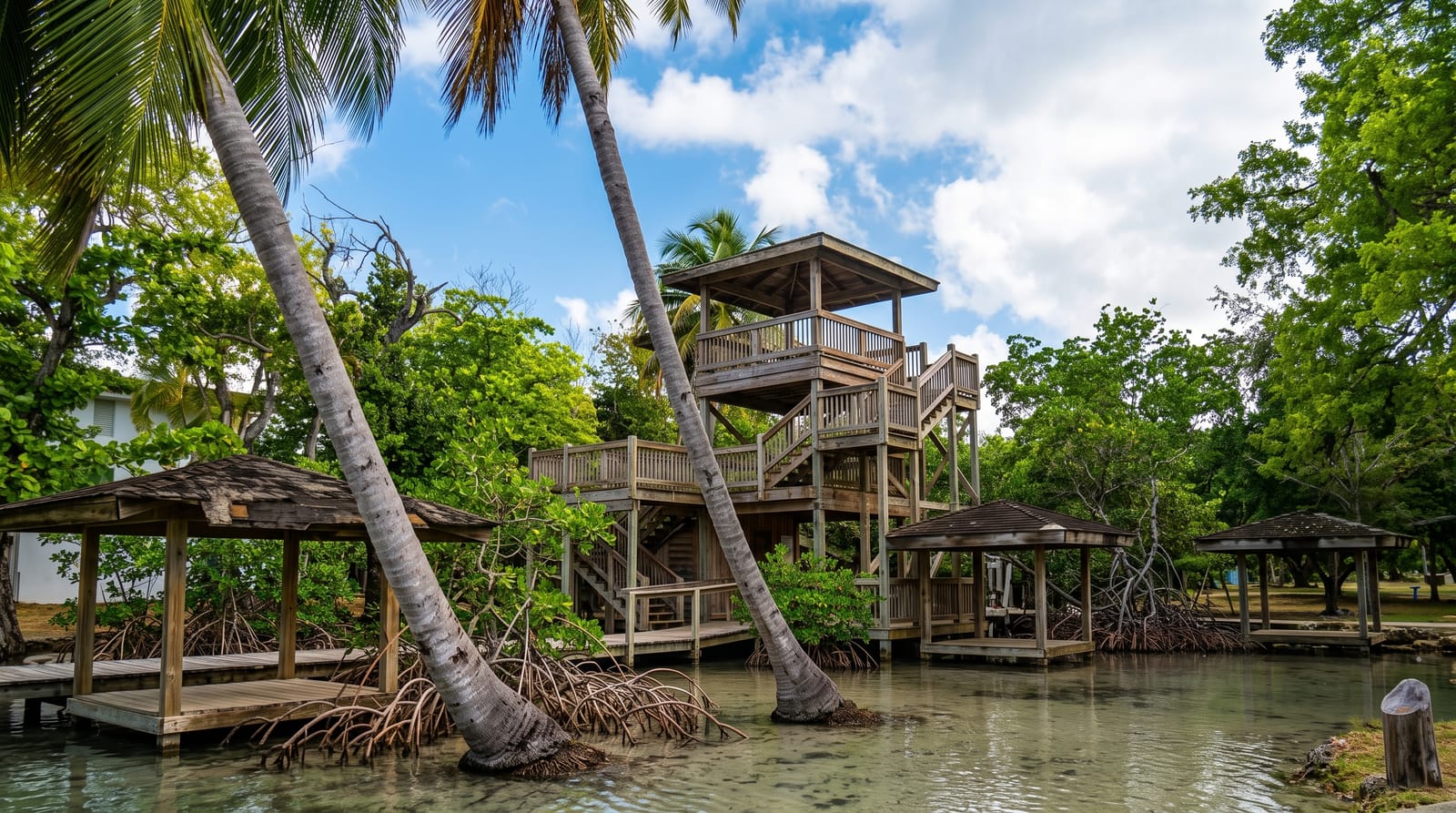
The Punta Santiago reserve protects around three thousand acres of lagoon, mangrove, marsh and beach on the east coast, land that was once sugar cane and flooded when the drainage was allowed to fail. What grew back is the most productive bird habitat on the island that anyone can simply walk into: something over a hundred and eighty species have been recorded, including the endangered yellow-shouldered blackbird and West Indian whistling duck, with herons, gallinules and migrants filling the lagoons through the winter. Flat trails and a boardwalk run between the water bodies, an observation tower gives the overview, and kayaks can be taken through the mangrove channels, where manatees are seen regularly.
History
The 3,000-acre reserve was established in 1986, as the Humacao Wildlife Refuge, to protect the remaining Pterocarpus forest and its surroundings; the land was long tied to the sugar industry, and an old pump and other remains of that time still stand in it (Wikipedia, Humacao Nature Reserve).
Highlights
- The lagoons - herons, ducks and migrants across open water.
- The observation tower - the overview across the whole wetland.
- Manatees - regularly seen in the channels and near the river mouth.
- The mangrove kayak channels - flat paddling through the reserve.
When to go
November to April is the peak for birds, when northern migrants are present and the weather is drier. Early morning is by far the best time. Mosquitoes are heavy at dawn and dusk, so cover up.
Things to know
It is flat, hot and shadeless on the main trails, and midday visits see very little. Mosquitoes are severe. The reserve took serious hurricane damage and some trails and facilities have been slow to reopen. Manatee sightings are luck, not a certainty.
Nearby
Palmas del Mar is next door; Fajardo and the ferries are 45 minutes north.
Key facts
Source: Wikidata, item Q110128449, read on 18 October 2026.
What to pack for Humacao Nature Reserve
Chosen from what this place is for. Tap a kit for the full checklist.
- Broken-in walking shoes or boots - Grip and ankle support matter more than looks; never hike in brand-new boots. Find on Amazon
- Reef-safe sunscreen - High SPF that will not bleach the coral you are swimming over. Find on Amazon
- Quick-dry clothing - Board shorts or synthetics that shrug off spray and dry fast. Find on Amazon
- Binoculars - The single best wildlife tool - even a compact pair transforms a sighting. Find on Amazon
Some links on this page are Amazon affiliate links - if you buy through them we may earn a small commission at no extra cost to you.
All packing kitsPlan your trip
Where to start if Humacao Nature Reserve is going on the list.
Booking links on this page are affiliate links - if you book through them we may earn a small commission at no extra cost to you. It never changes what we write about a place.
Opening times, ticket prices and seasonal closures change - check the official source before you go: official site.