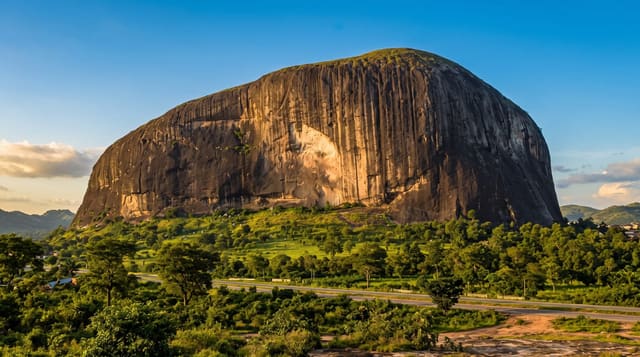
Rocha dos Bordões
A cliff of vertical basalt columns on southern Flores, formed as a lava body cooled and cracked into pipes.
Updated 22 October 2026
The Rocha dos Bordões is a formation on the southern side of Flores where a body of basalt cooled slowly and contracted into vertical columns - the same jointing process that produced the Giant's Causeway and Fingal's Cave - leaving a cliff face of parallel stone pipes tens of metres high, standing like organ pipes or, in the local name, walking staffs. Vegetation has taken hold in the joints, so the columns are streaked green with fern and moss and, in season, hydrangea at the base, which is what makes the Flores version look different from the bare grey examples elsewhere. It is directly beside the regional road with a viewpoint and parking, so it takes fifteen minutes, and the drive on either side through Mosteiro and Lajedo is worth extending. Cloud on Flores is frequent and can hide it.
History
Flores was found in the late summer of 1452 by the navigator Diogo de Teive and his son João, and its earlier names were São Tomás and Santa Iria. Real settlement began after 1477, when the Fleming Willem van der Haegen reached an agreement with Maria Vilhena and moved to the island between 1480 and 1490, and Flores was permanently settled in 1510, under Manuel I, mostly by people from northern Portugal (Wikipedia, Flores Island (Azores)).
Highlights
- The columns - vertical basalt pipes tens of metres high in a cliff face.
- The jointing - the same contraction process as the Giant's Causeway.
- The vegetation - fern, moss and hydrangea growing in and below the joints.
- The roadside access - a viewpoint and parking directly on the regional road.
When to go
May to September for flights and hydrangeas; the formation is there year-round. Thirty to sixty minutes. Afternoon light hits the face better than morning.
Things to know
A roadside viewpoint - fifteen minutes of looking. Cloud and rain on Flores hide it often. Flights to the island are limited and cancelled by fog. Facilities amount to a layby.
Nearby
Poço da Alagoinha and Fajã Grande are north; Lajes das Flores is south-east.
Key facts
Source: Wikidata, item Q216752, read on 18 October 2026.
What to pack for Rocha dos Bordões
Chosen from what this place is for. Tap a kit for the full checklist.
- Broken-in walking shoes or boots - Grip and ankle support matter more than looks; never hike in brand-new boots. Find on Amazon
- Head torch + spare batteries - Hands-free light is essential; caves are truly dark. Find on Amazon
- Layers + a waterproof shell - Mountain weather turns fast; a packable rain jacket saves the day. Find on Amazon
- Grippy closed shoes - Cave floors are wet, muddy and slick with formations. Find on Amazon
Some links on this page are Amazon affiliate links - if you buy through them we may earn a small commission at no extra cost to you.
All packing kitsPlan your trip
Where to start if Rocha dos Bordões is going on the list.
Booking links on this page are affiliate links - if you book through them we may earn a small commission at no extra cost to you. It never changes what we write about a place.
Opening times, ticket prices and seasonal closures change - check the official source before you go: official site.