Fajã Grande
The westernmost village in Europe, on a shelf under waterfall cliffs on Flores, with the Atlantic and nothing beyond.
Updated 22 October 2026
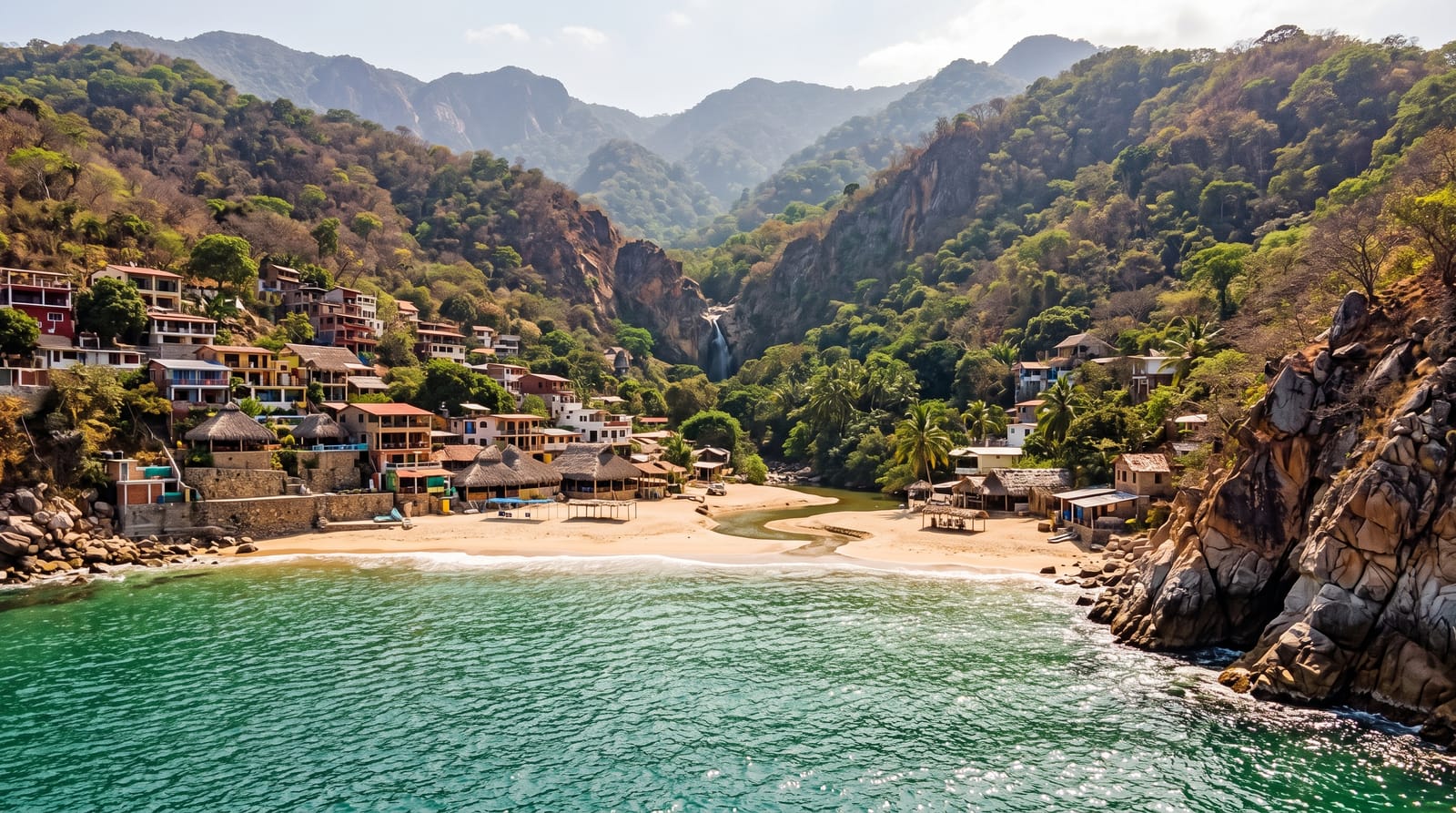
Fajã Grande sits on a fajã - a flat shelf of land at the foot of a cliff, formed by landslide or lava - on the western coast of Flores, and it is the westernmost settlement in Europe by the usual definitions, with the next land west being North America. Behind it a wall of cliff several hundred metres high carries waterfalls that run permanently, Flores being the wettest of the Azores, and the Poço da Alagoinha is a short distance inland. The village has a few dozen houses, a church, a stony beach and a natural pool at Poço do Bacalhau below another fall. Walking trails climb the cliff to the plateau and run along the coast to Fajãzinha and Ponta da Fajã. Flores is served by small aircraft and a seasonal ferry, both cancelled routinely by weather, and getting stuck here for extra days is normal.
History
The western coast of Flores was settled slowly from the middle of the 16th century, and its fertile land grew woad and the dye lichen orchil, both sought by Europe's dye industries. Caravels returning from India often called here, and Fajã Grande grew prosperous enough to be separated from the parish of Lajes das Flores in July 1676 (Wikipedia, Fajã Grande).
The main sights
- The westernmost village - the last settlement in Europe before the Atlantic.
- The cliff waterfalls - permanent falls down several hundred metres behind the village.
- Poço do Bacalhau - a natural pool under a fall below the settlement.
- The trails - paths up the cliff and along the coast to neighbouring fajãs.
When to go
May to September for flights and walking. A day, realistically an overnight given the transport. Allow spare days for weather cancellations.
Practical notes
Getting to Flores is the hard part - small aircraft and a seasonal ferry, both frequently cancelled by fog and swell. The village has very limited accommodation and food. Constant rain and cloud. Trails are muddy and steep.
Nearby
Poço da Alagoinha is inland; Fajãzinha and Rocha dos Bordões are south.
Key facts
Source: Wikidata, item Q996979, read on 18 October 2026.
What to pack for Fajã Grande
Chosen from what this place is for. Tap a kit for the full checklist.
- Comfortable walking shoes - Sightseeing means kilometres of pavement and cobbles daily. Find on Amazon
- Shelter suited to the place - Tent, tarp or hut booking - match it to the terrain and rules. Find on Amazon
- A slim anti-theft daypack - Zips that close properly; keep it in front in crowds and on transit. Find on Amazon
- A warm sleeping bag + mat - Rated a little colder than you expect the nights to be. Find on Amazon
Some links on this page are Amazon affiliate links - if you buy through them we may earn a small commission at no extra cost to you.
All packing kitsPlan your trip
Where to start if Fajã Grande is going on the list.
Booking links on this page are affiliate links - if you book through them we may earn a small commission at no extra cost to you. It never changes what we write about a place.
Opening times, ticket prices and seasonal closures change - check the official source before you go: official site.