Monserrate Palace
A Moorish-Gothic romantic villa in Sintra with plasterwork like lace, set in a botanical park of imported forests.
Updated 21 October 2026
UNESCO World Heritage
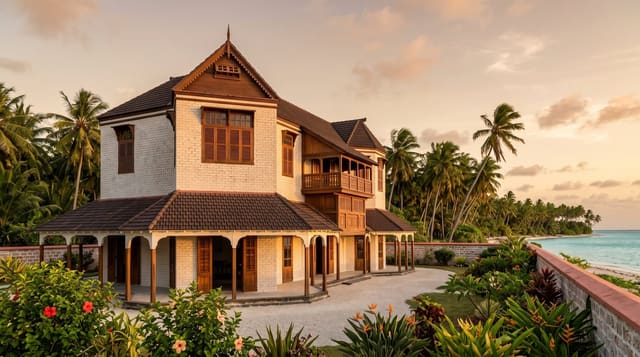
The English merchant Gerard de Visme rented Monserrate in 1789 and built a neo-Gothic house here, and in 1793-1794 William Beckford, the English writer and one of the richest men in Britain, subleased it and began a landscaped garden; Byron visited and wrote about it, and the property then fell into ruin. In 1856 Francis Cook, another wealthy Englishman, leased it, bought it in 1863 and rebuilt the palace in an eclectic Moorish, Gothic and Indian manner - a long facade of three domes, and an interior of carved and moulded plaster in interlacing patterns of extraordinary fineness, particularly the central gallery and the music room. The park is the other half: thirty-three hectares planted from the 1860s with species grouped by region - a Mexican garden, an Australian one, tree ferns from New Zealand, a valley of camellias - fed by an irrigation system and laid out with lawns, ruins and a waterfall. It is quieter than Pena and Sintra's other palaces.
History
In 1540 a chapel of Our Lady of Monserrate was built on the hilltop, on the ruins of an older one that legend credits to Afonso Henriques; the estate belonged to the Hospital Real de Todos os Santos in Lisbon and later to the Mello e Castro family, and the 1755 earthquake left its farmhouse uninhabitable. The English merchant Gerard de Visme rented it in 1789 and built a neo-Gothic house on the chapel's ruins, William Beckford sublet it in 1793-1794 and began a landscaped garden, and Lord Byron, who saw it still in ruins in 1809, praised it in Childe Harold's Pilgrimage. Francis Cook, a rich English merchant, leased it in 1856, bought it in 1863 and with the architect James Knowles rebuilt de Visme's house as the family's summer palace; the Portuguese state acquired it in 1949, it became part of the Sintra World Heritage cultural landscape in 1995, and the park won a European Garden Award in 2013 (Wikipedia, Monserrate Palace).
What to look for
- The plasterwork - interlacing carved and moulded patterns through the interior.
- The facade - three domes in a Moorish, Gothic and Indian mix from the 1860s.
- The regional gardens - thirty-three hectares planted by geographic origin.
- The literary history - Beckford's garden here, and Byron's visit.
When to go
Year-round; spring for camellias and the fern valley. Two to three hours. Far less crowded than Pena, which is the main reason to prefer it.
Practical notes
The park is large and hilly with a lot of walking. Sintra's traffic makes driving here difficult and parking is minimal - take the bus. Rain and fog are frequent. The palace interior is small relative to the ticket price.
Nearby
Sintra town is east; Capuchos and Pena are elsewhere in the serra.
Key facts
Source: Wikidata, item Q3175595, read on 18 October 2026.
What to pack for Monserrate Palace
Chosen from what this place is for. Tap a kit for the full checklist.
- Comfortable walking shoes - Sightseeing means kilometres of pavement and cobbles daily. Find on Amazon
- Modest clothing - Shoulders and knees covered - the single most common requirement. Find on Amazon
- A slim anti-theft daypack - Zips that close properly; keep it in front in crowds and on transit. Find on Amazon
- A scarf or shawl - To cover the head or shoulders on entry; women especially at mosques. Find on Amazon
Some links on this page are Amazon affiliate links - if you buy through them we may earn a small commission at no extra cost to you.
All packing kitsPlan your trip
Where to start if Monserrate Palace is going on the list.
Booking links on this page are affiliate links - if you book through them we may earn a small commission at no extra cost to you. It never changes what we write about a place.
Opening times, ticket prices and seasonal closures change - check the official source before you go: official site.