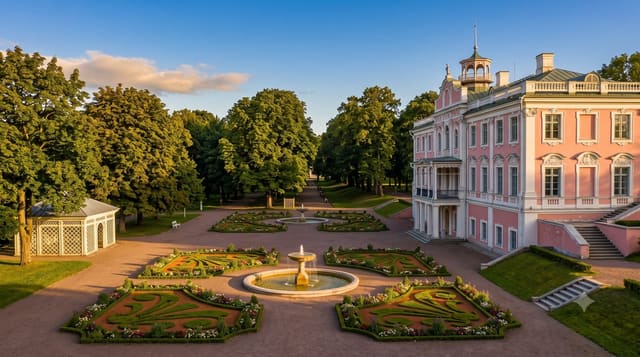
Mafra Palace
A baroque palace, basilica and convent under one roof, with a rococo library, six matched organs and a walled hunting park behind.
Updated 18 October 2026
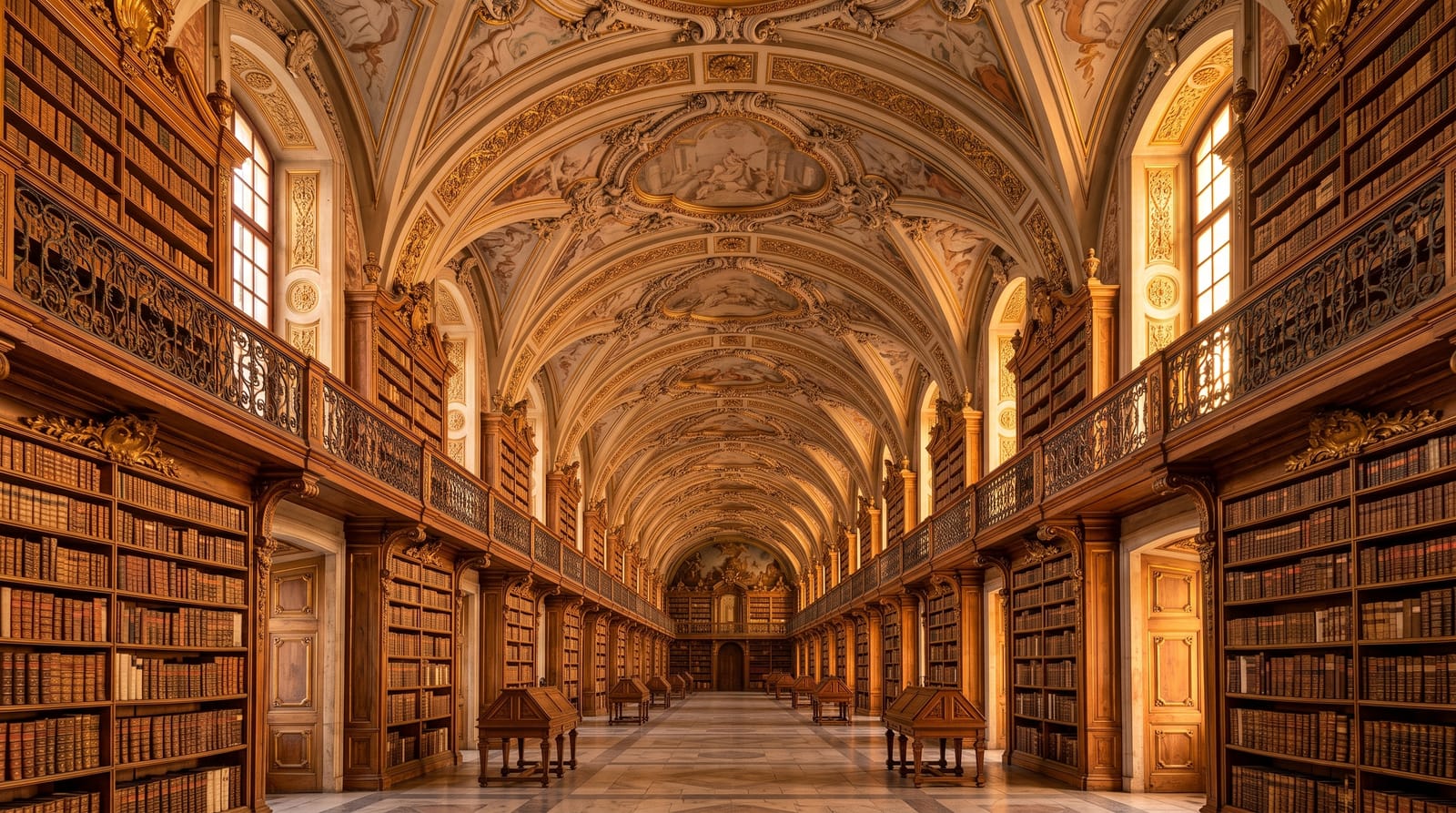
AI illustration
UNESCO World Heritage
Mafra is scale as a statement. Begun in 1717 under Joao V and paid for with Brazilian gold, it puts a royal palace, a basilica and a friary inside a single facade more than two hundred metres long, and the walk from the queen's apartments to the king's takes several minutes of corridor. Two carillons in the towers hold dozens of bells between them, and the basilica was fitted with six pipe organs designed to be played together. The library at the far end is the reason many people come: rococo shelving, tens of thousands of volumes, and a resident colony of small bats that feed on paper-eating insects after closing. UNESCO added the complex, gardens and hunting park in 2019.
History
John V vowed in 1711 to build a convent if his wife, Maria Anna of Austria, gave him children, and the birth of the Infanta Barbara set the work going; the site was chosen in 1713, bought in 1716, and the first stone was laid on 17 November 1717 before the king, his court and the Cardinal Patriarch of Lisbon. Planned at first as a small friary for 13 Capuchins, it grew into a palace with a much larger friary once gold and then diamonds from Brazil reached Lisbon in abundance, and it was designed by the German architect João Frederico Ludovice; the main construction lasted 13 years and employed a daily average of 15,000 workers, at times up to 45,000, with 7,000 soldiers to keep order. Completed in 1755, the 40,000-square-metre building holds a library of about 30,000 rare books, six historical pipe organs and two carillons of 98 bells; it became a National Monument in 1910 and on 7 July 2019 a World Heritage Site (Wikipedia, Palace of Mafra).
Highlights
- The library - a barrel-vaulted rococo hall of shelves, guarded at night by bats.
- The basilica - marble in grey, pink and white, with the six organs in the galleries.
- The carillons - two towers of bells, rung on a schedule from the terrace.
- The Tapada - the walled hunting park behind, now open for trails and wildlife.
When to go
Any season works since almost everything is indoors, but the unheated corridors are cold from November to March. Weekday mornings are the quietest. Check the carillon concert times before you go, and note that the Tapada park behind is a separate ticket with its own opening hours and gates.
Things to know
The route is long and largely repetitive - room after room of similar furniture before the library at the end, and photography inside the library is not permitted. The town of Mafra offers little else. Parts of the palace are frequently closed for conservation, and the basilica's organs are rarely heard outside scheduled concerts.
Nearby
Ericeira's surf coast is fifteen minutes west and Sintra half an hour south.
Key facts
Source: Wikidata, item Q599223, read on 18 October 2026.
What to pack for Mafra Palace
Chosen from what this place is for. Tap a kit for the full checklist.
- Quick-dry clothing - Board shorts or synthetics that shrug off spray and dry fast. Find on Amazon
- Binoculars - The single best wildlife tool - even a compact pair transforms a sighting. Find on Amazon
- Comfortable walking shoes - Sightseeing means kilometres of pavement and cobbles daily. Find on Amazon
- Modest clothing - Shoulders and knees covered - the single most common requirement. Find on Amazon
Some links on this page are Amazon affiliate links - if you buy through them we may earn a small commission at no extra cost to you.
All packing kitsPlan your trip
Where to start if Mafra Palace is going on the list.
Booking links on this page are affiliate links - if you book through them we may earn a small commission at no extra cost to you. It never changes what we write about a place.
Opening times, ticket prices and seasonal closures change - check the official source before you go: official site.