Jardim da Estrela
A romantic nineteenth-century park of exotic trees and an ironwork bandstand, facing the Estrela basilica.
Updated 28 August 2026
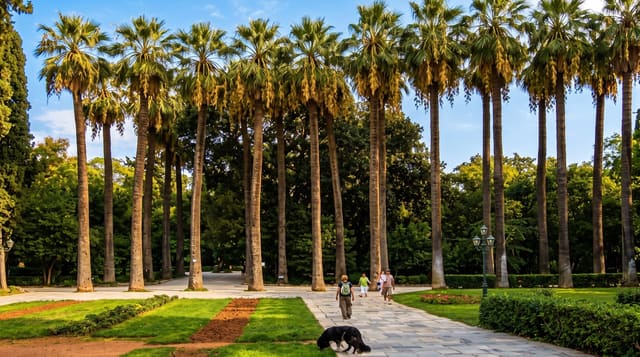
The Jardim da Estrela was laid out in 1842 opposite the basilica in the English landscape manner: winding paths, lawns, a duck pond with a small island, and a planting of exotic species brought in when Lisbon was collecting them - dragon trees, magnolias, cedars, a large Ficus, palms. Its centrepiece is a wrought-iron bandstand made in Porto in the 1880s and moved here, still used for concerts. There is a well-known kiosk café under the trees, a children's playground and a small library, and the park functions as the neighbourhood's living room rather than as a tourist site: dog walkers, prams, chess, people reading. The English Cemetery across the road contains the grave of Henry Fielding, who died in Lisbon in 1754. Tram 28 passes the gate, which is the only reason most visitors find it.
What you'll find
- The bandstand - an 1880s wrought-iron structure from Porto, still used.
- The tree collection - dragon trees, magnolias, cedars and palms from the collecting era.
- The pond - ducks and an island at the centre of the winding paths.
- The neighbourhood use - a working local park rather than a visitor attraction.
When to go
Year-round; spring for the magnolias. One hour. Weekend mornings are busiest with families.
Things to know
A local park, not a sight - people expecting a formal garden will find it modest. The kiosk cafés are busy and slow at weekends. Tram 28 outside is crowded and a pickpocketing hotspot. Gates close at dusk.
Nearby
The Estrela basilica faces the park; the English Cemetery is across the road.
Key facts
Source: Wikidata, item Q10306236, read on 18 October 2026.
What to pack for Jardim da Estrela
Chosen from what this place is for. Tap a kit for the full checklist.
- Broken-in walking shoes or boots - Grip and ankle support matter more than looks; never hike in brand-new boots. Find on Amazon
- Modest clothing - Shoulders and knees covered - the single most common requirement. Find on Amazon
- Layers + a waterproof shell - Mountain weather turns fast; a packable rain jacket saves the day. Find on Amazon
- A scarf or shawl - To cover the head or shoulders on entry; women especially at mosques. Find on Amazon
Some links on this page are Amazon affiliate links - if you buy through them we may earn a small commission at no extra cost to you.
All packing kitsPlan your trip
Where to start if Jardim da Estrela is going on the list.
Booking links on this page are affiliate links - if you book through them we may earn a small commission at no extra cost to you. It never changes what we write about a place.
Opening times, ticket prices and seasonal closures change - check the official source before you go: official site.