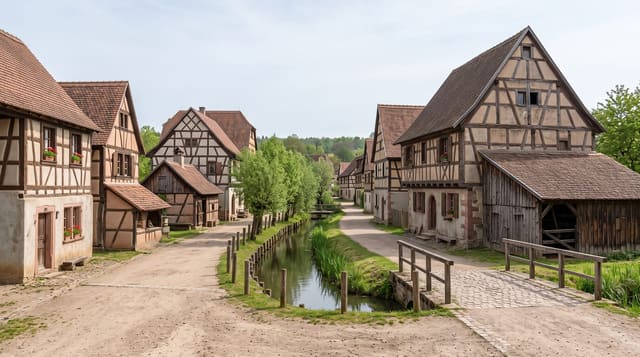
Orawa Ethnographic Park
An open-air museum of the Orawa borderland, with a wooden church of 1651 moved here whole and repainted inside.
Updated 29 August 2026
Orawa is a small borderland region under Babia Gora, split between Poland and Slovakia in 1920, with a building tradition of its own, and the museum at Zubrzyca Gorna was founded in 1955 around the Moniak manor - a large seventeenth-century wooden nobleman's house that stands on its original site, which is unusual for a skansen. Around it have been brought some thirty buildings: cottages, a forge, a sawmill, a water-driven fulling mill for cloth, an oil press, apiaries. The church of St Michael, built in 1651, was moved here from Tokarnia and re-erected with its painted interior, the walls and ceiling covered in folk polychrome. The site runs on a hillside with the mountain behind it, so it works as a walk as well as a museum, and the collections cover a culture that in Poland exists only in a handful of villages.
What to look for
- The Moniak manor - a seventeenth-century wooden noble house on its own site.
- A church of 1651 - moved here and re-erected with its painted interior.
- Working mills - a fulling mill, sawmill, forge and oil press.
- Babia Gora behind - the museum laid out on the hillside under the mountain.
When to go
May to September. Half a day.
What to expect
Open seasonally, with reduced or no winter opening. Interiors of some buildings open only with a guide. The site is on a slope and involves a fair walk. Labelling is largely Polish.
Nearby
Babia Gora National Park is above; Zawoja is east.
What to pack for Orawa Ethnographic Park
Chosen from what this place is for. Tap a kit for the full checklist.
- Comfortable walking shoes - Sightseeing means kilometres of pavement and cobbles daily. Find on Amazon
- A slim anti-theft daypack - Zips that close properly; keep it in front in crowds and on transit. Find on Amazon
- A refillable water bottle - Many cities have public fountains; save money and plastic. Find on Amazon
- A light layer + compact umbrella - For museum air-con and a sudden shower. Find on Amazon
Some links on this page are Amazon affiliate links - if you buy through them we may earn a small commission at no extra cost to you.
All packing kitsPlan your trip
Where to start if Orawa Ethnographic Park is going on the list.
Booking links on this page are affiliate links - if you book through them we may earn a small commission at no extra cost to you. It never changes what we write about a place.
Opening times, ticket prices and seasonal closures change - check the official source before you go: official site.