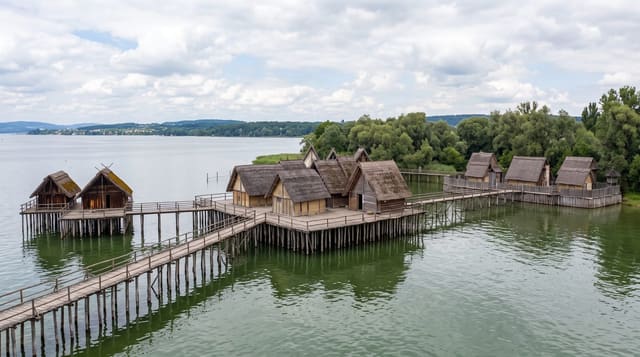
Sadecki Ethnographic Park
The largest open-air museum in southern Poland, showing four highland cultures including a Roma settlement.
Updated 29 August 2026
The skansen at Nowy Sacz covers about twenty hectares and holds around eighty buildings, which makes it the largest open-air museum in the south of the country, and its organising idea is that this corner of the Carpathians was inhabited by several distinct groups: Lachy Sadeckie in the valleys, Gorale Sadeccy in the hills, Lemkos and Boykos of the Ruthenian tradition, and German colonist villages of the eighteenth century. Each has its own sector with cottages, farmsteads and churches, including a Lemko wooden church with an iconostasis and a Protestant church from a German settlement. There is a Roma sector - one of very few museum presentations of Roma dwelling in Poland - and a reconstructed small-town square, Miasteczko Galicyjskie, in the town itself as a separate branch, with shopfronts and interiors of the Austrian period. Events through the summer include craft demonstrations and folk music.
Highlights
- Four cultures side by side - valley and hill Poles, Ruthenians and German colonists.
- A Lemko church with its iconostasis - moved and re-erected on site.
- A Roma sector - rare in Polish museum presentation.
- A Galician town square - the separate branch in Nowy Sacz itself.
When to go
May to September. A day.
Good to know
Open seasonally with limited winter access. Interiors often need a guide. The site is large and involves a lot of walking. The Galician town branch is a separate ticket in a different part of the city.
Nearby
Nowy Sacz old town is close; Stary Sacz is ten kilometres south.
Key facts
Source: Wikidata, item Q7767843, read on 18 October 2026.
What to pack for Sadecki Ethnographic Park
Chosen from what this place is for. Tap a kit for the full checklist.
- Comfortable walking shoes - Sightseeing means kilometres of pavement and cobbles daily. Find on Amazon
- A slim anti-theft daypack - Zips that close properly; keep it in front in crowds and on transit. Find on Amazon
- A refillable water bottle - Many cities have public fountains; save money and plastic. Find on Amazon
- A light layer + compact umbrella - For museum air-con and a sudden shower. Find on Amazon
Some links on this page are Amazon affiliate links - if you buy through them we may earn a small commission at no extra cost to you.
All packing kitsPlan your trip
Where to start if Sadecki Ethnographic Park is going on the list.
Booking links on this page are affiliate links - if you book through them we may earn a small commission at no extra cost to you. It never changes what we write about a place.
Opening times, ticket prices and seasonal closures change - check the official source before you go: official site.